


Plastic Knock Down Fitting Snap Panel Connector K4245
The K4245 Knock Down Fitting In Nine Photographed Positions

Nine frames were shot for this fitting, and three of them carry the measurements that matter: the length of the pair, the width across the cover half and the thickness of the face that closes over the joint. The rest of the frames do what a photograph has to do with a part this thin, which is show the ribs on the locking half and the lip on the cover half from enough angles that a buyer can see how the two halves come together.
The fitting is a pair, and the two halves are not interchangeable. The locking half has three parallel ribs, two locating tabs and a row of windows; the cover half is solid, with a rebated edge and a small hook at one end. The ribbed half is set into the routed recess in the first panel, the cover half is set into the second, and the joint closes when the two panels are brought together and pressed until the hook catches.
What makes this a knock down fitting rather than a glue joint is that the whole of the grip is inside the two recesses. Neither half has a screw head, a cam or a bolt on the face of the panel; the parts sit below the surface and only the cover face shows. That is the property the frames are selling, and one of them says so in as many words: after installation no screw holes are visible at all.
The Ribs, The Tabs And The Cover
| Part | What it does | Where it shows on the frames |
| Ribbed half | locks into the recess in the first panel | the half with three parallel ribs |
| Parallel ribs | take the grip and spread it along the joint | the raised bars on the locking half |
| Locating tabs | seat the fitting at the correct depth | the two small lugs at either end |
| Windows | let the ribs flex as the halves close | the openings between the ribs |
| Cover half | closes the face and hides the joint | the solid leaf with a rebated edge |
| Hook | catches the ribbed half and holds it closed | the small return at one end of the cover |
The parallel ribs are the working part of this fitting. Each rib runs across the short axis of the leaf, so the grip is spread along the length of the joint rather than concentrated at one point, and the windows between them give each rib room to flex as the halves close. A fitting with a single click post grips at one spot and rocks; three ribs on a leaf this long hold the joint flat.
The locating tabs set the depth. They stop the ribbed half going deeper into the recess than the tooling intended, which matters because the cover half assumes exactly that depth when it clips on. On a fitting with no tabs the two halves still engage, but the cover sits proud at one end and the joint shows, and that is the failure that sends the batch back.
The cover is solid for a reason. A cover with an opening or a screw hole would defeat the point of the fitting, which is a joint with nothing visible on the face. The rebated edge lets the cover sit level with the panel face and the small hook at the end is what holds it closed; there is no separate clip and nothing to lose during assembly.
What The Frames Mark, And What They Do Not

The measurements on this fitting need a word of explanation, because the frames do not agree with each other. One frame marks the pair at 65 millimetres long and 13 millimetres across, a second marks 66 millimetres and 14 millimetres, and a third marks 52 millimetres with 0.8 millimetres on the face. The parts photographed are the same size in every frame, so the difference is in the annotation rather than in the product, and this listing does not pick one figure and present it as the drawing.
| What the frames mark | Figure |
| Overall length, frame to frame | 65 mm, 66 mm or 52 mm depending on the frame |
| Width across the cover half | 13 mm or 14 mm depending on the frame |
| Face thickness | 0.9 mm on two frames, 0.8 mm on one |
| Locating tab | 0.5 mm |
| Material | moulded nylon, two parts |
| Colour | black on every frame |
The honest position is that a photograph with a line drawn on it is not a drawing. The figures here are good enough to show the size of the part against a hand, and they are not good enough to cut a recess to. A dimension drawing is issued with the quotation for that, and it is the figure to build to and the figure to check a sample against before a production run.
Two figures are consistent enough to quote. The face of the cover half is under a millimetre thick on every frame that marks it, which is what lets the fitting disappear into a panel face, and the locating tab is 0.5 millimetres. Everything else about the size of this fitting should come from the drawing rather than from the artwork.
The Names This Fitting Sells Under
The same pair is bought under several names and three of them are used here. It is a plastic knock down fitting when the material and the assembly method are named together, which is how a distributor orders it against a picture. It is an invisible wood connector when the result is what the buyer is after, because once the two halves are pressed home the face carries no screw head and no cam. And it is a furniture connector fitting when the trade is the scene, which is the name it carries on a parts list.
All three names point at the same two mouldings, the same ribs and the same cover, so a quotation answers whichever one is on the enquiry. What is worth confirming before an order is the recess: the depth and the width of the rout decide whether the fitting seats, and those are the figures a buyer should send with the enquiry rather than the words on the carton.
One more name needs care. A cam and dowel fitting and this fitting are both sold as knock down hardware and both go into a panel. The cam is tightened with a screwdriver and shows a cam on the face; this fitting is pressed home and shows nothing. The frames show a ribbed half and a cover with no fastener on it, which is how the two are told apart.
Where An Invisible Wood Connector Is Used
The commonest place is panel furniture that is delivered flat and built once: wardrobes, shelving units, desks and bed frames. The fitting holds the joint and leaves the face clean, which is why it turns up on pieces where the outside of the carcass is meant to be seen rather than covered by a panel or a plinth.
The second place is a partition or a display system, where panels are assembled on site and taken down again later. The third is a repair: where a face has been drilled for a cam and the hole has worn, a snap fitting can be routed in beside it and the joint repaired without a fastener on show.
The limits are worth stating plainly. This fitting holds panels together and holds them flat, and it does it without tools, but it is an assembly fitting rather than a structural one: it is not sold as a rated load bearing part and nothing on these frames claims a load figure. Where a joint carries real weight, the fitting holds alignment while a mechanical fixing carries the load.
Black Nylon On Every Frame

Every frame of this fitting is black, and that is a specification rather than a styling choice. A fitting that sinks into a routed recess is invisible on a dark panel and reads as a shadow on a light one, so black covers the carcasses and office furniture where the fitting is most used. A white or natural version of the same fitting would show at the edge of the cover on a dark board.
The material is moulded nylon rather than a general purpose plastic, and the frames say why: the captions carry the claim that the fitting has high strength and toughness and is anti ageing and stable. Those are the properties a snap fitting needs, because the ribs flex every time the joint is made and released, and a material that goes brittle takes the grip with it.
Colour is moulded through, so there is nothing to chip at the edge of the cover where it meets the panel. On a fitting this thin the visible surface is only a rim, and a painted rim would wear through in the first season of use and leave a light line around a black cover.
Short Answers On This Fitting
- Fitting type: two-piece snap fitting, ribbed locking half and solid cover half.
- Fitting material: moulded nylon, black, colour through the part.
- Fitting size: 65 to 66 mm long and 13 to 14 mm across on the annotated frames.
- Fitting face: under a millimetre, 0.9 mm on two frames and 0.8 mm on one.
- Fitting action: pressed home, released by drawing the panels apart.
- Fitting advantage: nothing visible on the panel face once the joint is closed.
- Fitting duty: an assembly fitting for panel joints, not a rated load part.
- Fitting packing: sold by the pair, the hundred or the thousand.
How The Fitting Goes Into A Panel
The recess is routed first, and it is the recess rather than the fitting that decides whether the job works. Both halves are set into their own panel, at the same distance from the panel edge, with the rout deep enough for the ribbed half to sit below the face and wide enough for the cover to close flush. A fitting pressed into a rout that is too shallow stands proud and never clips.
The two halves are then pressed in dry, before any panel is assembled, and checked for depth with a straight edge across the face. The joint itself is made by bringing the panels together square and pressing until the hook catches, which is felt rather than heard on a nylon fitting. Pressing at an angle is what breaks the locating tabs.
Release is a straight pull with the panel supported, not a twist and not a lever. A fitting that will not release has either been pressed in too deep or has the cover half in the wrong panel, and forcing it takes the ribs with it. On a production line the halves are pressed with a flat block rather than a hammer, which is the difference between a batch that assembles and a batch that comes back.
Questions A Buyer Asks About This Fitting
- How many parts in a set? Two, one ribbed half and one cover half.
- Does it need screws? No, the fitting is pressed into a routed recess.
- Is anything visible after assembly? Only the cover face, level with the panel.
- What colour is it? Black, moulded through the part.
- What is the length? 65 to 66 mm on the frames that mark it; the drawing governs.
- Can the joint be taken apart? Yes, by drawing the panels apart with the panel supported.
- Is it strong enough for a shelf? It holds a panel joint; it is not a rated load part.
- Do you supply the recess drawing? Yes, with the quotation for this fitting.
Checks Before A Fitting Goes Into A Recess
A snap fitting is only as good as the rout it sits in, so these are the checks that decide whether the joint closes on the first press.
- Recess depth checked on an offcut before any panel is routed, because the fitting has no depth adjustment.
- Both halves offered up dry, so the cover is seen to sit level with the face before the joint is made.
- Locating tabs checked for moulding flash, since a raised tab holds the fitting proud at one end.
- Ribs checked for cracks on a sample from every carton, because a cracked rib still clicks but does not grip.
- Panels brought together square, since pressing at an angle breaks the tabs rather than the ribs.
- Fitting counted against the set, because a panel joint takes one pair and a box takes four.
- Joint cycled twice before packing, because a fitting that releases hard on the bench will not release once the piece is loaded.
Two Halves, One Fitting
The two halves of this fitting are made to different jobs and the difference is worth knowing before a recess is routed. The ribbed half is the one that moves: its ribs flex as the fitting closes and take the grip. The cover half is the one that does not move: it is a lid, and its whole task is to sit level with the panel and hide the fitting behind it. A fitting that grips well but covers badly looks like a mistake even when the joint is sound.
That is why the fitting is bought as a pair and not as two parts. Where the two halves are ordered separately, the ribbed half is usually the one that runs out first, because a repair takes a new locking half and reuses the cover. Keeping the fitting as a pair on the parts list is what stops a carcass being held together with a lid that no longer matches the fitting behind it.
Fitting Notes For A Buyer
- Fitting halves: one ribbed locking half and one solid cover half, sold as a pair.
- Fitting recess: routed, not drilled; the rout depth decides whether the cover closes flush.
- Fitting grip: three ribs across the leaf, so the fitting holds flat rather than at one post.
- Fitting depth: set by the locating tabs, which is what keeps the cover level at both ends.
- Fitting release: a straight pull with the panel supported, never a twist.
- Fitting colour: black, because a fitting in a recess reads as a shadow on a light panel.
- Fitting thickness: the cover face is under a millimetre, which is what lets the fitting disappear.
- Fitting drawing: issued with the quotation, since the frames annotate rather than dimension.
- Fitting tolerances: the rout carries the tolerance, so the fitting is only as accurate as the tooling.
- Fitting sample: press one pair into offcuts and cycle it before a production run.
- Fitting carton: the count per fitting pair is marked on the box.
- Fitting batch: keep one fitting pair from each lot for comparison.
Who Supplies This Fitting
This invisible wood connector is supplied by Guangzhou Gorgeous Intelligent Technology Co., Ltd., a furniture and architectural hardware business whose range covers hinges, drawer slides, handles, stays, legs, castors, locks, corner brackets, connecting plates and the fittings that hold panel furniture together. The company works to export orders: quantity, colour, packing, carton marking and shipping documents are agreed before production rather than after it. On a moulded fitting the ribs, the tabs and the cover are all fixed by the tool, so those are agreed with the model number and checked against a master sample, which is the only way a second order can be guaranteed to press home the way the first one did.

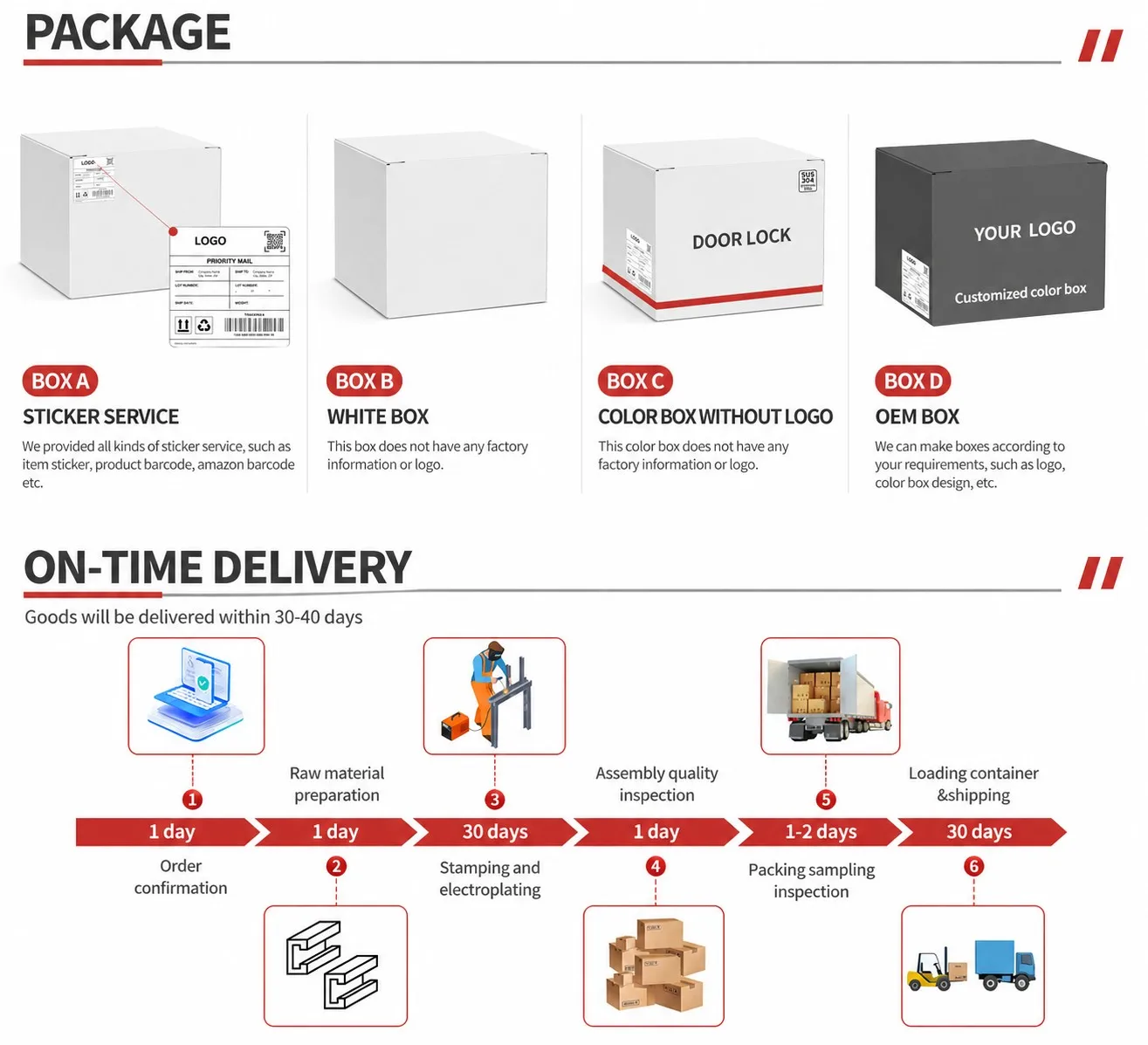



Send the model number K4245 with the number of pairs, the panel thickness, the recess dimensions and the destination port, and ask for the dimension drawing with the quotation, because the figures printed on these frames are artwork rather than a drawing. Samples are available before a production order so the two halves can be pressed into offcuts and cycled, which is the fastest way for both sides to agree that the cover sits level and that the joint releases without force. The drawing, the packing list and whatever test documentation we hold for K4245 are issued on request, and delivery and payment terms are agreed order by order on the proforma rather than assumed from a previous order.


Comprehensive score