


Aircraft Base Hydraulic Cup Hinge Soft Close Alloy F850FH
F850FH Aircraft Base Cup Hinge, Hydraulic Soft Close, Alloy Tail
Wing-shaped clip-on mounting plate · hydraulic soft close · concealed cup hinge · for kitchen, wardrobe and contract furniture
Product Overview

F850FH is a concealed cabinet hinge built around what our workshop calls an aircraft base: a clip-on mounting plate whose two fixing wings spread out to either side of the hinge rather than running as a single narrow strip. The hinge itself is a hydraulic cup hinge, so the soft close is inside the arm and the door is pulled and metered through the last part of its travel instead of dropping shut. The tail on this hinge is an alloy part, which puts more material around the fixing bosses in the door than a thin stamped strip does.
Three things decide whether a hinge like this is right for a job, and none of them is the brand on the carton: what the door is made of, how the plate is fixed to the carcase, and how many hinges are put on the door. A soft close hinge that is correctly chosen will feel solid and quiet for years. The same hinge, chosen for a door it was never meant to carry, will be blamed for problems that belong to the door or the setting-out. Everything below is written so that the pairing can be checked before an order is placed rather than after a site complaint.
What The Aircraft Base Actually Does

The photograph above shows the hinge and the plate as two separate parts, which is the clearest way to see what the base is for. The plate carries two round screw holes and two oval slots. The round holes locate the plate; the oval slots are what allow the plate to be nudged after the screw is home, and they are also what the clip jaw of the hinge engages through when the door is pushed on. A narrow single-strip plate gives the fitter almost no room to correct a setting-out error. The wing-shaped plate on this hinge gives room in two directions and spreads the holding load across a wider area of the carcase side.
That wider footprint is the practical reason a project will specify an aircraft base hinge instead of a standard plate hinge. Where the carcase material is chipboard or a thin side panel, a wide plate with four fixings holds better than a narrow plate with two, and a hinge carried on four fixings does not creep out of alignment when the door is opened repeatedly. Where a carcase has already been drilled for a different plate, an aircraft base hinge does not automatically fit that hole pattern, so the plate drilling should be confirmed against your carcase drawing before the hinge is ordered, not on the assembly line.
What You Get On This Hinge
- Hydraulic soft close inside the hinge arm. The damper is part of the hinge, so there is no separate closer to order, no loose part to lose during assembly, and nothing to retrofit if the customer says the door slams. The damped element is visible in the arm channel so the soft close version can be confirmed on receipt.
- Wing-shaped clip-on plate. The hinge clips onto the base and the door lifts off again without a screwdriver, which matters on site: doors come off for painting, for transport and for adjustment, and a clip-on hinge turns each of those into seconds.
- Alloy tail with moulded fixing bosses. This is the door side of the hinge. Because the bosses are part of a cast alloy tail rather than a thin folded strip, the screws bite into more material, which is what protects the fixing in chipboard and MDF doors.
- Adjustment at the hinge. The arm carries the adjustment screws, so door alignment in three directions is done with a driver after the carcase is standing, not by packing or re-drilling during manufacture.
- Concealed mounting. The hinge sits in a drilled cup and disappears when the door is closed, which keeps the front face clean and is the arrangement most CNC drilling set-ups already produce.
Technical Reference For This Hinge
We do not publish numbers we cannot show you on the hinge itself. What follows is how each item is handled for this hinge; every dimension, material and cycle figure is confirmed against the drawing and the test sheet issued with the quotation.
| Item | How it is stated for this hinge | Why we state it this way |
|---|---|---|
| Hinge type | Concealed cup hinge, clip-on on a wing shaped aircraft base | The base type decides your carcase drilling, so it belongs on the first line of the hinge drawing. |
| Closing action | Hydraulic soft close built into the hinge arm | Confirms there is no separate closer accessory to order with the hinge. |
| Tail | Alloy tail with moulded fixing bosses | This is what the buyer is paying for versus a steel strip tail: screw holding in the door material. |
| Plate fixings | Two round locating holes plus two oval adjustment slots | The slots are what let a fitter correct a setting-out error without re-drilling. |
| Cup diameter and depth | Per the hinge drawing issued with the quotation | Drilling is taken from the drawing, never from a catalogue average, because a wrong cup ruins a door. |
| Overlay and door gap | Confirmed against your door and carcase drawing | Overlay is a hinge plus plate result; we confirm the pair rather than the hinge alone. |
| Finish | Plated steel arm and clip, bright alloy tail and base | Interior furniture finish; not a marine or hosed-down duty finish. |
| Unit weight | Bench spot check of one hinge from this run read 99.1 g on the packing scale; the packing list carries the batch figure | A single reading is a spot check, not a specification, so it is published as a spot check and the batch figure is confirmed with the order. |
| Tested cycles | From the cycle test sheet for the current hinge batch | A figure without a sheet number behind it is marketing rather than a specification. |
| Door weight limit | Depends on hinge count per door; worked out with your door size and material | Any hinge load figure quoted without the hinge count is meaningless. |
Fitting This Hinge
- Drill the cup in the door to the depth on the hinge drawing, and blow the swarf out. A hinge sitting proud of a cup full of chips will never align, and the arm will be loaded sideways for the life of the furniture.
- Seat the hinge and drive the door screws by hand until the hinge can still be nudged. Do not run a hinge screw home at full torque before the door is hung.
- Fix the aircraft base to the carcase side using both oval slots, keeping the plate square to the carcase edge and to the drawing dimension. A plate fitted crooked cannot be fully corrected at the hinge.
- Lift the door into position and push each hinge onto its base until it clips. You should feel and hear the clip engage on every hinge; a hinge resting on a base without clipping will drop the door in transit.
- Set the door: adjust side-to-side and depth at the hinge, check that the gap is even along the full height, then tighten the fixings. Test the soft close last, because a hinge wound too tight against the carcase can lose the final degrees of the pull-in.
Two fitting faults account for most of what comes back to us about a hinge of this kind. The first is a door that does not close fully, which is nearly always a hinge set too deep or a base set out of position rather than a failed damper. The second is a hinge that will not clip on or that drops off the base, which is a plate and hinge mismatch. Both are pairing and setting-out issues, and neither is solved by replacing the hinge.
How Many Hinges A Door Needs
Hinge count is a load and sag question and it is the one number on a hinge order that should never be left to habit. Every hinge added to a door shares the weight and reduces the leverage the top fixing has to carry, so hinge count is what protects the door and its screws rather than the hinge itself.
As a way of thinking rather than a rule of thumb: a light door on a normal carcase takes the standard pair. As the door gets taller, a middle hinge stops being optional, because without it the door pivots about a long unsupported line and the fixings at each end take the whole leverage. As the door gets heavier, hinge count is what keeps the load on each screw inside what your particular door material can hold. Solid timber fronts, very tall doors, glass-fronted doors and doors with heavy integrated handles are the four cases where the hinge count should be agreed with us rather than assumed, and we will state hinges per door explicitly on the packing list so the assembly line is not deciding it themselves.
What We Check Before A Hinge Order Leaves

The photograph above is a hinge on the packing-bench scale, and the visible reading of 99.1 g is a spot check on one hinge from this run, published exactly as it was measured. Weighing a sample of hinge sets out of a batch is the fastest way to catch a short supply, a missing mounting plate, or a component that has quietly lost material somewhere. A hinge that comes in away from the approved sample weight has usually changed physically, and that is far better found in the factory than inside a customer claim.
Around that check the routine on a hinge order is deliberately boring: hinge count against the packing list, base type against the order, clip engagement tested by hand on a sample, plating and carton condition on a sample from each pallet, and carton marks matching the list. It is not an elaborate process, but it catches the failures buyers actually report, which are nearly always a wrong quantity or a wrong pairing rather than a broken hinge.
Where This Hinge Belongs And Where It Does Not
An alloy tail hinge with a wide clip-on base is a good choice for interior furniture in dry and moderately humid conditions: kitchens that are not washed down, wardrobes, vanity units in normal use, office and retail joinery, and contract furniture expected to be opened thousands of times a day. The wide base makes it the better option of the two wherever the carcase side is chipboard or a thin panel, because four fixings in a wide plate hold better than two in a narrow one.
It is the wrong choice for a marine locker, a hosing-down area, a food processing room or an unventilated external cupboard. Where moisture stands at the contact between an alloy part and a plated steel part, corrosion can start at that interface rather than evenly across the surface. That is not a defect in the hinge; it is the expected behaviour of a combination designed for indoor furniture, and the correct answer for wet duty is usually a different hinge rather than a better version of this one. Declare wet duty at the enquiry stage and we will quote the hinge that suits it.
Where This Hinge Sits In The Range
F850FH is the aircraft-base, alloy-tail member of the hydraulic cup hinge family we supply. Alongside it are the standard narrow-plate versions, the fixed and bent-cup variants, the steel-tail versions and the same hinge geometry without damping. The difference between one hinge and the next in this family is rarely visible in a photograph, which is exactly why buyers who specify from a picture end up with a hinge that does not match the drawing.
If you are weighing this hinge against another model on our site, three questions settle it: what the tail is made of, which base the hinge clips onto, and whether the closing action is hydraulic soft close or free swing. Send both model codes with the enquiry and we will confirm which hinge your drilling and your overlay actually suit, rather than letting you find the difference on a production run.
Who Makes This Hinge
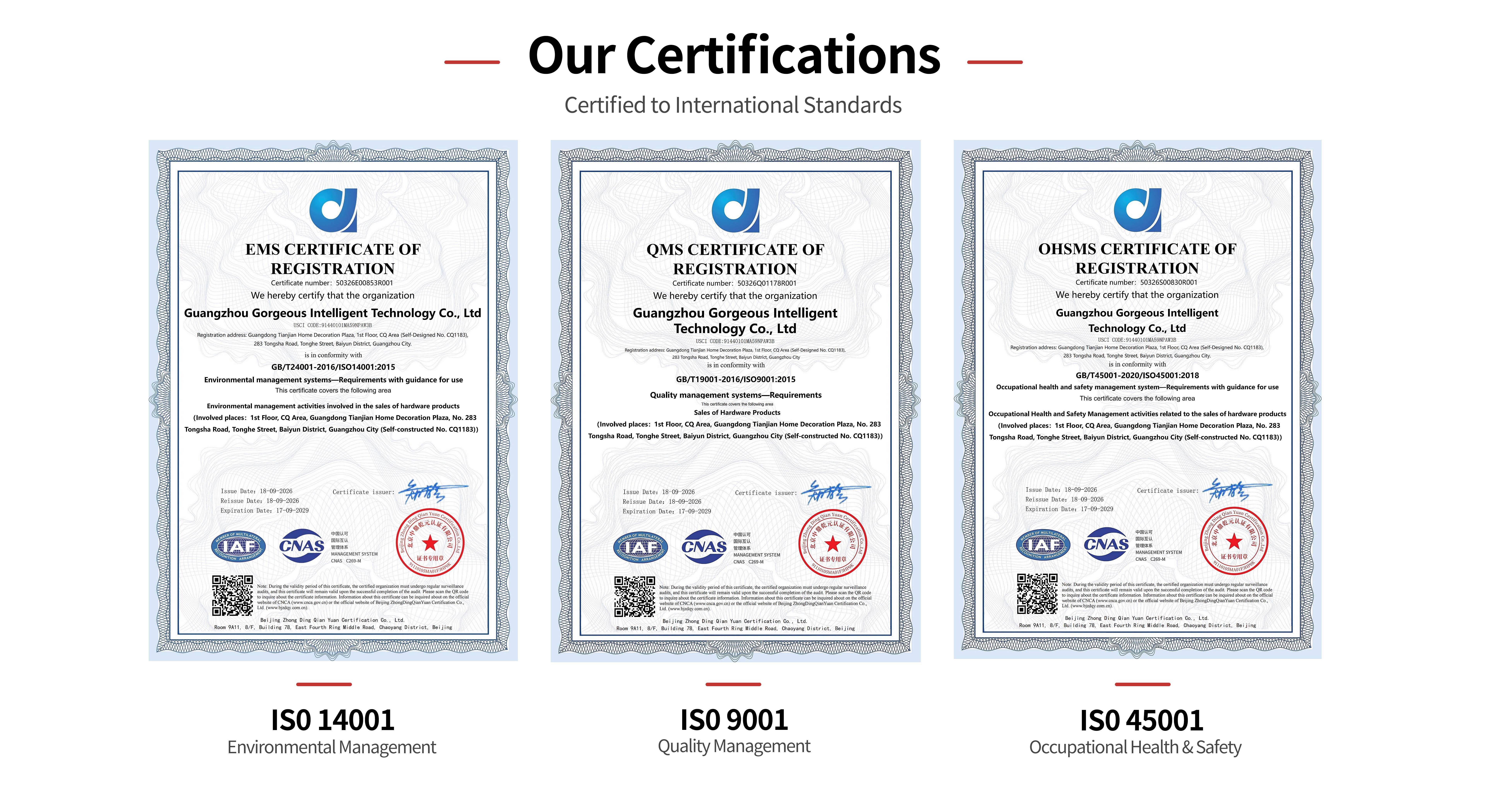
This hinge is produced for Guangzhou Gorgeous Intelligent Technology Co., Ltd., a furniture and architectural hardware supplier whose range covers hinges, slides, handles, stays, legs, castors and the fitting sets that go around them. Cabinet hinges are one of our highest-volume lines, which means the arm, the alloy tail and the aircraft base for this hinge are sourced and assembled in a quantity that keeps the hinge price stable across reorders rather than repriced on every container.
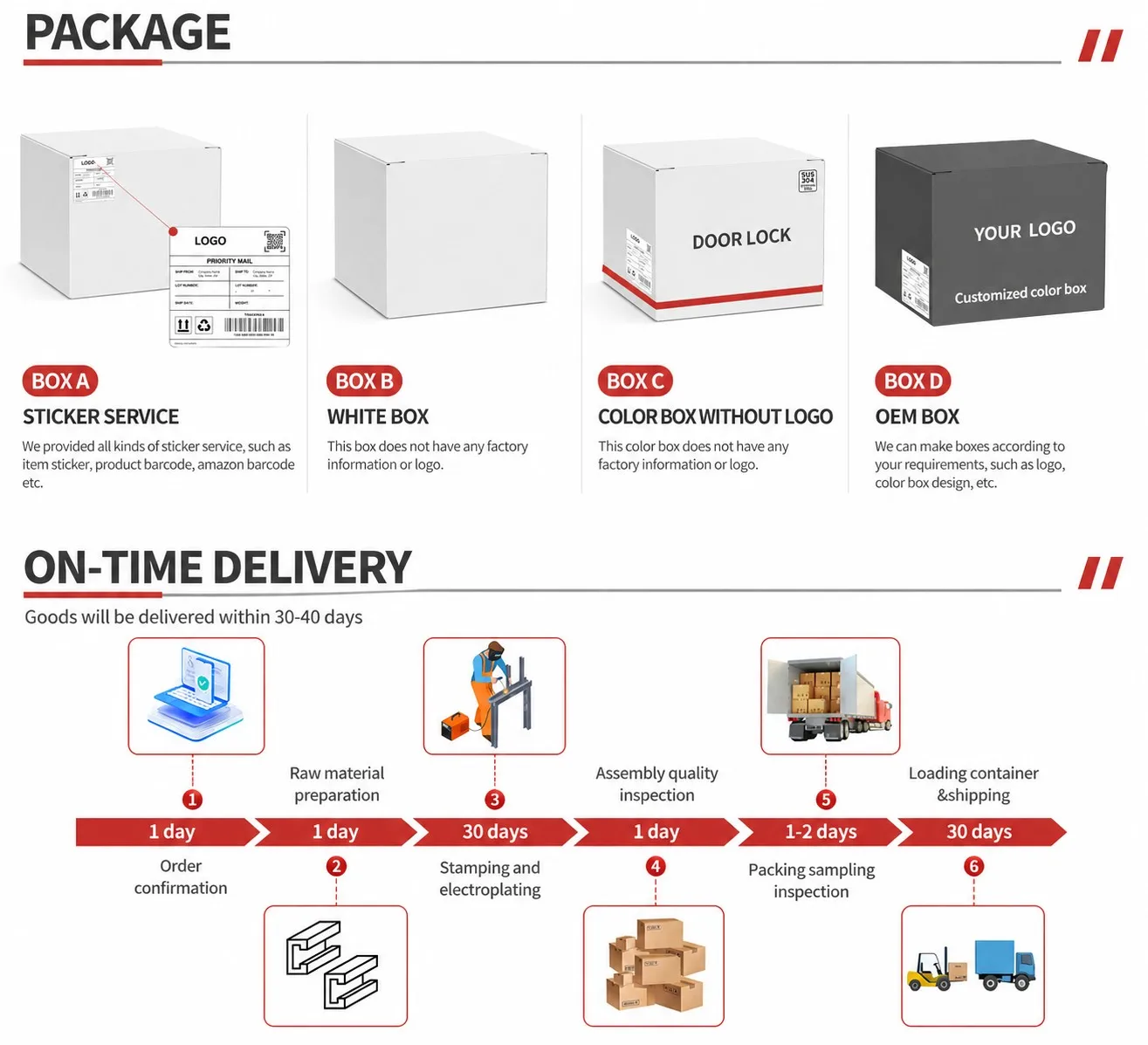
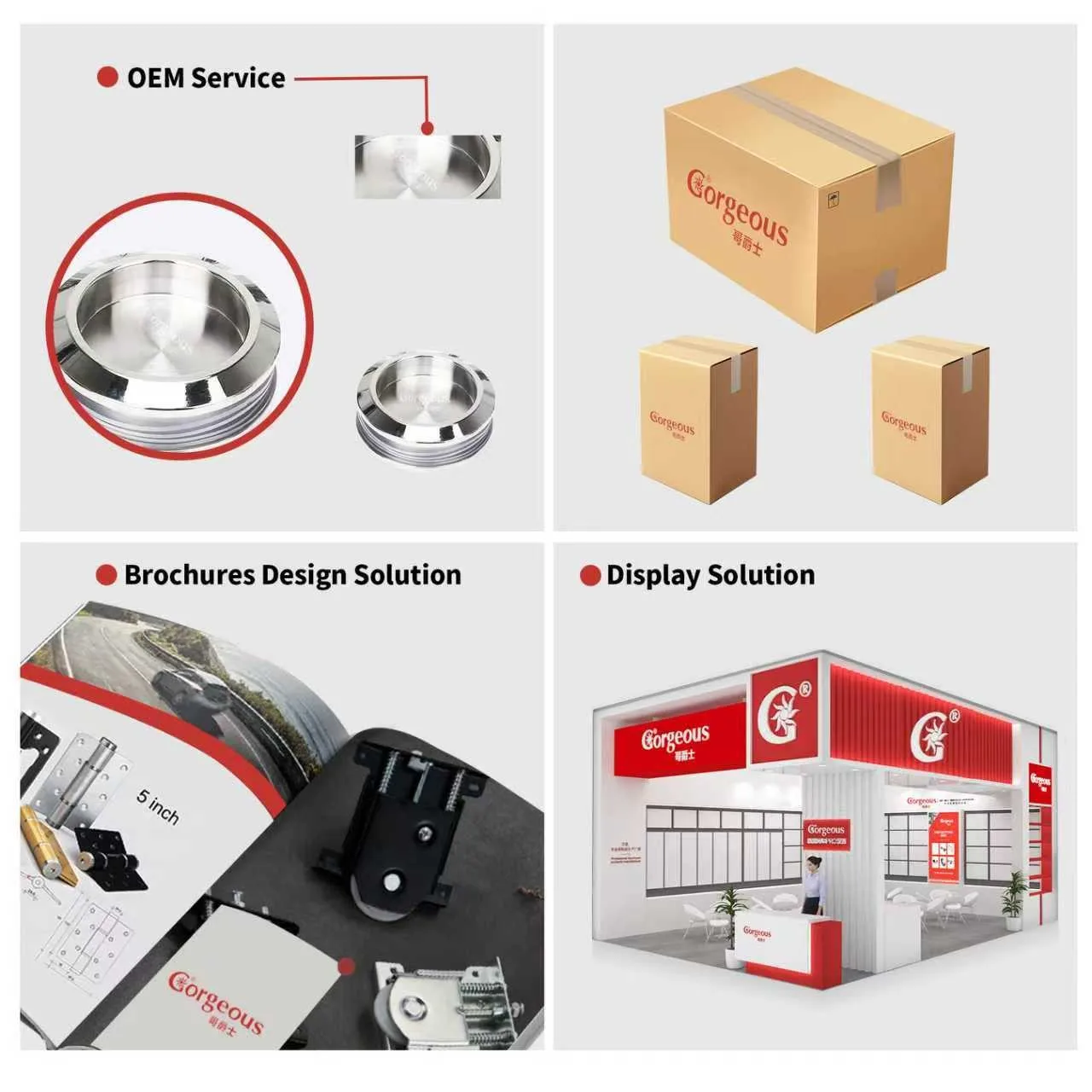
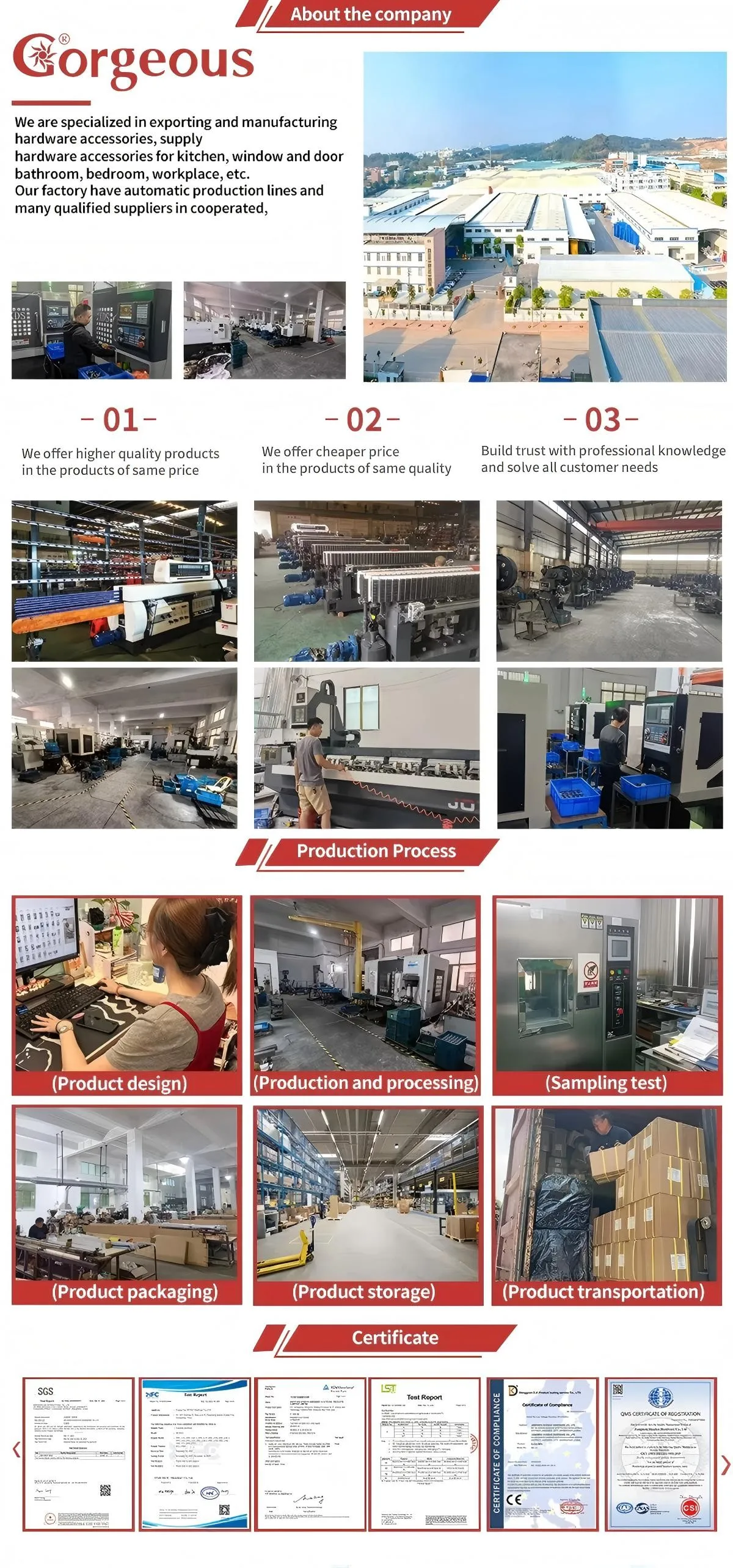

Because we supply a full furniture-fitting range rather than a single hinge, buyers normally consolidate more than one line into a container with us. If you are ordering slides, handles or legs alongside this hinge, say so at the enquiry stage; the packing and the paperwork are simpler when the hinge order is planned as part of the shipment instead of added to it afterwards.
Common Hinge Faults And What They Actually Mean
- Door will not close the last few millimetres. Almost always the hinge depth or the base position, occasionally an obstruction at the carcase. Move the hinge in the cup before condemning the damper, because a soft close hinge that is being fought by the setting-out will feel exactly like a failed damper.
- Soft close feels strong on one door and weak on the next. Check that the same hinge is fitted to both doors and that the door weights match. A hinge is not sensitive enough to explain a door-to-door difference within one batch.
- Screw will not hold in the door. This is a door material issue rather than a hinge issue. Low-density core and over-torqued driving both strip cup screws, and the fix is the screw, the material or the hinge count, not a different hinge brand.
- Hinge drops off the base. Not clipped, or the base and hinge are not a matched pair. Confirm the base part number against the hinge before anything is replaced.
- Base holes do not line up with the carcase. An aircraft base covers a wider area than a narrow plate, so a hole pattern drilled for a strip plate will not always suit it. Check the base drilling against your carcase drawing when switching hinge types.
- Dark staining around the fixing bosses after months in service. On an alloy tail in a damp cupboard this is normally corrosion at the dissimilar-metal contact, which is a duty specification issue and the reason this hinge is not offered for marine or hosed-down use.
Questions Buyers Ask About This Hinge
What is an aircraft base? It is the wing-shaped clip-on mounting plate shown in the photographs: two wings spreading either side of the hinge, carrying two round locating holes and two oval adjustment slots. It is a wider plate than a standard strip base, so it holds better in chipboard sides and gives the fitter room to correct the setting-out.
Can I order this hinge on a different base? Yes, and it is the most common change made to a hinge order. Tell us the base you use and the hinge will be paired and packed with it, because a hinge quoted without the right base is an incomplete price.
Is the alloy tail weaker than a steel tail? It is a different design rather than a weaker one. The cast tail puts more material around the fixing bosses, which helps holding power in door material, while a thin steel tail behaves differently under some bending loads. Choose by application rather than by assumption.
Can I get this hinge without soft close? Yes, the same family includes non-damped versions, and where a door must swing freely that hinge is the better choice.
Do you supply samples? Yes. Samples of a hinge should always be fitted into your own door material before you commit, because that is the only way to test screw holding in your substrate and clip engagement on your carcase drilling.
What is the lead time? It depends on the quantity of hinges in the order and on whether the bases have to be assembled for you. State your target on-board date in the enquiry and we will confirm the hinge schedule against it rather than quoting a generic figure.
Sign-Off Checklist Before You Order This Hinge
- Door material and thickness confirmed against the screw holding requirement of the alloy tail.
- Cup diameter and depth on your drilling sheet match the hinge drawing.
- Carcase hole pattern confirmed for the wing shaped aircraft base rather than a strip plate.
- Overlay and door gap confirmed for this hinge with the base being ordered.
- Hinge count per door agreed and printed on the packing list.
- Closing action confirmed as hydraulic soft close, not free swing.
- Duty confirmed as interior furniture, not marine or hosed-down service.
- Sample hinge fitted into your own door stock and signed off.
Ordering
Send the model code F850FH with your door material, door size, hinge count per door, base type and target quantity, and the quotation will come back with the hinge and base combination, the packing and the schedule for that quantity. Where a different hinge suits your drawing better, we will say so on the quotation rather than letting a production line discover it. For projects, sample hinges of this model can be issued first so the fixing behaviour is confirmed in your own door material before the hinge order is placed.


Comprehensive score