


Detachable Hydraulic Cup Hinge Soft Close Clip On F826H
F826H Detachable Hydraulic Cabinet Hinge, Clip On Plate, Visible Damper Cartridge
Soft close cup hinge · Detachable arm on a screwed plate · Damper cartridge visible in the cup · Factory direct
Product Overview

TheF826H hinge is a concealed hydraulic cup hinge built to be taken apart without tools: the arm that carries the door releases from the screwed mounting plate, and the damper that closes it sits as its own cartridge inside the cup where it can be seen. Both choices are visible in the photographs on this page rather than being written into a specification sheet, which is the point of photographing a hinge from the back as well as the front.
Two parts of this hinge do the work and they do different jobs. The plate stays on the cabinet and keeps the screws; the arm stays in the door and keeps the hinge. Between them is a clip, and that clip is the difference between a door that comes off in three seconds and a door that needs a driver, a steady hand and someone to catch it.
Closing is damped rather than dropped. A sealed cartridge inside the cup meters the last part of the swing, so the door arrives under control. Because the cartridge is a component rather than a treatment applied to the hinge, its behaviour is consistent from the first cycle to the last, and a batch can be checked by hand instead of by a test rig.
The hinge is made for the same doors as the rest of this family: kitchen and bathroom cabinets, wardrobes, vanities, office and retail joinery. What it is chosen for in particular is the combination of a door that must be removable in service and a closing action that must not be audible.
What The Visible Damper Cartridge Changes
In most soft close hinges the damping is buried: a piston in the arm, a piston in the cup, or a separate dashpot clipped onto the plate. On this hinge the cartridge stands out of the cup and can be seen in the photographs as the brass coloured cylinder. That is a construction decision with three consequences for a buyer.
The first is inspection. A buyer who receives a carton of hinges and wants to confirm that they are the damped version rather than the plain one does not have to cycle the door or cut a hinge open. The cartridge is visible on the bench, which also means that a mixed shipment is visible on the bench, and a quality agreement can be written around something a person can check in a warehouse.
The second is consistency of the closing arc. A cartridge metered as a unit behaves the same way in every hinge of the batch, instead of depending on how much resistance a filled arm happens to have. Where a project tests a sample and then judges the production delivery by the same feel, a metered cartridge is what makes that test reproducible.
The third is what happens when a door has to be replaced. A hinge whose damper is a separate part of the assembly is a hinge whose behaviour can be assessed on its own: if a returned hinge closes too fast, the question is whether the cartridge has been damaged, and that question can be answered. Where damping is integral to a sealed arm, the only answer is to replace the hinge.
The visible cartridge also fixes what the hinge is not. It is not a hinge that can be lubricated to change its feel, and the cartridge is not a part the end user should attempt to work on. It is set at the factory, and the only field adjustment on this hinge is at the plate.

The Detachable Joint
A detachable hinge is a hinge with a designed separation line. The plate is screwed to the cabinet side and stays there; the arm is screwed into the bored door and stays there; the two are joined by a clip that holds position and releases on demand. The photographs show the hinge in both states, assembled and separated, so the joint can be seen rather than imagined.
The advantage is realised after handover rather than at installation. Doors get removed: to clean behind a unit, to let an appliance through a narrow kitchen, to replace a shelf, to take a damaged door away for repair. If the only way to do that is to undo hinge screws, the door stays on and the cabinet behind it stays uncleaned, or the screws are lost the first time.
The cost is a joint in the load path, and a hinge family that is honest about it will say what the joint does and does not carry. On this hinge the plate carries the screws and the screws carry the door; the clip locates the arm and holds it against lifting. That is why the plate is the part to inspect on a returned sample, and why refitting a door has to be a positive push rather than a drop into place.
There is a fitting consequence too. A clipped door is set at the plate, so a fitter who has grown used to packing behind a fixed hinge has to change habit: on this hinge the adjustment is the slotted plate holes, and nothing else.
How The Hinge Behaves In Service
The hinge swings freely through most of its travel and the cartridge takes over close to the shut position. In a showroom this reads as a door that seems reluctant to close on its own, because a metered force is competing with a light door and a cold room; on a full height panel in a warm kitchen the same hinge shuts with authority. Judge a sample on whether it brings the door under control, not on how quickly it does so.
Where a door has to be pushed through the last degrees, the hinge is being worked against the cabinet rather than against air, and the plate needs to be reset. Where a door slams, either the cartridge has been damaged in fitting or the door is so heavy that this hinge is being asked to damp more mass than it meters for, which is a question of hinge count and is answered below.
The cartridge and the arm are not serviceable parts, and oil or silicone spray is the fastest way to change a working hinge into a failed one: the spray alters the metering first and attacks the seal after. A hinge that has been lubricated to make it quieter should be replaced rather than adjusted.
Key Features
- Detachable arm · the door lifts off its plate without tools and refits by pressure, which is the whole reason this hinge is specified over the fixed member of the family.
- Visible damper cartridge · the soft close unit stands out of the cup, so a buyer can confirm the damped version of this hinge on the bench instead of by cycling a door.
- Sealed, metered closing · the hinge acts on the closing arc only, so the door opens freely and arrives under control; the cartridge is set at the factory and is not adjustable.
- Concealed cup fixing · the hinge disappears when the door is shut and bores into the door as a normal cup hinge, so an existing drilling setup carries this model unchanged.
- Round and slotted plate holes · the door is pulled into line at the plate after the hinge is screwed down, and no packing goes behind this hinge.
- Pressed steel, plated finish · interior furniture construction, supplied assembled, with the plate and arm clipped together or packed apart by arrangement.
- Family interchangeability · the arm and plate of this hinge sit within the same door drilling as the fixed and padded members, so one shipment can cover the whole door schedule of a project.
Technical Reference
| Item | Reference for the F826H hinge |
| Model | F826H |
| Hinge type | Concealed hydraulic cup hinge, detachable |
| Joint | Clip on arm to screwed plate, tool free release |
| Closing action | Sealed damper cartridge acting on the closing arc |
| Damper position | In the cup, visible externally |
| Plate | Mounting plate with round and slotted fixing holes |
| Material and finish | Pressed steel, plated finish for interior furniture |
| Door removal | At the clip, no tools; refit by pressing home |
| Adjustment | At the plate holes only; no packing behind the hinge |
| Supplied as | Assembled hinge, or arm and plate packed apart on request |
| Dimensions and drilling | Drawing and test sheet issued with the quotation |
| Packing and marking | Standard export packing, OEM options on request |
Hinge geometry is a set of interdependent dimensions, and a buyer checking a cabinet drawing needs the drawing rather than a rounded summary of it typed into a listing page. The drilling sheet, the measured sheet and the packing list format for this hinge are issued with the quotation on request.
Fitting And Adjusting This Hinge
The door is bored as for any cup hinge, so a shop already running cup work changes nothing in its setup. The arm goes into the door, the plate goes on the cabinet side, and the two are brought together until the clip engages. Because the plate is the part that carries the screws, levelling the plate is the whole of the fitting job on this hinge.
Alignment after that is done at the plate. The round holes locate it and the slotted holes let it be moved, and the door is drawn into line with the plate slack before the screws are finally tightened. Packing behind a hinge is not an adjustment on this model: it lifts the arm off the clip line, and a door packed out of line will be refitted out of line for the rest of its life.
Two checks are worth making before a batch leaves the bench. Press the door onto the hinge plate and confirm that it takes a positive push rather than dropping home, and lift the door off and refit it three times to confirm that the clip still holds without play. A hinge that passes both on a sample door will pass on three hundred cabinets; a hinge that needs to be coaxed is a hinge whose plate was set out of square.
Finally, the cartridge is not a fitter's adjustment point. It is metered at the factory, and the commonest cause of a damaged cartridge on a new installation is a door being forced onto its plate at an angle rather than pressed straight home.
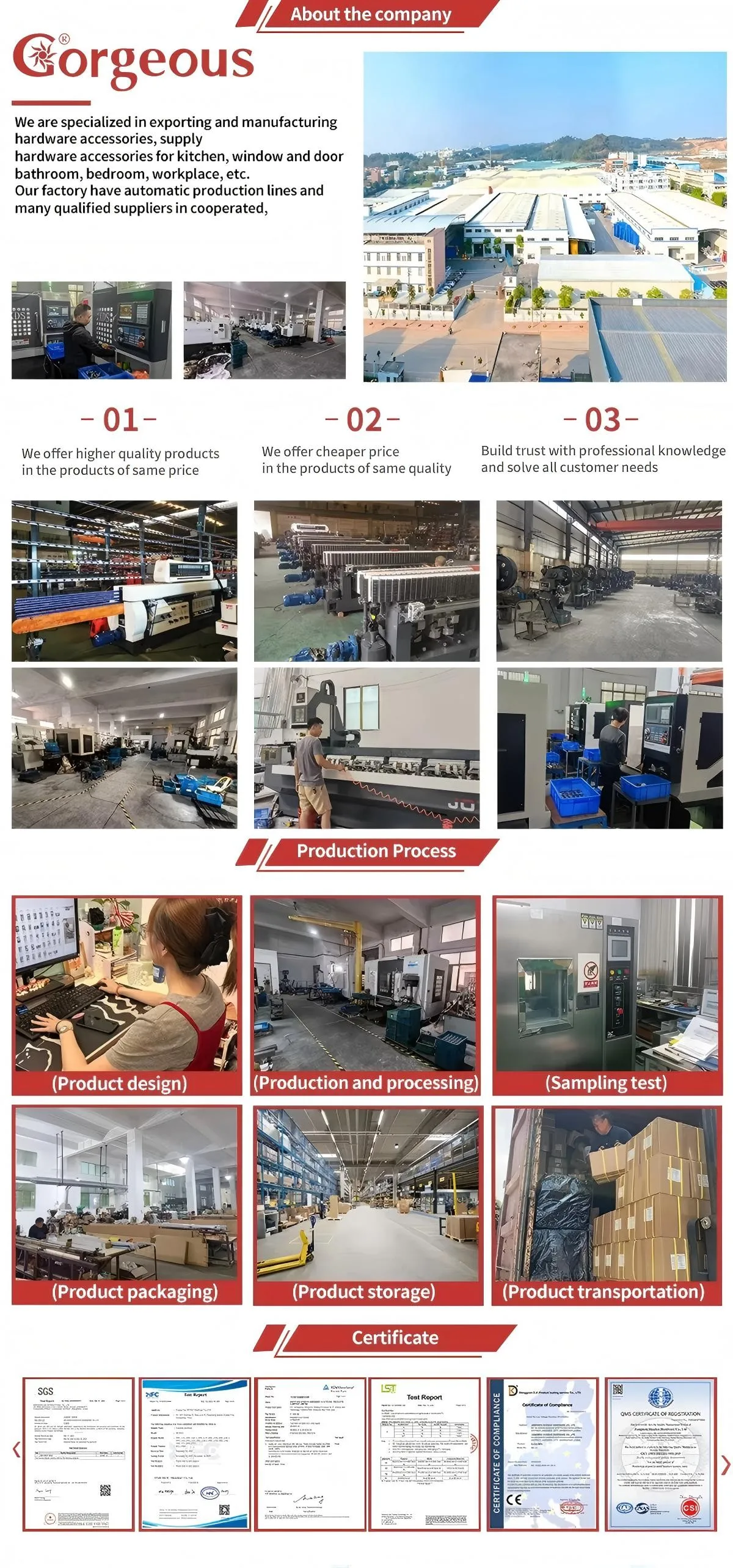
Hinge arms, cups and plates are made in our own shop and the damper cartridges are fitted on the line, which is the only way to guarantee that a batch of this hinge is one hinge rather than a mixture. Cartridge presence is checked as a visual and hand test at the end of assembly, precisely because it is visible.
Where Buyers Specify The F826H
Kitchen and bathroom wall units are the core application, and specifically the runs where the door will have to come off during the life of the furniture: above a sink, above a waste compartment, above an appliance that needs to be pulled forward. On those doors a fixed hinge turns a five second job into a screw, a ladder and a risk of dropping the door.
Rental and build to rent schemes specify this hinge for the same reason in a commercial form. Doors are removed at turnover, and every removal that needs tools is either not done or done badly, with the hinge paying for it. A detachable hinge with a damped close also survives the way rental doors are actually closed, which is not the way a showroom door is closed.
Vanities and bathroom joinery are a case of their own. A door in front of a piped cabinet is a door that a plumber will remove, and the hinge that gets removed and refitted without a driver is the hinge that still works afterwards. The damper matters just as much in that room, because a light door in a hard tiled box is the noisiest door in a house.
Retail fit out, reception joinery, hotel casework and office storage round out the demand. In all of them the hinge is chosen for the same pair of reasons: doors come off without tools, and doors close without noise.
Common Faults And What Inspection Shows
Most complaints about a hinge of this type are complaints about a door, and a returned hinge says which. A hinge returned from a door that sagged shows wear at one plate hole and none at the others, which is a fixing line problem in the panel rather than a hinge fault. A hinge returned because the door no longer closes shows either a scored or weeping cartridge, which is visible, or a plate out of square, which is measurable against the arm.
On a detachable hinge two patterns are specific to the clip. Doors pressed onto an out of line plate burnish the outside edge of the clip, and the hinge will still hold while being steered wrong every time it is refitted. Doors dropped on without being pushed home load the arm through the wrong shoulder, and that shows as a bright bearing line where metal has been sitting on metal.
Cartridge faults are almost always mechanical or chemical. A cartridge that has been forced sideways during a refit will meter inconsistently; a cartridge that has met solvent or spray will lose its damping and usually show a soft or discoloured seal. Neither is corrected by adjustment, and both are visible on the bench, which is the practical advantage of a hinge whose damper can be seen.
Send back two hinges with a note about the doors they came off and you will get a written report naming which of these patterns the wear corresponds to. That report is how a batch problem gets separated from a fitting problem, and it costs nothing to request.
Ordering, OEM And Quality Control
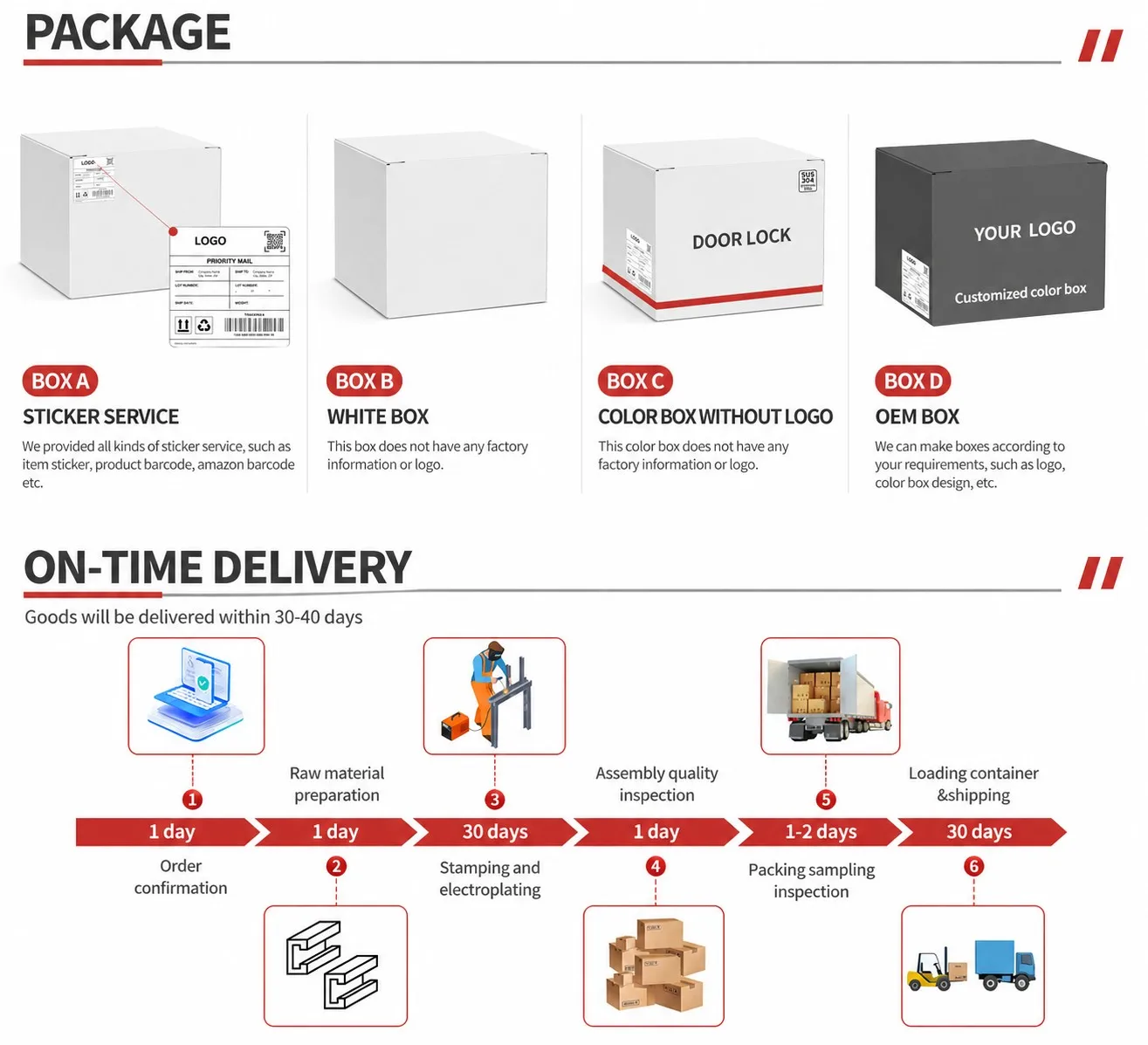
Hinges are packed in inner boxes inside export cartons, and the count per inner and per carton is stated on the packing list issued with the order rather than assumed from a listing page. Buyers who order by the door rather than by the piece should say so at enquiry: we can pack door sets, which are the hinges for one door with their plates matched, and this is common on kitchen work.
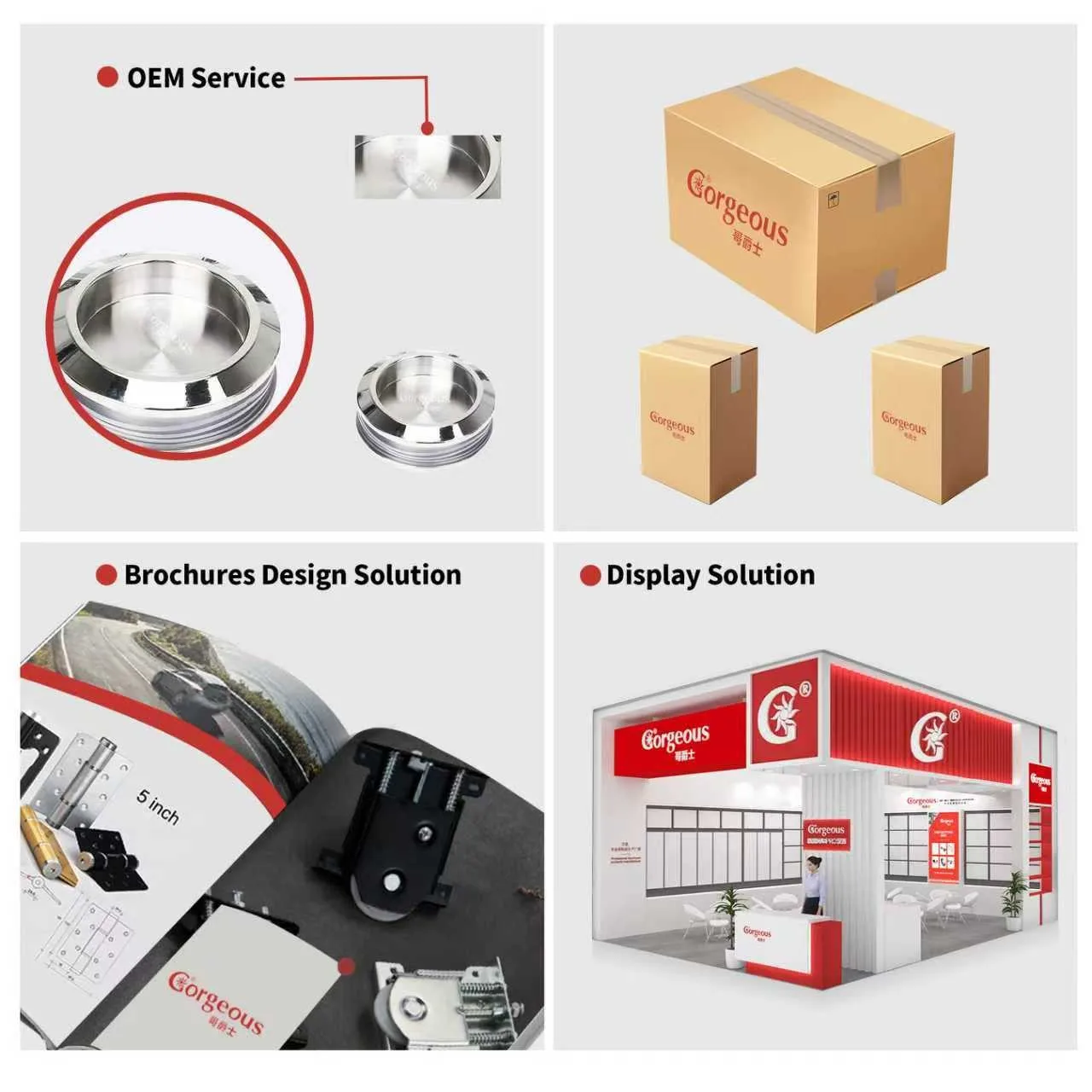
OEM marking on the hinge, the inner box and the carton is normal work, as are custom bagging counts, barcode labels and a printed fitting sheet in the buyer's language. Tooling and lead time for marking are quoted with the price, and no packing arrangement shown elsewhere on this site is a promise about your order.
Quality control runs on the batch. Hinges are checked for bore and centre distance against the drawing, for clip engagement against a gauge, for closing behaviour against a reference cartridge, and for plating to the standard agreed at sample stage. Cartridge presence is a visual check on every hinge at the end of assembly, which is the test that catches the one fault that would otherwise reach a container: a soft close hinge packed as a plain one.
Test documentation for the range is held centrally and the relevant reports are sent on request rather than reproduced here. Tender work that names a specific test standard should name it in the enquiry, so we can confirm before sampling which of our reports cover it.

Choosing Between The Family Members
Start with the joint. If the door will never be removed by the people who use the furniture, the fixed member of this family is cheaper, has one fewer wearing surface and is the better answer; if it may be removed, this hinge pays for its clip within the first year. This is a decision about the door, not about the hardware budget.
Then decide what you want to be able to see. On this hinge the damper cartridge is external and visible, which is what makes warehouse inspection possible. On the sealed arm members the damping is hidden inside the hinge, which is a legitimate construction but cannot be verified without cycling the hinge.
Then decide about the pad. Where noise and vibration matter, or where the carcase surface is not perfectly true, the padded member of the family puts a rubber layer under the plate. This hinge is not padded; where a project needs both the pad and the visible cartridge we will quote the combination and say plainly which part of it is standard and which is made to order.

Hinge Count Per Door
Count is a function of door height and door weight, and both numbers come from the door rather than from the hinge. Our technical team steps the count up at the point where a door begins to twist under its own mass, not at the point where it becomes heavy to lift, because twisting is what drops a corner.
Tall doors are where projects under count most often. A door well over a metre tall puts a bending load into its fixings that a kitchen wall door never produces, and the third hinge on that door is what stops the top corner sagging. Where a door is both tall and heavy we would rather quote one hinge more and a longer plate than argue about a dropped corner a year later.
Light doors can be over counted as easily. Three hinges on a small, light door means three fixing lines that must be exactly co planar, and a shop that cannot hold that tolerance will produce a door that binds against its cabinet and loads the cartridge on every closing. Send the door dimensions and panel material and the count per door will be stated in writing with the quotation.
What To Check On A Hinge Sample
A hinge sample is only useful if the hinge is tested in a door rather than held in a hand. Screw the hinge plate to an offcut of the panel you actually use, bore a scrap door, fit the hinge and hang it. A hinge judged loose in the palm feels like a different hinge on a real door, because the cartridge, the clip and the plate all respond to door weight.
On that test hinge, check five things. Look at the hinge cup and confirm the hinge cartridge is present and square. Close the hinge slowly and note where the hinge damper takes over; the hinge should swing free until the hinge arm is nearly shut. Press the hinge door onto the hinge plate, then lift it off and refit the hinge three times. Look at the hinge clip for any bright bearing line after those three cycles. Leave the hinge closed overnight and check the hinge door line in the morning.
A hinge that passes those checks on your own panel is the hinge that will behave the same way in three hundred cabinets. If it passes on your panel and fails on ours, the difference is the panel, and we would rather learn that from a sample hinge than from a claim after a container.
Frequently Asked Questions
Is this hinge the padded version? No. This hinge has no rubber pad under its plate; the pad is a feature of the padded member of the family, and the two are quoted separately.
Can the damper cartridge be replaced? It is a metered sealed unit and is treated as factory set. A cartridge that has lost its damping means a hinge to be replaced, not a part to be serviced.
Will the clip work after many refits? Yes, on a door that is refitted straight onto a correctly set plate. The clip wears when doors are steered onto a plate that is out of line.
Can the door be adjusted without removing it? Yes. The plate screws are reachable with the door closed and the slotted holes allow movement while the door hangs. Removal is a separate operation, not a precondition for alignment.
Is the visible cartridge a weakness? It is exposed by design and is checked as an assembly step. What damages it is a door forced on at an angle, which also damages hinges whose dampers are hidden.
Can one shipment mix the family? Yes. Every member shares the same door drilling, so a project can carry the detachable hinge for service doors and the fixed hinge for the rest in one container.
Contact And Quotation
Send the door size, the panel material, the count per door you intend to fit and the destination port, and the F826H hinge will be quoted against that door rather than against a generic cabinet. If the same project needs the fixed, padded or long plate members of this family, list them in the same enquiry and they will be priced as one shipment.
Samples are available before any order decision, and we would rather send a hinge to be tested in your own door than argue about a specification over email. The drilling drawing, the measured sheet and the packing list format follow with the quotation.



Comprehensive score