


Nickel Curved Arch Frog Bridge Cabinet Door Hinge F880
F880 Nickel Curved Arch Frog Bridge Hinge With A Three-Hinge Studio Set And Two Installed Views

This listing is written from the six photographs on this page, and what they show is an exposed curved arch cabinet hinge in bright nickel with a bridge body: each hinge is a curved arch that spans the gap between two octagonal mounting plates, one plate for the door and one for the case, with the fixing holes visible in every frame. Three of the photographs are studio sets of three hinges on white, each from a different angle, and two are installed views of a single hinge on a wooden cabinet corner and on a closed wooden door edge. The hinge stays visible when the door is shut, so this is a frameless exposed bridge hinge rather than a concealed cup hinge.
One point is stated plainly rather than implied: no damper piston and no coil spring are visible in any of the six staged photographs, and the folder did not carry a written specification with the hinge. This page therefore does not call the hinge soft close. The arch span, the plate fixings and the installed position are real in the sense that they are clearly present in the frames, but the exact overlay, the opening angle and the door load figures come from the drawing, not from these photographs, and a damped closing behaviour, if it is part of the F880 range, will be shown on the drawing and confirmed on the sample before a single door is cut.
What The Photographs In This Listing Do And Do Not Prove
Every structural claim on this page can be pointed at in one of the six frames: the curved arch body, the two octagonal plates, the fixing holes in each plate, the fan arrangement of three hinges, the installed hinge on the cabinet corner, and the installed hinge on the closed door edge. What no photograph can show is the overlay, the opening angle, the arch span in millimetres, a door load limit or a cycle count, so this page carries none of those numbers. They come from the hinge drawing and the test report, issued on request against the exact hinge you are ordering, because a figure borrowed from a similar hinge is the most expensive kind of typo in a workshop.
The staged set also omits, on purpose, three further photographs of this folder that are re-exports of the same camera positions already kept here, plus a video file that ships in the folder but is not a product still. What remains is six different views of the fitting, and each of the six is used once in the image gallery.
How The Hinge Is Built

The front row of three is the clearest way to read a hinge of this kind: the curved arch bridge body in the middle, an octagonal plate at each end, and the fixing holes in each plate. Three things about this construction are worth a buyer knowing before the drawing arrives. First, the arch is a curved bridge body that spans the gap between the two plates, and the curvature of the arch is what sets how far the door face stands off the case line when the door is closed. Second, the plates are octagonal stamped parts with fixing holes, and the holes are what the fitter aligns to the door edge and the case side. Third, the whole joint is exposed: nothing is sunk into a boring, so the fit tolerance lives in the arch span and the plate position rather than in a cup seat.
- Curved arch bridge body spanning the door-case gap.
- Two octagonal mounting plates, one for the door and one for the case.
- Fixing holes visible in both plates in every studio frame.
- Exposed joint: no cup, no boring, no concealed pocket.
- Bright nickel finish on arch and plates alike.
- Installed views showing the hinge on a cabinet corner and on a closed door edge.
The Arch Span And The Gap It Sits In

The three staggered views are the ones that show the depth of the arch: the same curved bridge body seen at three different angles, with the plates edge on. That curvature is the whole specification of a bridge hinge, because the arch span sets the overlay and the closed gap of the door at the same time. If a workshop orders a bridge arch with a different span than the case line allows, the door either hits the case or leaves a gap the fitter has to chase, and the only clean fix is the correct arch, which is why the span is a drawing figure for this hinge and not a number read off a photograph.
The installed frame on the cabinet corner shows the arch doing exactly that: spanning the corner between the door edge and the case side with the plates screwed to both faces. The second installed frame, on the closed door edge, shows the same hinge in its closed position, which is the position a buyer will actually see every day, and it is the reason the finish and the plate line matter as much as the mechanics.
The Octagonal Plates And Their Fixings
The plates are the two flat halves of the hinge, one fixed to the door edge and one to the case side, and on this fitting they are octagonal stamped parts with fixing holes. Which plate a given order ships with is fixed on the order, and the plate the buyer's case needs is the plate to specify; the drawing shows the plate and its hole centres. A plate that only has round holes gives the fitter less travel to work with than a slotted plate, so a workshop doing a high volume of doors sometimes asks about the slotted option even when the round plate would technically fit, and that choice is one to make against the case construction rather than on this page.
The plate holes carry the fixing screws, and the pilot hole matters as much as on any hinge plate. A plate that has been screwed and unscrewed repeatedly while a fitter chases the line loses grip in chipboard, which shows up later as the plate pulling away from the carcass while the hinge itself is still sound, so the drawing lists the fixing specification we would ship with this plate.
How Many Hinges A Door Needs
Hinge count follows door height and door mass, not preference. A tall door hung on two hinges works the upper fixing into a groove over a season, and the first symptom is never the hinge: it is the screw holes. On a wardrobe or cabinet door of this class the practical rule we work to is two hinges up to a modest height, three above that, and an extra hinge at mid height on a tall or heavy door so the middle of the rail is not carrying the twist. The break points depend on the door and the board, so they are agreed against the drawing rather than assumed on a page.
Where the door is a frameless front over a case with a deep overlay, the bridge hinge carries more of the door than it would on a framed door, and the plate fixings have to be trusted completely. That is the application where a sample first, hang second, is the cheapest possible sequence, because the alternative is a shelf of doors and a pile of plates that do not line up.
Where This Hinge Is The Right Call, And Where It Is Not
A nickel finished exposed bridge hinge with a curved arch and octagonal plates belongs inside furniture: frameless wardrobe and closet doors, kitchen wall and base units, study and hotel casework, and retail joinery that is assembled in a workshop and hung on site. With the door shut the hinge stays visible as part of the design line, which is exactly what an exposed bridge hinge is being bought to do. It is the wrong call for a marine locker, a hosing down area, a food processing room or an unventilated external cabinet in a coastal position: the finish is a decorative interior finish rather than a marine barrier, and bright plating always has pinholes at the arch where salt and chlorine start. For wet or coastal work we quote a stainless hinge instead, even though it costs more per fitting, because a hinge that corrodes through in one season costs more than the hinge ever did.
Specification Summary
| Model | F880 |
| Hinge type | Exposed curved arch frog bridge hinge for frameless wardrobe and cabinet doors |
| Bridge body | Curved arch spanning the door-case gap; span figure from the drawing, not the photographs |
| Mounting plates | Two octagonal stamped plates with fixing holes, one for the door and one for the case |
| Visibility | Exposed: the hinge is visible when the door is shut |
| Closing behaviour | Not claimed: no damper piston or coil spring is visible in the staged photographs; behaviour confirmed from the drawing and sample |
| Finish | Bright nickel |
| Door material | Panel materials that can be fixed to the plates: chipboard, MDF, plywood, solid timber rails |
| Overlay, opening angle and load | From the hinge drawing; not read from photographs |
| Fixing screws | Not supplied as standard unless agreed on the order |
| Sample policy | Samples before a production order so the hinge can be hung in the buyer's own case |
How Each Hinge Batch Is Checked Before Packing
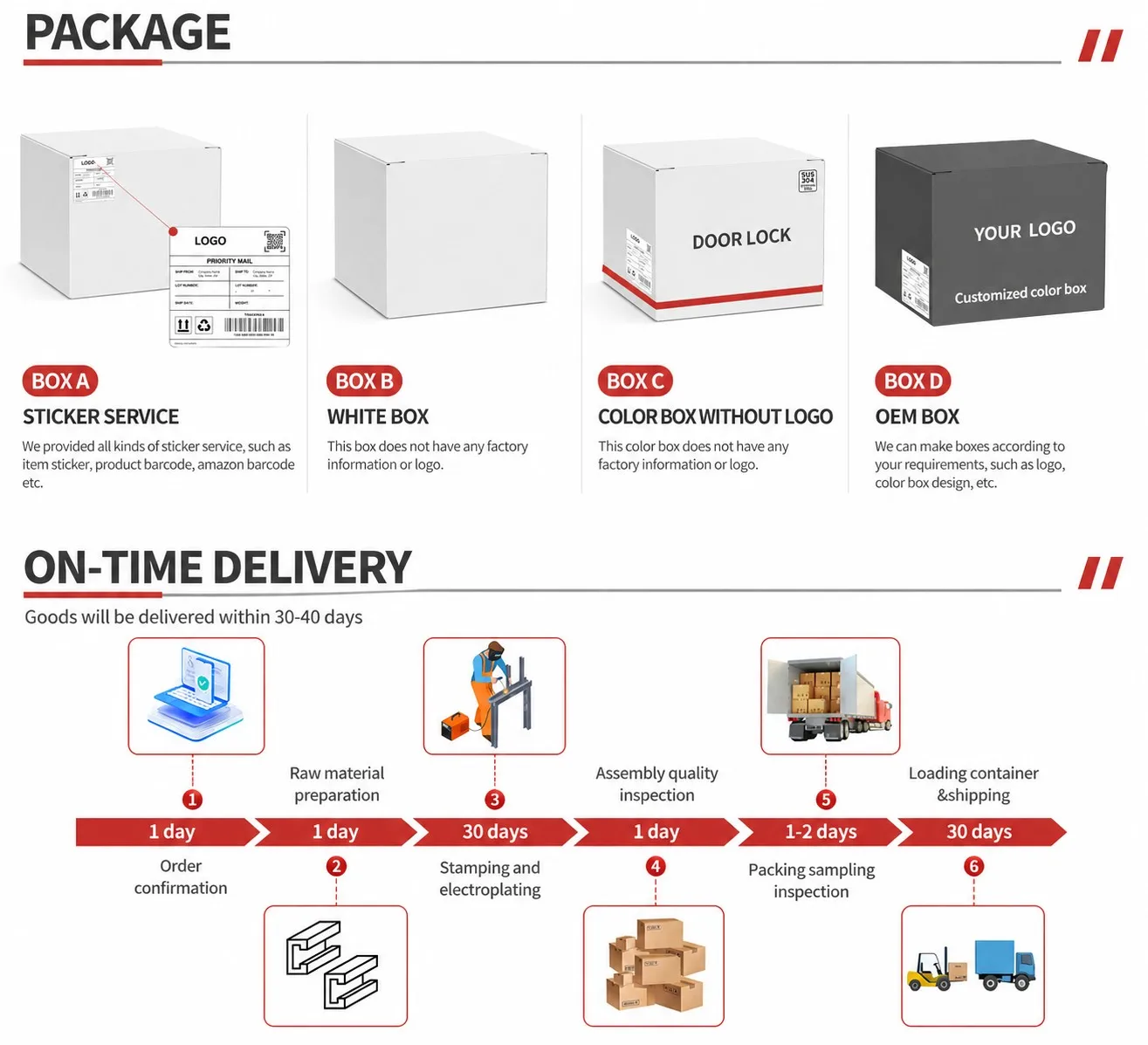
Every hinge batch is sampled on four points before packing. Assembly: the arch, the two plates and every fixing hole are checked to be present, square and unstripped, and the joint is checked to swing rather than bind. Appearance: the nickel surface is checked for passivation marks, handling scratches and any plating that has pulled at the arch radius, which is the part of the fitting that shows first in a lit wardrobe. Function: each sampled hinge is worked through its full swing by hand and the plates are checked to sit flat against their faces, so a twisted plate or a binding arch shows up before the carton closes. Packing: carton quantity, inner bag, marking and the model number on the label are checked against the order rather than the previous job, and the documents a buyer needs at their own customs are issued with the proforma.
Who Supplies This Hinge
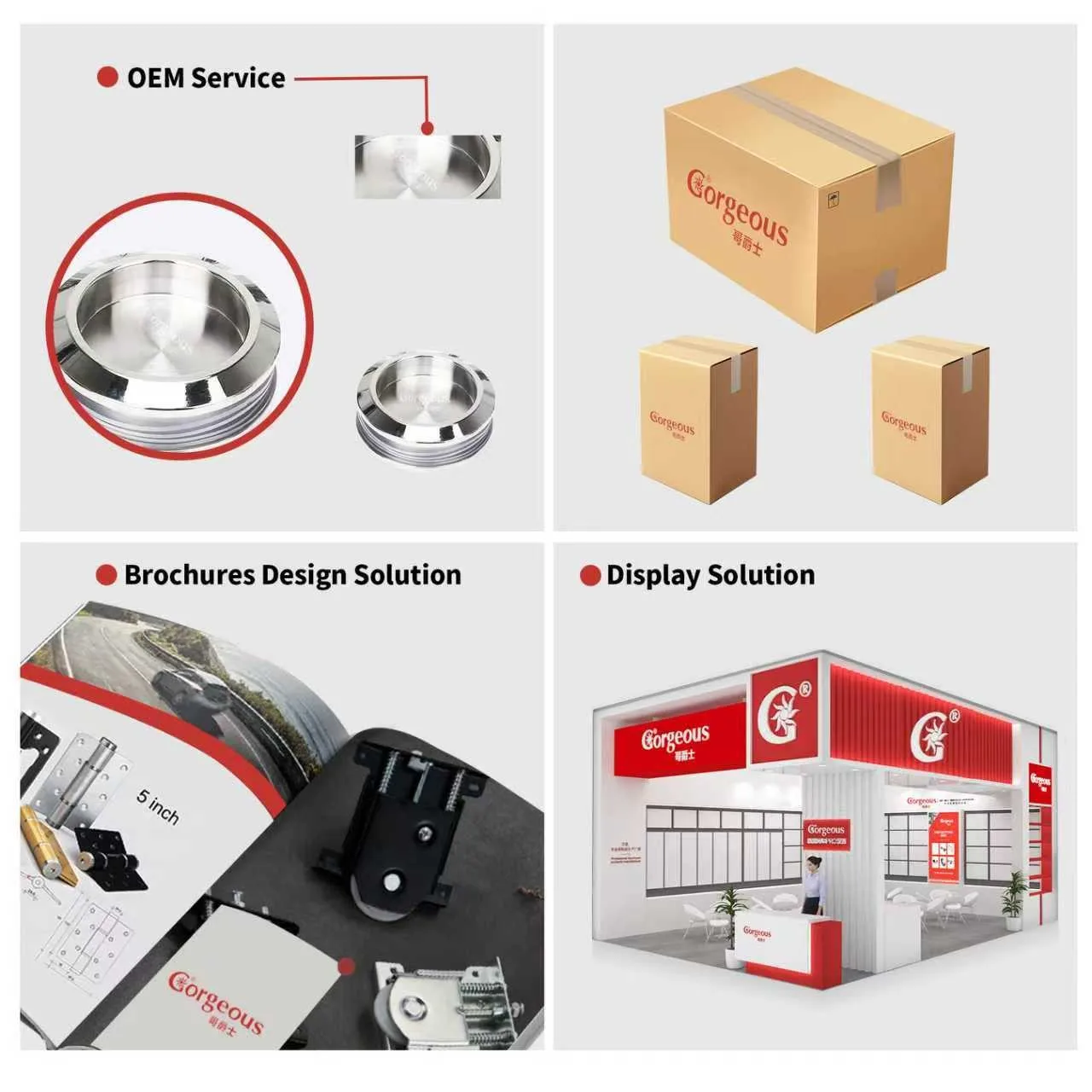
This hinge is supplied by Guangzhou Gorgeous Intelligent Technology Co., Ltd., a furniture and architectural hardware business whose range covers hinges, drawer slides, handles, stays, legs, castors, locks and the fitting sets that go with them. The company works to export orders: quantities, carton marking, barcodes and shipping documents are agreed before production rather than after it, and a buyer who specifies the plate and the screw type on the order gets those things made, because that is the only specification the factory works from.



Terms Worth Agreeing Before Two Hinges Are Compared
- Bridge hinge: a hinge whose body is a curved arch spanning two plates; this page sells a bridge hinge, and the arch on this hinge is the part that sets the gap.
- Frog bridge hinge: the curved arch bridge body shape this family is sold under; the arch is visible in every studio frame.
- Plate: one of the two flat octagonal parts of the hinge; the plate and its holes are part of the hinge specification.
- Overlay: how far a closed door stands off the case line; the arch span sets it, and a drawing shows it for the hinge.
- Exposed hinge: a hinge that stays visible with the door shut; that is the whole reason a hinge of this kind is bought.
- Frameless door: a door without a surrounding frame; the bridge hinge is the typical fitting for it.
- Octagonal plate: the eight-sided stamped plate on this hinge, with its fixing holes shown in the frames.
- Fixing holes: the holes that carry the screws; on this hinge they sit in the two octagonal plates.
- Drawing: the document that turns a hinge photograph into a hinge specification; without it a hinge cannot be hung, and we send it with the quotation.
Common Hinge Faults And What They Actually Mean
A door that drops over time is almost always a fixing problem rather than a hinge problem. The hinge is the strongest part of that joint; the board it is screwed into is not. In chipboard and MDF the holding power depends on the pilot hole and the screw gauge, and a plate that has been screwed and unscrewed repeatedly while a fitter chases the line loses grip, which shows up later as the plate pulling away from the carcass while the hinge itself is still sound.
A door that will not square up no matter how it is screwed is usually a span question: the door is being held at the wrong offset for the arch that was fixed, or the plate is sitting proud of the case face. The answer is the correct arch span for the case, and the plate worked gently to position, not a hinge swapped for one nobody has specified. A hinge that feels loose at the joint after a season is normally carrying a door heavier than the hinge count assumes, and the fix is another hinge rather than a tighter screw.
How This Hinge Sits In Our Range
Within our own hinge range, a buyer choosing a door hinge is usually choosing between the body shape, the plates and the finish, in that order. The body shape sets what the closed door looks like and how the gap is made; the plates set what the door and the case have to be cut for; and the finish sets the design line. This hinge is specified by all three: a curved arch frog bridge body, two octagonal plates with fixing holes, and a bright nickel finish. A buyer comparing it against another hinge should compare the same three, because two hinges can look like the same hinge in a small catalogue image and be different tools at the door edge.
It also sits against the concealed cup hinges we supply, and the honest position is the one on the specification table: the photographs of this hinge do not show a damper, so this listing does not claim one. A buyer who needs soft close behaviour should ask for the damped variant of the family, have it confirmed on the drawing, and take a sample to prove the closing behaviour in their own door before the production order is cut.
Questions Buyers Ask About This Hinge
- Is F880 a soft close hinge? The six staged photographs show no damper piston and no coil spring, so this listing does not claim soft close. The closing behaviour is a specification question answered by the drawing and the sample, and we will confirm it in writing before you order.
- Is the arch the same span on every hinge in the set? The three hinges in each studio frame are the same model, so the arch span is the same on all three. The span figure itself is a drawing specification for this hinge, not a number read from the photograph.
- Are the two plates interchangeable? The two octagonal plates are shown as a pair on every hinge, one for the door and one for the case. Whether a specific plate can be reused on the other face is a drawing question for the order, because the hole centres have to match the face they are fixed to.
- Does it suit a frameless door? Yes. The installed frames show the hinge working on a frameless wooden cabinet corner and on a closed frameless door edge, which is the typical application for an exposed octagonal plate hinge.
- Is the hinge visible when the door is shut? Yes. It is an exposed hinge by design, and the installed closed-door frame shows exactly what the visible line looks like, which is why the finish and the plate line are part of the specification.
- What is the finish and is it wet area rated? A bright nickel finish, the same colour on arch and plates. It is an interior finish; for wet, hosed or coastal applications we quote a stainless hinge instead.
- Are the fixing screws included? Fixing screws are not supplied as standard unless agreed on the order; the drawing lists the specification we would ship so the screws match the holes in this hinge.
Sign-Off Checklist Before You Order This Hinge
- Door material confirmed as a panel material that can be fixed to the plates for this hinge.
- Door height and mass confirmed against the hinge count, with an added hinge at mid height on tall doors.
- Arch span confirmed from the drawing for this hinge, not from a previous different bridge hinge.
- Overlay requirement confirmed so the correct arch span is ordered for the door gap.
- Plates confirmed against the case construction and the fixing method.
- Closing behaviour requirement confirmed in writing against the drawing and a sample, since it is not visible in the photographs.
- Screw specification agreed separately, since fixings are not supplied as standard.
- Environment confirmed as dry or moderately humid; wet, hosed and coastal work is outside this finish.
- Sample hung in the buyer's own case before the production order is cut.
Ordering
Send the model number F880 with the quantity, the destination port and the carton marking you need. Samples are available before a production order so the hinge can be hung in your own case, which is the fastest way for both sides to agree that the arch span, the plates, the overlay and the closing behaviour are right. The drawing, the span dimension sheet and whatever test documentation we hold for this hinge model are issued on request, and delivery and payment terms are agreed order by order on the proforma rather than assumed from a previous order.


Comprehensive score