


Open Tail Hydraulic Cup Hinge Soft Close Clip On F850K
F850K Clip-On Cup Hinge With Open Tail, Hydraulic Soft Close, Self Detaching Wing Base
Open tail end, uncovered slot between the prongs · damper rod and spring visible in the arm · clip on, lift off · wing base with oblong slots
Product Overview

F850K is a concealed cabinet door hinge with a hydraulic damper inside the arm and an open tail at the end opposite the cup. Open tail is the plain description of what the photographs show: the tail end of the hinge is left as an uncovered channel between two prongs rather than being closed over by a cover plate or a cast block, and that opening is visible in every frame of this listing that shows the end on. The hinge clips onto a separate base plate and lifts off it by hand, which is the self detaching part of the arrangement, and the door is then adjusted through the slots in that plate and the screws on the arm.
The lead photograph is a full length side view, which is the angle that lets a buyer check the whole hinge at once: the cup and its flange at one end, the arm with its link and pivot pins running through the middle, and the base plate with two cross-head screws at the far end. Nothing in that frame is hidden, and nothing in the rest of this listing contradicts it.
Two frames are published specifically because they show the working parts rather than the outside of the hinge. The rear end-on photograph shows a coil spring seated in the middle of the hinge and a bright cylindrical rod running down the centre axis into the open tail - that rod and its cylinder are what make the hinge close slowly. The side profile with the hinge held slightly open shows the same cylinder lengthwise inside the arm, together with the pivot pins and the spring beside it. A soft close claim on a hinge listing is normally unverifiable; on this page it is not, because the part is in the picture.
What An Open Tail Is And Why It Matters
The tail of a concealed hinge is the end that carries the folding geometry and, on a self detaching hinge, most of the release action. Closing that end over with a cover makes the hinge look tidier and costs a press stroke. Leaving it open - which is what the open tail name records - gives the swarf, the dust and any moisture a way out instead of a place to sit, gives the arm a lighter end that does not foul the carcass when the door swings, and lets a fitter see the state of the internal parts without taking anything apart.
For a buyer the practical differences are these. An open tail hinge can be blown or wiped clear on site, which matters on a furniture line where board dust gets into everything. The open channel is also the fastest visual inspection point on a received pallet: the spring and the damper rod are seen through it, so a hinge shipped without a damper or with a collapsed spring is caught at goods-in rather than after installation. And because the tail does not carry a cover, the hinge sits into a slightly shallower cut-out in the door edge region, which occasionally decides whether an existing boring template can be reused.
What an open tail does not do is change the load path. Door weight still goes from the arm into the cup and from the cup screws into the board. On a heavy or tall door the answer is still more hinges rather than a stronger tail, and everything written below about hinge count applies to this hinge exactly as it does to a closed-tail member of the same family.
Reading The Photographs On This Page
Six photographs are published and each one is there for a different reason, so it is worth saying which question each answers. The full length side view answers what the whole hinge looks like and what the plate ends in. The front end-on view answers how the fixing holes are laid out: the cup flange with its two countersunk holes appears at the top, and below it the wing shaped base plate with an oblong slot and a round hole position on each side. The rear end-on view answers what is inside the hinge, and it is the frame that shows the coil spring and the damper rod in the same silhouette. The second side profile, with the hinge rolled slightly open, answers how deep the cylinder sits in the arm and shows the mouth of the cup from its open side. The diagonal rear view answers how the hinge looks when it is standing on a bench rather than laid down. And the last frame shows a single hinge on a weighing platform, which is the goods-out check described further down.
We have deliberately not published the second set of photographs that came with this hinge. The supplier folder held a detail-page set alongside the main set, and comparing them frame by frame - ink bounding box, normalised perceptual hash, and pixel difference after normalisation - showed the detail set to be re-exports of the same six camera setups rather than six further views. Duplicating the same six angles across a product page tells a buyer nothing new, so only the six original frames are on this listing.
What You Get On This Hinge
- A concealed hydraulic cup hinge with the damper cylinder and rod inside the arm, visible in two of the photographs.
- An open tail end: an uncovered channel between two prongs rather than a closed cover over the hinge end.
- A door-side cup with a flat flange carrying two countersunk fixing holes, bored for a standard concealed hinge.
- A separate wing shaped base plate with an oblong adjustment slot and a round hole position at each side.
- A clip-on coupling so the door lifts off the plate without tools and the plate stays where it was set.
- A cross-head adjustment screw on the arm with a window beside it for door face alignment.
- A bright plated finish across cup, arm, tail and plate so the visible parts of the hinge read as one fitting.
Technical Reference For This Hinge
We publish a figure for a hinge only where it is on our drawing or on our packing paperwork. For this model the geometric set - cup diameter, cup depth, flange hole pitch, the distance from the cup bore to the plate face, the plate fixing centres and the opening angle - is issued on the drawing on request, and a buyer should machine from that drawing rather than from a listing page. What is stated below is the construction, the fixing pattern and the coupling, all of which can be checked against the photographs above.
| Item | As published for this hinge |
| Hinge type | Concealed hydraulic cup hinge, clip-on, self detaching |
| Tail end | Open tail: uncovered channel between two prongs, no cover plate over the end |
| Closing action | Hydraulic soft close, with the damper cylinder and rod inside the hinge arm |
| Door side | Cup with a flat flange and two countersunk fixing holes, standard concealed boring |
| Carcass side | Separate wing shaped plate with an oblong adjustment slot and a round hole at each side |
| Door removal | Lift the door and work the hinge off the plate - no tools, no screws undone |
| Door adjustment | Play in the plate oblong slots plus the arm screw behind the window |
| Visible internals | Coil spring and bright damper rod in the rear end-on view; cylinder lengthwise in the side view |
| Finish | Bright plating over cup, arm, tail and plate |
| Mass | Weighed per batch before packing; the reading in a photograph is not a specification |
| Fixings | Not supplied unless requested - screw gauge and length depend on the panel material |
| Dimensions, cycles, load | Issued on the drawing and on request; not guessed in this listing |
On the mass line: a hinge is weighed out of every batch in the way the last photograph shows, because a hinge that has lost a component or has had an arm substituted for a lighter one is caught on the platform before it is caught by a customer. The figure that governs a shipment is the measured number on that batch's packing list, not the digits in an image.
Fitting And Setting This Hinge
Bore the door, seat the hinge in the boring and drive the two countersunk flange screws. Screw the wing plate to the carcass through one screw at each side, leaving them short of home so the plate can still slide. Hang the door by pushing the hinge onto the plate until the coupling takes. Then set the door: lateral and in-and-out position from the play that remains in the oblong slots, door face alignment from the screw behind the window in the arm. Draw the plate screws up last and re-check the swing, because pulling a plate home moves the arm by a fraction of a millimetre.
Two mistakes put this class of hinge under load it was never designed for. A cup boring cut too shallow leaves the hinge proud of the door face, so every close racks the arm sideways instead of turning it. And a fixing screw that is too short or too fine for the panel - which matters more on a self detaching hinge than on a fixed one, because the door is lifted off and hung back on repeatedly and the plate screws are the only thing in the load path that has to survive it.
How Many Hinges A Door Needs
Hinge count follows door height and door mass, and neither an open tail nor a clip-on coupling changes that arithmetic. A door under roughly two kilograms and under 900 mm high is carried by two hinges of this type. Above that, add a third at mid height and keep adding one hinge for each further increment of height or mass, because on a tall door the failure you actually see is not the end hinge failing but the middle of the door sagging while both end hinges stay sound.
On a soft close door the count also sets the closing feel. A damper hinge is dimensioned against a door mass, so a heavy door hung on the minimum number of hinges leaves each damper at the top of its range and the last few degrees of travel slow visibly. Adding one more hinge spreads the same duty over more dampers, is cheaper than moving to a heavier hinge, and is the change we recommend first when a customer reports a door that still thumps at the end of its swing.
What We Check Before A Hinge Order Leaves
Every hinge batch is sampled on four points before packing. Function: the hinge is worked through its full swing by hand, so an arm that binds, a pivot that is tight out of press, or a damper that kicks back rather than closing is found on the bench. Coupling: the hinge is clipped onto its plate and lifted off several times, because the clip force on a self detaching hinge is the one attribute a fitter notices on day one and the one that varies most between press batches. Assembly: the spring, the damper rod and the pivot pins are checked present on the sample, which an open tail makes possible without dismantling anything - that check is one of the reasons we photograph the rear end on. And finish: the plated surface is checked against the approved sample for colour and for plating coverage in the cup bore, where an incomplete rinse leaves a mark that only shows later.
The batch is photographed before packing and the photographs are kept against the order. Where a buyer wants a hinge to be tested rather than inspected - a cycle count on a sample, a pull test on the cup fixing, a salt spray on the plating - that is arranged before the order starts and costed, because the cost of the test belongs on the proforma and not added to an invoice afterwards.
Where This Hinge Belongs, And Where It Does Not
A clip-on hydraulic hinge with an open tail is the right hinge for interior joinery whose doors will be removed and hung back during the life of the furniture: kitchen wall units that get cleaned and re-hung, wardrobe and closet carcasses fitted around fixed services, office and hotel joinery maintained by a facilities team rather than the original installer, and retail fixtures that are struck and re-erected between sites. The open tail suits exactly the same jobs, since the furniture that needs lift-off doors is also the furniture where board dust, swarf and cleaning moisture get into the hinge.
It is the wrong hinge for a marine locker, a hosing-down area, a food processing room or an unventilated outside cabinet in a coastal position. The plating on this class of hinge is a decorative interior finish, not a marine barrier, and chlorine and salt spray attack the plating defects a bright finish always has rather than the sound plating. On a boat, a wash-down scullery or a coastal shower unit we would move the buyer to a stainless hinge even though it costs more per fitting, because the hinge that corrodes in a year costs more than the hinge did.
Where This Hinge Sits In The Range

F850K is the open tail member of the clip-on hydraulic family we supply. Alongside it sit variants whose tail end is closed over by a cover, variants whose base plate fixes through round holes rather than oblong slots, and non-damped versions of the same body for doors where a soft close is not wanted. The boring pattern and the coupling are shared across the family, so a buyer who has already tooled for one member usually needs the drawing confirmed rather than a new template. Send us the model you are replacing and we will tell you whether this hinge is the same fitting under a different name.
Who Makes This Hinge
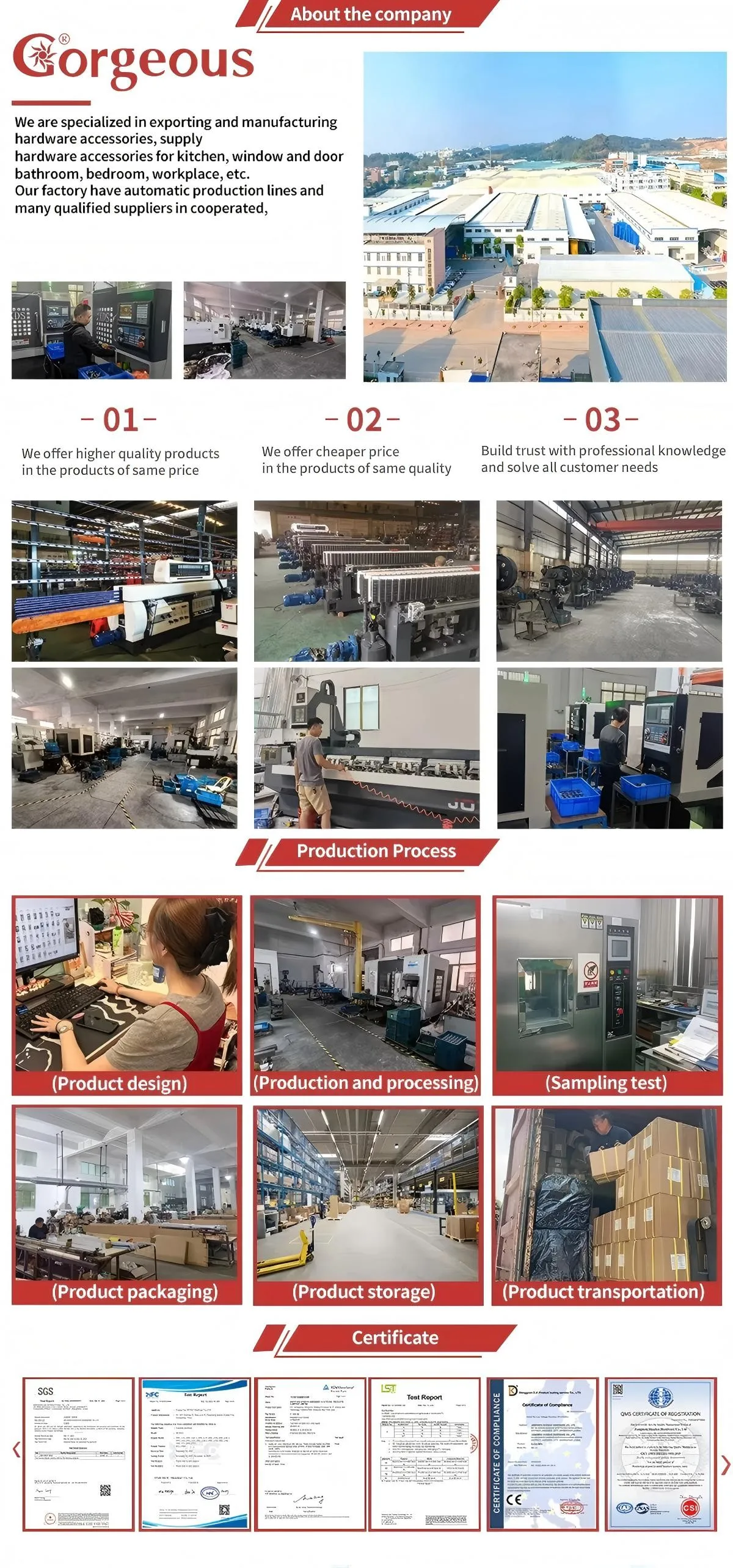
This hinge is produced for Guangzhou Gorgeous Intelligent Technology Co., Ltd., a furniture and architectural hardware supplier whose range covers hinges, drawer slides, handles, stays, legs, castors, locks and the fitting sets that go with them. The company works to export orders: carton quantities, marking, barcodes and the documents a buyer needs at their own customs are agreed before production rather than after it, and the hinge specification on the proforma is the specification that is made.



Common Hinge Faults And What They Actually Mean
A door that drops over time is almost always a fixing problem rather than a hinge problem. The hinge is the strongest part of the joint; the board it screws into is not. In chipboard and MDF the holding power depends on the pilot hole and the screw gauge, and a plate that has been screwed and unscrewed repeatedly during fitting loses grip - which shows up as the plate pulling away from the carcass while the hinge itself is still sound. A clip-on hinge reduces how often that happens, because the door comes off at the coupling instead of at the screws, but it does not make the board immune.
A soft close hinge that stops damping has usually been worked past its duty: either the door is heavier than the hinge was specified for, or the door has been pulled closed by hand against the damper. The damper in a hinge arm is a hydraulic restriction, not a brake, and repeated manual overrunning is what empties it. A hinge that has lost clip force, so the door lifts off the plate too easily, is normally a plate that was fitted twisted, so the arm meets the edge of the reception rather than the reception itself - slacken the plate, seat it flat and the coupling should return to firm hand pressure.
Questions Buyers Ask About This Hinge

- What does the open tail name mean on this hinge?
- The tail end of the hinge - the end opposite the cup - is left as an open channel between two prongs instead of being closed by a cover. You can see it in the rear end-on photograph, and the coil spring and damper rod are visible through it.
- Is it a soft close hinge?
- Yes - hydraulic, with the damper inside the arm. The rear end-on and the rolled side photographs show the damper rod and cylinder, so the damping is a visible part rather than a word on the listing.
- How is the door removed?
- Carry the weight of the door off the hinge, then work the hinge off the plate at the tail end. The plate stays exactly where it was set on the carcass and no screw is undone.
- How many fixing holes does the assembled hinge use?
- Two countersunk holes in the cup flange on the door side and one oblong slot with a round hole position at each side of the wing plate on the carcass side. The face-on photograph shows both patterns in one frame.
- Are screws included?
- Not as standard. Screw gauge and length depend on the door and carcass panel, and we would rather the buyer specify the fixing for the board than accept ours and find the holding power short.
- Is the weight shown in the last photograph the specification?
- No. That frame is a per-batch goods-out weighing on a bench platform, and the digits are that batch at that moment. The figure that governs a shipment is the measured number on the packing list.
- Can you supply other variants of this hinge?
- The cup boring and the coupling are shared across the family, so closed-tail, different plate and non-damped variants can usually be arranged. Send the door drawing and we will confirm what this hinge can be made to do.
Sign-Off Checklist Before You Order This Hinge
- Door mass and height confirmed against the hinge count, with an added hinge at mid height on tall doors.
- Door material and panel thickness confirmed against the screw holding requirement of the wing plate.
- Cup boring diameter and depth confirmed against the drawing for this hinge, not against a previous hinge.
- Open tail confirmed as acceptable, since the internal spring and damper rod remain visible at the end.
- Plate fixing pattern confirmed against the carcass, oblong slot adjustment included.
- Overlay requirement confirmed, so the correct plate variant of the family is ordered.
- Lift-off release confirmed as acceptable for the end user, since there is no push-button on this hinge.
- Screw specification agreed separately, since fixings are not supplied as standard with this hinge.
- Environment confirmed as dry or moderately humid; wet and hosed areas are outside the duty of this hinge.
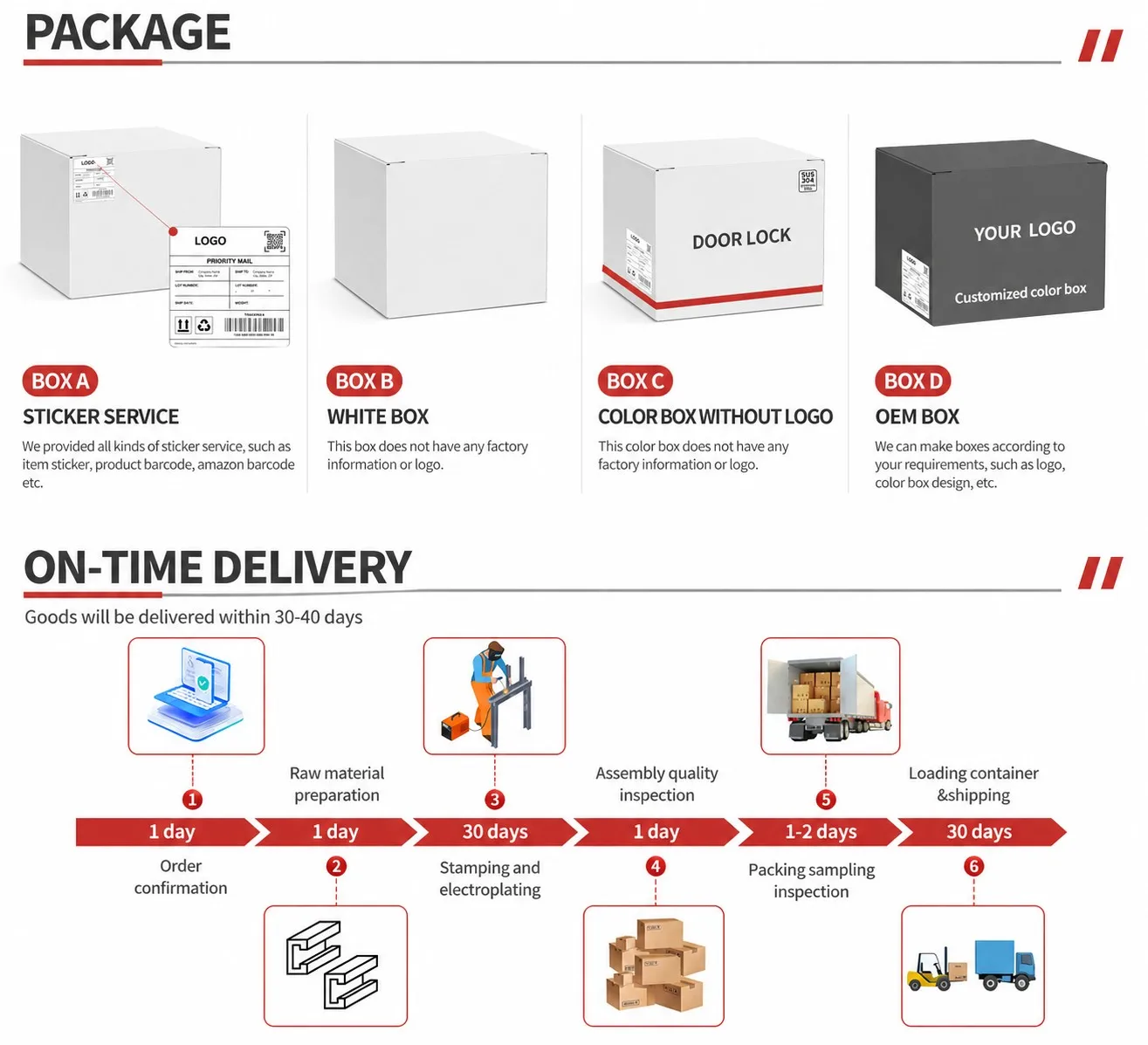
- Packing, carton quantity and marking confirmed against the order before the hinge batch starts.
Ordering
Send the model number F850K with the quantity, the destination port and the carton marking you need. Sample quantities are available before a production order so the hinge can be bored, clipped and swung in your own panels, which is the fastest way for both sides to agree that the hinge is right for the job. Drawings, the batch weight sheet and whatever test documentation we hold for this hinge model are issued on request, and delivery and payment terms are agreed order by order on the proforma rather than assumed.


Comprehensive score