


Polished 90 Degree Soft Close Cup Hinge G-F727
G-F727 Polished 90 Degree Cup Hinge In Six Photographed Positions

This listing is written from the six photographs on this page, and what they show is a cup hinge of the 90 degree line in a polished bright finish: the three quarter view where the round cup, the two hole base plate, the barrel knuckle and the arm all read at once, the front view where the cup opens to the camera and the two fixing holes of the base plate sit square in the frame, the three quarter view from the opposite side where the arm runs off the other way, the vertical side view where the profile of the hinge is the whole of the frame, the T shaped front view with the arm up and the cup at the foot, and the horizontal side view where the hinge lies on its side. Two honesty points govern the whole page. First, this set carries no drawing frame, so no dimension figure is stated anywhere on it: the cup figure, the plate figure and the body figure are drawing facts that we issue with the quotation, and the page says so instead of guessing them. Second, the model belongs to the factory's 90 degree hydraulic line, so the soft close closing is the designation of the line rather than a part a photograph can show: no damper is readable as a part in any of the six frames, and the copy carries the closing exactly that way, with the sample as the place where the closing is confirmed.
The frames prove the structure directly: a round cup that seats into a bored recess in the door, a two hole base plate that screws to the case, a barrel knuckle that carries the swing, and an arm with the clip on receiver that rides the cup. That is the cup hinge form in its most common expression, and the 90 degree figure on the model is the opening restriction of the line: the door swings to ninety degrees and the hinge holds it there, which is the difference between this hinge and the full swing member of the range.
The 90 Degree, As The Line Names It

A 90 degree hinge of this line exists for the door that must not swing all the way. Where a full opening cabinet door runs clear of everything, there are doors that hit a wall, a return, a countertop edge or the corner of the room, and the 90 degree hinge is the part that stops the door at the working angle rather than letting it run on to an impact. The three quarter frame on this page is where the geometry reads: the arm leaves the knuckle at the angle the line was cut for, and the cup base sits where the drilling template puts it. The buyers who reach for a 90 degree hinge are the ones whose layout already answers the question: kitchen runs against a return wall, bathroom vanities where the door meets the sill line, and the cabinet end doors of a run that stops at a corner. The restriction is the feature, and the frames show the hinge as the part that carries it.
Because the restriction is in the hinge and not in the room, a case built for a full swing door is not a case ready for this hinge without the layout being rechecked: the door leaf, the gap and the swing arc all answer to the ninety degree figure of the line. That is why the model number carries the angle the way it does, and why the comparison between this hinge and the full opening member of the range starts with the layout drawing rather than with the photograph.
What The Photographs In This Listing Prove
Every structural claim on this page can be pointed at in one of the six frames: the cup with its two hole base plate in the three quarter view, the cup opening to the camera in the front view, the arm from the opposite side, the profile of the whole body in the vertical side view, the T shaped arrangement of cup, knuckle and arm in the front view with the arm up, and the body on its side in the horizontal view. What the frames do not prove is any figure: there is no drawing in this set, so the cup diameter, the base plate spacing and the body length are not numbers on this page. They come from the hinge drawing that we send with the quotation, and the drilling is done against that drawing rather than against the photographs.
The staged set also omits, on purpose, the remaining frames of the folder that repeat the same six camera positions from nearer or farther, and the multi piece composite frame, which the page keeps out of the gallery so that each of the six positions on the page is a distinct view of the hinge rather than a repeat of one. What remains is six different views of the part, and each of the six is used once in the image gallery on this page.
How The Cup Hinge Is Built

The side view is the clearest frame for reading a cup hinge, and the vertical frame on this page is that frame: the cup at the foot of the frame with its two hole base plate, the barrel knuckle standing up out of the cup, and the arm rising out of the knuckle to the clip on receiver at the top. Three things about this construction are worth a buyer knowing before the drawing arrives. First, the cup is the member that seats into the bored recess of the door, and the two hole base plate of the cup is what screws the hinge to the case side, so the drilling answers to the drawing and the plate answers to the drilling. Second, the barrel knuckle is the pivot that carries the swing, and the arm rides the cup through the knuckle so that the door leaf moves on the hinge rather than on the cup alone. Third, the arm ends in the clip on receiver, which is the part that locks the hinge onto the cup so that a door hinge of this class can be fitted without a separate screw at the top of the door, and the clip is what the fitter presses when the hinge is removed for a door strip.
- Round cup that seats into a bored recess in the door, the cup hinge form shown in the three quarter view.
- Two hole base plate on the cup, the member that screws the hinge to the case side.
- Barrel knuckle as the pivot, carrying the swing of the door leaf.
- Arm with the clip on receiver at the top, locking the hinge onto the cup.
- Polished bright finish as the frames show it, even across the cup, the knuckle and the arm.
- 90 degree opening restriction, the line designation of the model.
- Hydraulic soft close line designation, the damper not readable as a part in any frame, the sample as the confirmation.
- No drawing in this set, so no dimension figure on this page; the figures come with the quotation.
Soft Close, As The Hydraulic Line States It
The model sits in the factory's hydraulic line, and the soft close hinge is the member of that line: the door swings in on the knuckle and the closing runs damped rather than free, so the leaf lands quietly at the end of the swing instead of arriving with the force it carried out of it. The honest position on this page is that the damper is not a part any of the six frames shows: it is carried by the line designation of the model, and the frames show the body of the hinge, not the mechanism inside the body. That is how a cup hinge of this class is built and photographed, and it is why the closing behaviour is confirmed on the sample: the buyer works the sample through the full swing in the buyer's own door, and the closing is the fact that comes back from that test rather than from the page. A buyer who needs the free swinging member of the same geometry should say so on the order, because the line runs both ways and the designation on the model is what selects the member.
Polished Finish, As The Frames Show It
The six frames show a polished bright finish across the cup, the base plate, the knuckle and the arm, and that is the finish fact the page carries, because the finish is what a photograph can certify. The alloy under the finish is a drawing fact: the same 90 degree line of this hinge is also listed by us in a nickel plated finish under its own model number, and the two members of the line are the same geometry in two finishes, so a buyer choosing between them is choosing the finish and the environment, not the shape. For the polished member the honest case is the one every buyer of a polished hinge knows: the finish is an interior one, the hinge is made for the dry cabinet and the dry kitchen rather than the hosed surface, and the environment it is specified for is the one the frames show it in. Where the environment is wet, the plated member of the line is the call, and the drawing lists the finish of each member so the order states it rather than assumes it.
Where This Hinge Is The Right Call, And Where It Is Not
A 90 degree cup hinge of this shape belongs on the door that stops at the working angle: the kitchen run against a return wall, the vanity door that meets the sill line, the end door of a cabinet run that turns a corner, and the appliance garage door that swings into its own recess. The vertical side frame on this page is the fastest way to read what the part is doing in a real case: the cup in its recess, the arm on the knuckle, the door held at the angle the line was cut for. It is the wrong call for a door that must swing full, because the restriction of the model is in the hinge and a full swing door on a 90 degree hinge is a door that hits the stop of the hinge before it clears the case. It is the wrong call for a door that is too heavy for the cup figure the drawing states, because the cup and the plate carry the leaf and the figure on the drawing is where the weight question is answered, and it is the wrong call for a wet environment, because the polished finish of the frames is an interior finish.
How This Hinge Sits In Our Range
Within our own hinge range, a buyer choosing a restricted opening hinge is choosing between the angle, the closing and the finish, in that order. The angle sets the layout: the 90 degree hinge is the member for the door that stops at the working angle, and the full opening member of the range is the one for the door that must clear. The closing sets the behaviour: the hydraulic soft close line of this model is the member for the quiet landing, and the free swinging member of the same geometry is the one for the door where the closing is not the question. The finish sets the environment: the polished member of the frames is the interior call, and the nickel plated member of the same line is the call for the harder service. A buyer comparing this hinge against our other cup hinges should compare the angle first, because the restriction is in the hinge and the layout is where it shows up.
It also sits against the other restricted opening members we supply, and the honest position is the one on the specification table: the cup form and the clip on arm are the comparison that matters, the finish is what the frames show, the closing is what the line designation states, and the cup figure is what the drawing carries rather than what the page guesses. A buyer who needs the same angle in a different closing or the same closing in a different finish should say so on the order, because the line is built around those choices and the drawing is what ties the choice to the part number.
Specification Summary
| Model | G-F727 |
| Hinge type | Cup hinge, 90 degree restricted opening, clip on arm, for cabinet and kitchen doors |
| Opening | 90 degree, the restriction of the line the model belongs to |
| Closing | Hydraulic soft close, the line designation of the model; the damper is not shown as a part in any frame and the closing is confirmed on the sample |
| Cup | Round cup that seats into the bored recess of the door, with the two hole base plate that screws to the case side |
| Pivot | Barrel knuckle carrying the swing of the door leaf, shown in the vertical side view |
| Arm | Clip on arm with the receiver that locks the hinge onto the cup, shown in the three quarter views |
| Finish | Polished bright finish as the six frames show it |
| Material | Per the hinge drawing issued with the quotation; the same 90 degree line is also listed by us in nickel plated finish under its own model number |
| Dimension figures | No drawing in this photograph set, so no figure is stated on this page; the cup, plate and body figures come with the quotation |
| Door material | Chipboard, MDF or plywood doors bored to the cup figure of the drawing |
| Door load and cycle count | From the hinge drawing and the test report; not read from photographs |
| Sample policy | Samples before a production order so the swing, the closing and the clip on fit are worked in the buyer's own door |
How Each Hinge Batch Is Checked Before Packing
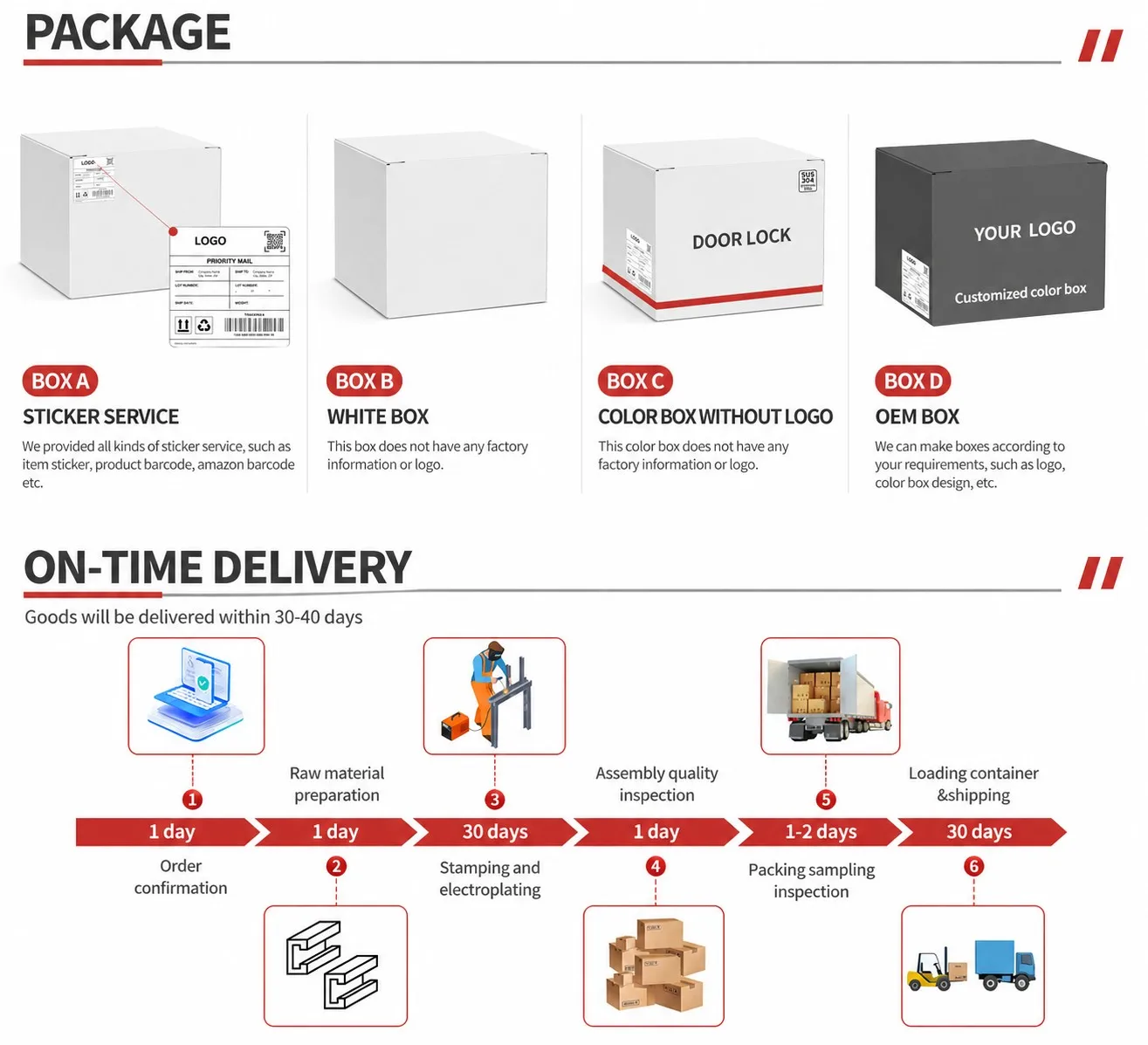
Every hinge batch is sampled on four points before packing. Assembly: the cup is checked to seat true on the knuckle, the base plate is checked to sit square to the cup rather than twisted, and the arm is checked to lock onto the clip receiver of the cup with no play that the fitter would feel at the door strip. Appearance: the polished surface is checked for handling marks and any scratch that runs across the cup or the arm, which is the part of the hinge that shows first in a lit kitchen, and the finish is checked to run even across the knuckle and the base plate. Function: each sampled hinge is worked through its full swing by hand, opened to the restriction of the line and closed on the damping of the soft close, so a binding knuckle or a closing that runs short shows up before the carton closes, and the clip on is checked to lock and release cleanly at the door strip. Packing: carton quantity, inner bag, marking and the model number on the label are checked against the order rather than the previous job, and the documents a buyer needs at their own customs are issued with the proforma.
Who Supplies This Hinge
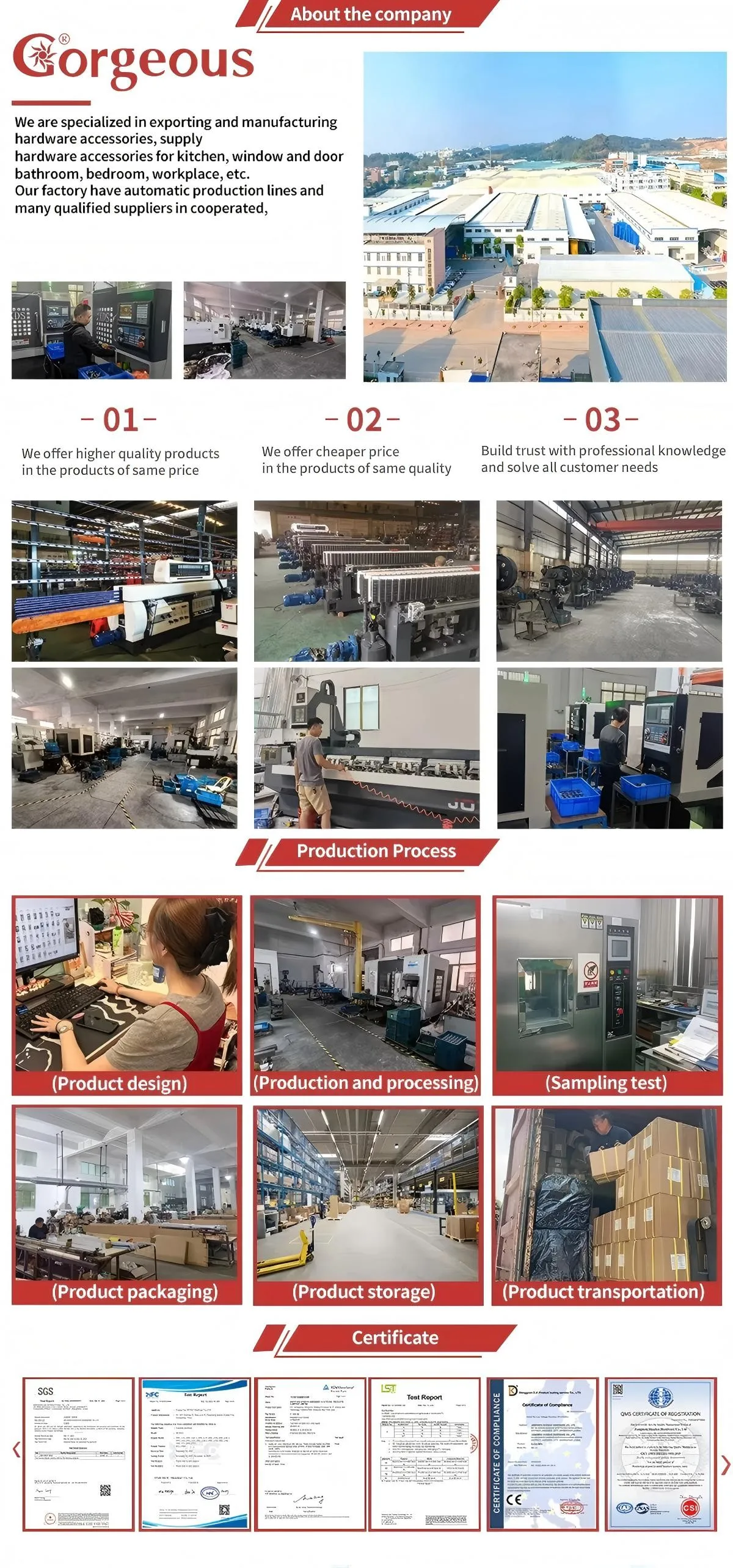
This hinge is supplied by Guangzhou Gorgeous Intelligent Technology Co., Ltd., a furniture and architectural hardware business whose range covers hinges, drawer slides, handles, stays, legs, castors, locks and the fitting sets that go with them. The company works to export orders: quantities, carton marking, barcodes and shipping documents are agreed before production rather than after it, and a buyer who specifies the angle, the closing and the finish on the order gets those things made, because that is the only specification the factory works from.



Terms Worth Agreeing Before Two Hinges Are Compared
- 90 degree hinge: a restricted opening hinge whose door swings to ninety degrees and is held there by the hinge, the member of the range for the door that stops at the working angle.
- Soft close hinge: the damped member of the line, the door that lands quietly at the end of the swing; the designation of this model and the sample is where the closing is confirmed.
- Cup hinge: a hinge whose cup seats into a bored recess in the door and whose base plate screws to the case side, the form shown in the six frames.
- Hydraulic hinge: the line designation for the damped closing of this model, the mechanism inside the body rather than a part the frames show.
- Cabinet door hinge: the application of this part, the leaf of a cabinet, kitchen run or vanity that swings on the cup and the knuckle of the hinge.
- Restricted opening: the 90 degree figure of the line where the swing of the hinge ends, the stop that is in the hinge rather than in the room.
- Clip on: the receiver at the end of the arm by which the hinge locks onto the cup, the fitting the fitter works at the door strip of the hinge.
- Drawing: the document that turns a hinge photograph into a hinge specification; without it the cup, plate and body figures of this hinge are not checked, and we send it with the quotation.
The Parts Of The Hinge, Named As The Frames Show Them
- Cup: the round member of the hinge that seats into the bored recess of the door; the cup is where the hinge meets the leaf, and the three quarter view is the frame where the cup of the hinge reads at its best.
- Base plate: the two hole member of the hinge that screws the hinge to the case side; the plate carries the fixing of the hinge, and the front view is the frame where the plate of the hinge sits square to the camera.
- Knuckle: the barrel pivot of the hinge that carries the swing of the door leaf; the vertical side view is the frame where the knuckle of the hinge stands up out of the cup of the hinge.
- Arm: the member of the hinge that runs off the knuckle toward the door; the arm of the hinge carries the leaf through the swing of the hinge, and both three quarter views show the arm of the hinge from each side.
- Clip on receiver: the end of the arm where the hinge locks onto the cup; the receiver is what the fitter works when the hinge comes off the cup at the door strip, and the clip on is what keeps the hinge seated while the door swings.
- Swing: the arc the door works on the hinge from the closed face to the stop of the line; the swing of the hinge is carried by the knuckle of the hinge, and the sample is where the swing of the hinge is worked through its full arc.
- Stop of the line: the 90 degree figure where the swing of the hinge ends; the restriction is in the hinge rather than in the room, and the door meets the stop of the hinge at the working angle the line was cut for.
- Damping of the line: the soft close the model of the hinge carries by designation; the damping sits inside the hinge, the frames show the body of the hinge rather than the mechanism of the hinge, and the sample is where the closing of the hinge is confirmed.
- Polished finish: the finish the frames show across the hinge, even on the cup of the hinge and the arm of the hinge; the finish is the photograph fact of the hinge, and the drawing is where the alloy under the finish of the hinge is stated.
- Drilling: the boring of the cup recess in the door and the plate holes in the case that the hinge answers to; the drilling is cut against the drawing of the hinge, and the hinge is checked in its recess before the plate of the hinge is screwed home.
Common Hinge Faults And What They Actually Mean
A door that drifts open on a cup hinge is almost always a fixing problem rather than a hinge problem. The hinge is the strongest part of that joint; the recess and the plate behind it are not. In chipboard and MDF the holding power depends on the cup boring and the plate screws, and a hinge that has been fitted and refitted while a fitter chases the line loses grip, which shows up later as the door sagging at the strip while the hinge itself is still sound. On a 90 degree hinge the drift can look like the door not reaching the stop of the line, and the answer is still the fixing and the boring, not a heavier hinge.
A door that will not reach its angle is usually a layout question before anything else: the leaf, the case and the stop have to be built to the ninety degree figure of the line, and a door that meets the stop of the hinge early is the classic sign of a leaf cut wide or a case built narrow. The frame on this page shows the hinge at the angle the line was cut for, and the check is to work the door against the hinge before the plate is screwed home, because correcting a door that was never cut to the angle after the boring is done costs more than the hinge. A closing that feels short on the soft close is a different question: it is the damping of the line against the weight of the leaf, it is checked on the sample in the buyer's own door, and it is the fault a fitter notices before a buyer does.
The faults that actually do come from the hinge are the cup, the knuckle and the clip: a cup bored crooked in the door, a knuckle that seats cross loaded through the swing, a clip on receiver that was worked loose at the door strip, and plate screws driven over the top instead of home. None of those is a hinge defect, but they all show up as one, and the way to keep a polished cup hinge working is the same as the way to keep any hinge working, which is to fix it true the first time with the cup in its recess and the plate square to the case.
Questions Buyers Ask About This Hinge
- Is this hinge really soft close? The model is the hydraulic member of the line, so the closing is damped by the designation of the hinge, and the soft close is the member of the range this listing describes. The damper is inside the body and is not a part any frame shows, so the confirmation is the sample: work it through the full swing in your own door and the closing is the fact that comes back from that test.
- Why 90 degrees and not the full opening member? Because the door has to stop. The 90 degree hinge is for the run that meets a return wall, the sill line or a corner, and the restriction is in the hinge rather than in the room. A door that must swing full is the full opening member of the range, and the layout is where the two are told apart.
- What is the difference between this G-F727 and the F727 you list in nickel plated finish? The same 90 degree geometry of the line in two finishes: this listing is the polished member shown in the six frames, and the nickel plated member is the same hinge specified for the harder service. The angle, the closing and the cup form are the line; the finish is the choice, and the drawing lists the finish of each member.
- What cup size is this? The cup figure is a drawing fact and this photograph set carries no drawing, so the page does not state the figure rather than guess it. The drawing comes with the quotation, and the boring is done against it.
- Do the fixing screws come with the hinge? The frames do not show screws staged with the hinge, so the copy carries it that way: the fixing screws are agreed on the order, the gauge set to the board and the cup boring, and the drawing lists the specification we would ship so the screws match the holes and the door.
- How many do I need on a door? The count follows the length and the mass of the leaf, the usual working rule being one hinge per standard door height and a second where the leaf runs long or carries the weight of a run. The figures that govern the count come from the drawing and the sample worked in the buyer's own door, not from the photograph.
- Will the polished finish hold up in a kitchen? In a dry kitchen, yes, and the polished finish of the frames is the interior call the line is built for. Where the surface is hosed or the environment is wet, the nickel plated member of the same line is the specification, and the drawing lists the finish so the order states it rather than assumes it.
- What does the clip on arm save me at fitting? It saves the top fixing at the door strip: the arm of the hinge locks onto the cup by the receiver, so the hinge is fitted and removed at the door rather than unscrewed from the leaf, and the fitter works the hinge with the cup and the plate already in their recesses.
- Is the stop of the hinge hard or soft? The stop is in the geometry of the hinge, and the damping of the line is what carries the door onto it quietly. The soft close of the model lands the door on the stop of the hinge without the force it carried out of the swing, and the sample worked in your own door is where the two are confirmed together.
- Can I use this hinge on a door bored for a different cup figure? No, and the cup of the hinge is the part that answers: the hinge seats on the recess the door was bored for, and a door bored to another figure is not a door ready for this hinge without the boring being redone to the drawing of the hinge. The figure is on the drawing we send with the quotation, and the hinge is checked in its recess before the plate of the hinge is fixed.
Sign-Off Checklist Before You Order This Hinge
- Layout confirmed to the 90 degree figure of the line, the door that stops at the working angle.
- Door material confirmed as chipboard, MDF or plywood bored to the cup figure of the drawing.
- Hinge count confirmed against the length and the mass of the leaf, the second hinge where the leaf runs long.
- Soft close requirement confirmed in writing against the line designation, the closing to be confirmed on the sample.
- Finish confirmed as the polished member of the frames, the nickel plated member selected for wet service.
- Sample worked through the full swing in the buyer's own door before the production order is cut, the knuckle of the hinge and the clip on both checked.
- Cup boring and plate fixing pilot sized for the door, so the cup seats true and the base plate holds through the swing.
- Drawing received against the order, the cup, plate and body figures checked before the boring is cut.
Ordering
Send the model number G-F727 with the quantity, the destination port and the carton marking you need. Samples are available before a production order so the swing of the hinge can be worked in your own door, the closing of the soft close confirmed against the leaf, and the clip on fit checked at the door strip, which is the fastest way for both sides to agree that the cup, the knuckle and the plate are right. The drawing, the fixing sheet and whatever test documentation we hold for this hinge model are issued on request, and delivery and payment terms are agreed order by order on the proforma rather than assumed from a previous order.


Comprehensive score