


Round Cup Hydraulic Concealed Cabinet Hinge Soft Close F861G
F861G Concealed Cabinet Hinge With A Round Black Cup, Hydraulic Piston And Spring In The Arm

F861G is a concealed hinge for framed and frameless cabinet doors: a round cup that sits in a boring in the door, an arm that carries the linkage, the spring and the piston, and a flat plate that screws to the carcass. The cup on this model is black with a bright rim and carries two crosshead screws inside the cavity; everything else in the assembly is bright polished steel. The end of the arm is closed rather than forked, so the internal parts stay inside the body instead of being open to the air.
Closing is controlled rather than free. Two of the photographs in this listing are taken from the underside, and they show why: a coil spring and a cylindrical piston sit inside the arm along its length, and the knuckle is made up of geared segments. That arrangement is what slows the last part of the swing, so the door is closed by the hinge instead of arriving at the carcass under its own weight.
What These Photographs Show, And What They Do Not
The folder this hinge was supplied in describes it as a glass door hinge, and we would rather correct that here than let a buyer order on the strength of a label. Read from the photographs, F861G is a bored round cup hinge: the part that meets the door is a recessed cavity with two fixing screws inside it, and there is no clamp jaw, pad pair, U channel or through glass screw anywhere in the six frames. A hinge that grips a glass panel without a bore cannot be confirmed from these images, so this listing describes the fitting that is shown - a concealed cup hinge for panel doors - and the drawings and the application sheet are issued on request so a buyer can confirm the use before ordering rather than after.
Where a glass door genuinely needs a fitting we quote the hinge that carries the glass clamp, and we photograph that clamp so the buyer can see the faces that hold the pane. If that is the part you need, say so in the enquiry and we will send the correct model with its own photographs instead of pointing you at this one.
How The Hinge Is Built

- Round cup, black body with a bright rim, bored into the door and held by two crosshead screws seated inside the cavity.
- Arm in bright polished steel with a closed, capped tail at the end away from the cup.
- Coil spring and a cylindrical piston housed along the arm, visible in the underside photographs.
- Geared knuckle segments at the joint between cup and arm, which is what carries the door load.
- Flat carcass plate with round fixing holes and oblong slots; the slots are the adjustment.
- One frame in the set shows three hinges together, so a buyer can compare the cup end, the end-on profile and the three-quarter view on a single page.
The plate is the part that decides how the finished door sits. Where the holes are round the plate location is fixed by the screws; where the slot is, the plate can still be moved against the carcass before the screw is home. That is why the same arm can be supplied for different overlay requirements and why we ask for the door drawing rather than quoting a set of numbers from a neighbouring model in the range.
The Cup And The Boring

A concealed hinge only works if the boring matches the cup. The cavity shown here is the round black cup with its two screw positions inside it, and it is those two screws, not the rim, that carry the door. Bore depth is what makes the rim sit level with the door surface: too shallow and the hinge stands proud, the door hangs out of alignment and the whole load ends up on the edge of the cup; too deep and the flange loses bearing area in the board. We issue the boring diameter and depth for this hinge on the drawing rather than in this text, because the same arm is supplied with more than one cup and plate combination and a figure copied from a neighbouring page is the most common cause of a bad fitting.
The board matters as much as the bore. In chipboard and MDF the holding power of those two cup screws depends on the pilot hole and the screw gauge, and a hinge that has been moved and re bored will not hold the way the first one did. Where a door is heavy, or the board is soft, the answer is another hinge rather than a longer screw.
Technical Reference For This Hinge
| Model | F861G |
| Fitting type | Concealed cabinet hinge, fixed mounting plate |
| Closing action | Controlled closing; spring and piston housed in the arm |
| Door fixing | Bored round cup, two crosshead screws inside the cavity |
| Carcass fixing | Flat plate with round holes and oblong adjustment slots |
| Adjustment | Plate position set in the oblong slots before the screws are tightened |
| Arm end | Closed and capped; internal parts are not exposed at the tail |
| Visible internals | Coil spring, cylindrical piston, geared knuckle segments |
| Finish | Bright polished steel arm and plate, black cup with a bright rim |
| Service condition | Dry or moderately humid interiors |
| Fixings supplied | Not as standard - screw specification is agreed with the order |
| Drawing | Issued on request with boring diameter, depth and fixing centres |
| Application note | Sold as a panel door hinge; glass door use is not claimed from these photographs |
Opening angle, overlay, cup diameter, fixing centres, cycle life and load rating are drawing and test figures rather than catalogue lines. If an order needs them we issue the drawing with the quotation and, where a test is required, the test is arranged and costed before production so the report travels with the shipment.
Fitting This Hinge
Bore the door, seat the cup in the boring so the rim is level with the surface, and drive the two screws into the cavity. Screw the mounting plate to the carcass with the screws slack enough that the plate can still move in its slots, offer the door up and couple the arm to the plate, then set the door by moving the plate in and out and side to side before tightening. The last degree of alignment is taken on the arm screw, which moves the door against the carcass without disturbing the plate.
Two mistakes account for most of the complaints that come back on a hinge of this type. The first is a shallow boring, which leaves the cup proud and puts the door weight through the flange edge instead of through the two screws. The second is a plate fixed into a crumbled hole, because the plate carries the door and it holds by the board rather than by the plating. Neither is a defect in the hinge, and both are visible on a sample before a production run starts, which is why we ask buyers to hang a hinge in their own panels first.
How Many Hinges A Door Needs
Hinge count follows door height and door mass rather than preference. A tall door hung on two hinges lifts its upper fixing out of the board long before the hinge arm itself fails, and a controlled closing hinge does not change that arithmetic - the piston slows the door, it does not carry it. Where a two hinge layout no longer feels solid in the hand, add a third hinge at mid height and accept the extra fitting; on a light wall unit door two hinges are usually enough. Send the door height, the panel material and the door mass and we will work the load per hinge with you before the order rather than after a container arrives.
What We Check Before A Hinge Order Leaves
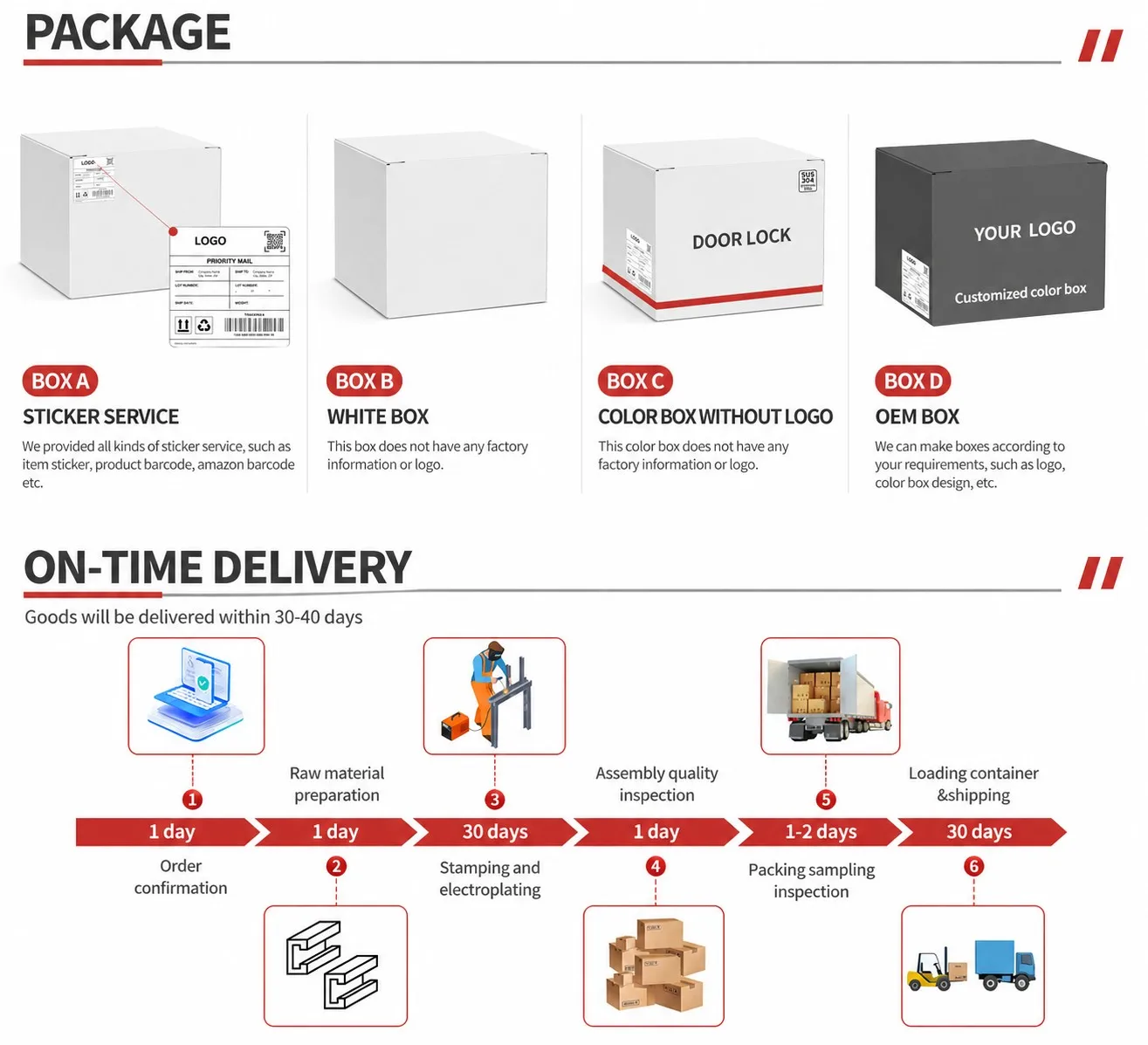
Every hinge batch is sampled on four points before packing. Function: the hinge is worked through its full swing by hand so an arm that binds, a pivot tight out of press, or a piston that kicks back instead of closing the last few degrees is caught on the bench. Assembly: the spring, the piston and the knuckle segments are confirmed present and seated on the sample. Appearance: the polished arm and plate are checked against the approved sample, and the black cup body is checked for coverage and for marks inside the cavity. Packing: the carton count and marking are checked against the order, and the batch is photographed so there is a record that travels with the shipment.
Where a buyer needs a hinge tested rather than inspected - a cycle count on a sample, a pull test on the cup fixing, a salt spray on the finish - that is agreed and costed before the order starts, so the test appears on the proforma instead of appearing later as a dispute.
Where This Hinge Belongs, And Where It Does Not
A bored round cup hinge with a capped arm and a slotted plate is the right hinge for interior joinery made from panel materials: kitchen wall and base units, wardrobes and closets, office and hotel casework, and retail joinery that is assembled in a workshop and hung on site. The closed tail suits that work because a solid end section does not collect board dust and swarf the way an open fork does, and the piston stays enclosed for longer.
It is the wrong hinge for a marine locker, a hosing down area, a food processing room or an unventilated outside cabinet in a coastal position. The finish on this class of hinge is a decorative interior finish rather than a marine barrier, and salt spray and chlorine attack the pinholes a bright finish always has. On a boat or in a wash down scullery we would move a buyer to a stainless hinge even though it costs more per fitting, because a hinge that corrodes through in a season costs more than the hinge did.
Who Makes This Hinge
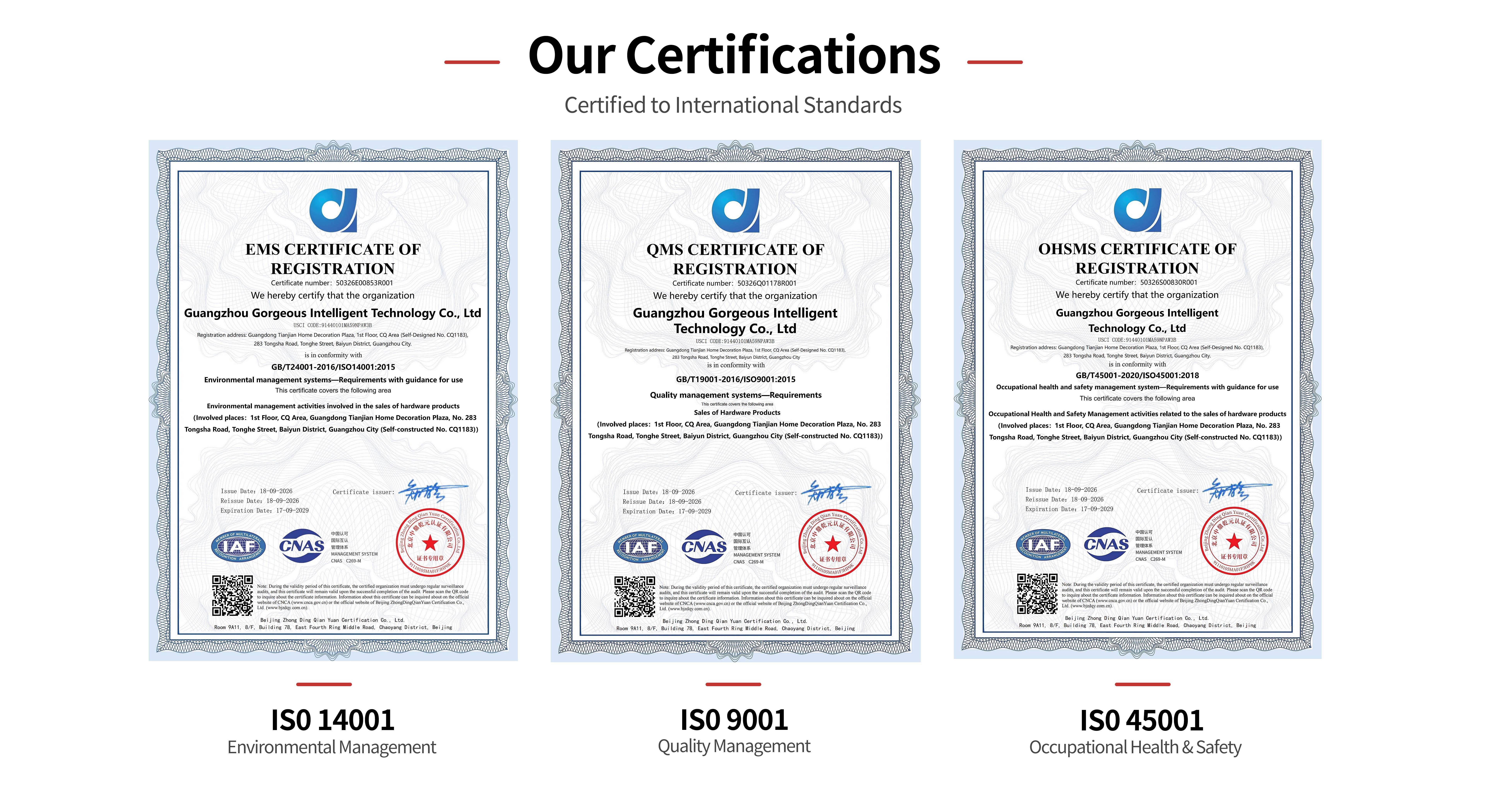
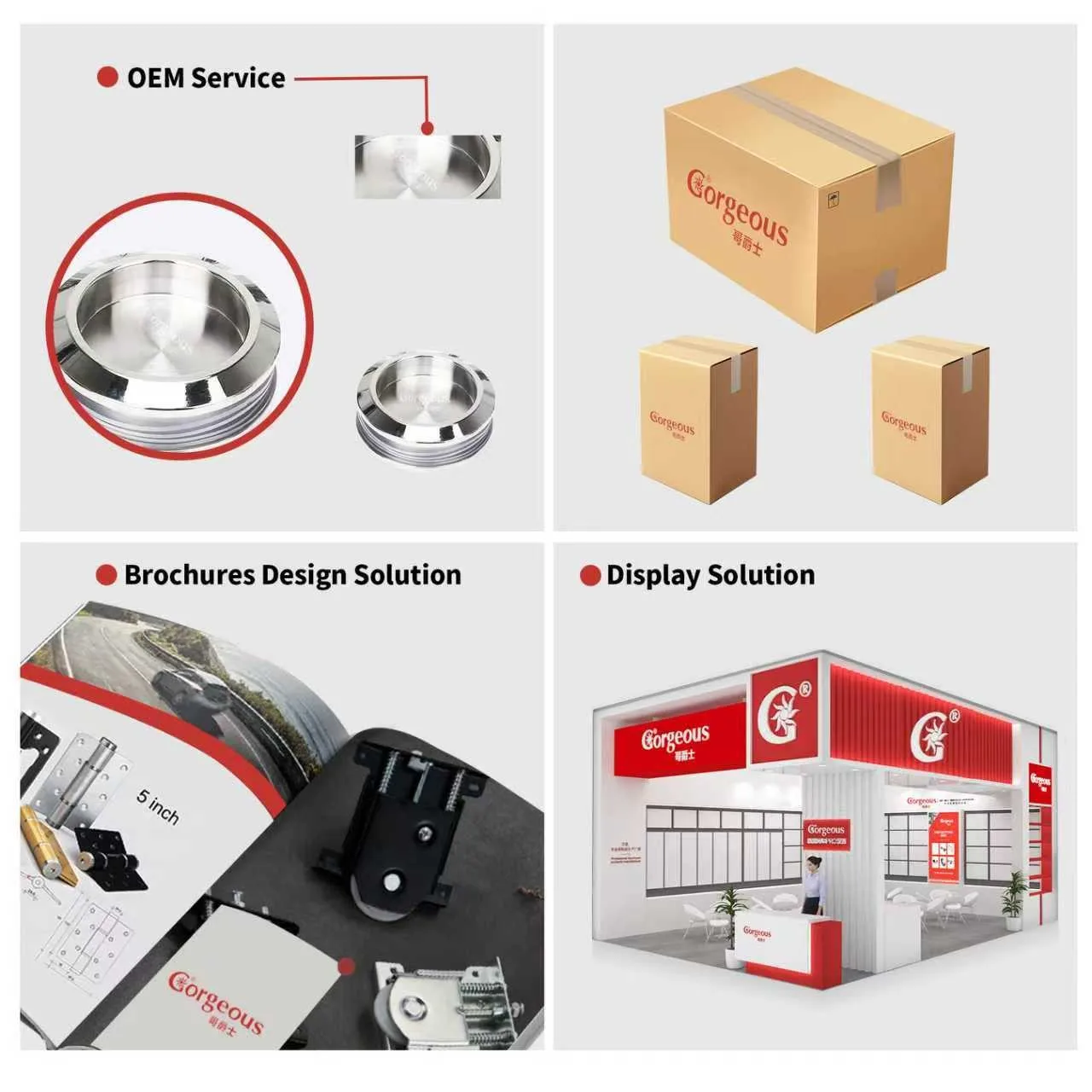
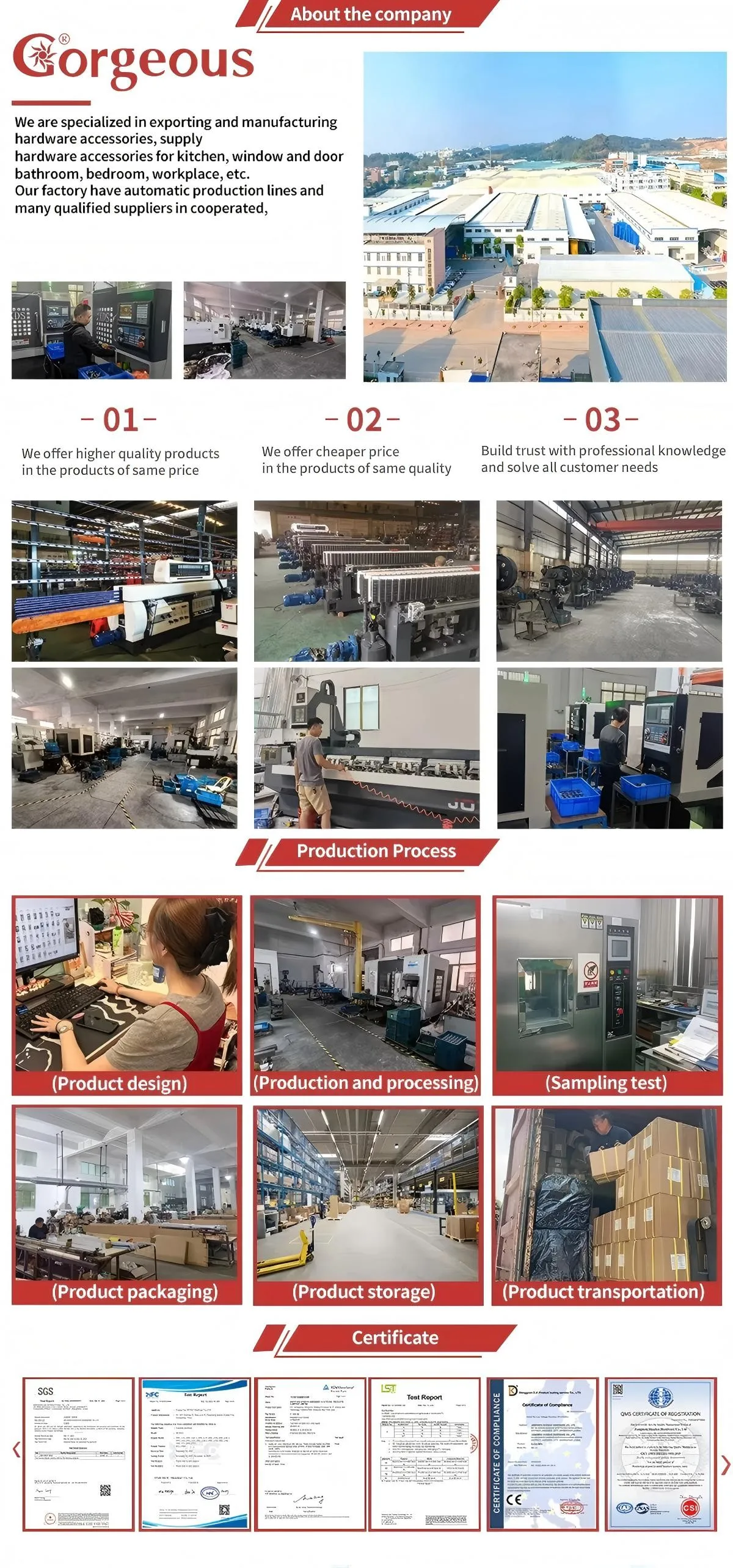
This hinge is produced for Guangzhou Gorgeous Intelligent Technology Co., Ltd., a furniture and architectural hardware supplier whose range covers hinges, drawer slides, handles, stays, legs, castors, locks and the fitting sets that go with them. The company works to export orders: carton quantities, marking, barcodes and the documents a buyer needs at their own customs are agreed before production rather than after it, and the hinge specification on the proforma is the specification that is made.

Common Hinge Faults And What They Actually Mean
A door that drops over time is almost always a fixing problem rather than a hinge problem. The hinge is the strongest part of that joint; the board it is screwed into is not. In chipboard and MDF the holding power depends on the pilot hole and the screw gauge, and a plate that has been screwed and unscrewed repeatedly during fitting loses grip - which shows up as the plate pulling away from the carcass while the hinge itself is still sound.
A hinge that stops closing slowly has usually been worked past its duty: either the door is heavier than the hinge was specified for, or the door has been pulled to by hand against the piston. The piston in an arm like this one is a hydraulic restriction rather than a brake, and repeated manual overrunning is what empties it. A hinge that feels loose at the knuckle after a season is normally carrying a door that is heavier than the hinge count assumes, and the fix is another hinge rather than a tighter screw.
Questions Buyers Ask About This Hinge
- Is F861G a glass door hinge?
- Not from what these photographs show. The part that meets the door is a bored round cup with two screws inside the cavity, and there is no clamp jaw, pad pair or channel anywhere in the six frames. We list it as a concealed panel door hinge, and if you need a fitting that grips glass without a bore we will quote the model that carries the clamp and photograph that clamp for you.
- Is it a soft close hinge?
- Closing is controlled by a spring and a piston housed in the arm, both of which are visible in the underside photographs. The damping figure itself is a test result, so if a specification is needed for a project we arrange the test on the batch or on a sample rather than quoting a number here.
- How many holes does the assembled hinge use?
- Two crosshead screws inside the cup cavity on the door side. On the carcass side the plate combines round fixing holes with oblong adjustment slots, and the photographs show both types; the exact count for the plate variant you order is confirmed on the drawing, since the same arm is supplied with more than one plate.
- Can the door be removed after fitting?
- This is a fixed plate hinge, so the door is taken off at the hinge screws rather than by lifting the arm off the plate. Where lift off doors are needed, the family includes self detaching variants and we will quote one instead of expecting your fitter to modify this one.
- Where is the adjustment?
- In the oblong slots of the plate. The plate is moved in and out and side to side while the screws are slack and the final gap is taken up on the arm screw.
- Are screws included?
- Not as standard. Screw gauge and length depend on the door and carcass panel, and we would rather the buyer specify the fixing for the board than accept ours and find the holding power short.
- Why does one photograph show three hinges?
- That frame exists so a buyer can compare the three useful angles - cup end, end on and three quarter - in a single view. The other five frames each show one hinge.
Where A Hinge Of This Type Is Specified
The photographs show a bored cup hinge with an adjustable plate, which places it in the general population of concealed hinges used on panel doors. The applications below are the ordinary ones for a hinge of this construction; whether a particular hinge suits a particular door is still a matter of the hinge drawing and the door, not of the category name.
- Kitchen wall cabinets, where the hinge cup disappears into the door and only the hinge plate remains visible inside the case.
- Wardrobe and cupboard doors, where a purchaser specifies a damped hinge so the door is not thrown shut.
- Vanity and bathroom joinery, where a concealed hinge is fine in a moderately humid room but is not the right hinge for a hosed area.
- Contract and office casework, where the slots in the hinge plate let the fitter pull the door square after the hinge is fixed.
- Retail fixtures, where the design brief asks for a hinge that cannot be seen with the door closed.
- Replacement stock, where the incoming hinge is matched from the hinge drawing, because two hinges can share a cup and still differ at the plate.
Sign-Off Checklist Before You Order This Hinge
- Door material confirmed as a panel material that can be bored for a round cup.
- Door mass and height confirmed against the hinge count, with an added hinge at mid height on tall doors.
- Cup boring diameter and depth confirmed against the drawing for this hinge, not against a previous hinge.
- Plate variant confirmed, since the same arm is supplied with more than one hole pattern.
- Fixed plate confirmed as acceptable, since this hinge is not a lift off design.
- Overlay requirement confirmed so the correct plate is ordered for the door gap.
- Screw specification agreed separately, since fixings are not supplied as standard with this hinge.
- Environment confirmed as dry or moderately humid; wet and hosed areas are outside the duty of this hinge.
- Application confirmed against the photographs rather than the folder name, and the drawing checked for glass use.
- Packing, carton quantity and marking confirmed against the order before the hinge batch starts.
Ordering
Send the model number F861G with the quantity, the destination port and the carton marking you need. Samples are available before a production order so the hinge can be bored and hung in your own panels, which is the fastest way for both sides to agree the hinge is right for the job. Drawings, the boring dimension sheet and whatever test documentation we hold for this hinge model are issued on request, and delivery and payment terms are agreed order by order on the proforma rather than assumed.


Comprehensive score