


Nickel Round Flap Hinge Drop Leaf Table G-K431-P17
The G-K431-P17 Round Flap Hinge In Six Photographed Positions

Six of the nine frames in this folder are used on this page, and the first one is the hinge as it arrives: a round flap hinge in nickel plated zinc alloy, two hinges side by side. What the frames show is a small hinge with two D-shaped leaves that fold flat against each other. Each leaf carries a rectangular window cut right through it, and the window is the part worth understanding before anything else on the page, because the barrel of the hinge drops into that window as the hinge closes. That is why this hinge closes flush: the knuckle does not sit proud between the leaves, it hides inside the cut-out. The remaining frames do four things. The dimensioned frame gives the figures. The closed front view shows the screw pattern. The standing frame shows the knuckle and the barrel. The two underside frames show the ribbed hollow casting inside each leaf and the barrel seated in its window.
A hinge of this shape is called several things in the trade and it is worth naming them once so a buyer knows what is on this page. It is a flap hinge, because the leaf of a table that drops down is called a flap. It is a drop leaf table hinge, because that is where most of them are fitted. It is a sewing machine table hinge, because the round form with the flush fold was standard on sewing machine cabinets for decades and is still made for them. It is also called a round edge hinge, after the rounded end of each leaf. All of those names point at the same article on this page: a two-leaf zinc alloy hinge that folds a panel through 180 degrees and lies flat when it does.
The Figures The Dimensioned Frame States

The dimensioned frame states this hinge completely, and every figure on it is a figure a cabinetmaker needs before cutting the leaf. Across the top, each of the two leaves is marked 3.0 centimetres. Down the right-hand edge the leaf is marked 4.0 centimetres. On the left, the body of the hinge is marked 1.30 centimetres, which is the height the hinge stands once it is folded closed on its own thickness. Along the bottom the hinge is marked 3.8 centimetres, which is the overall run of the two leaves folded together rather than the sum of the two 3.0 centimetre figures, because the leaves overlap at the knuckle when the hinge closes.
| Hinge figure | Marked on the frame |
| Leaf width, each leaf | 3.0cm |
| Leaf depth, each leaf | 4.0cm |
| Body height folded | 1.30cm |
| Overall run folded | 3.8cm |
| Screws per leaf | four countersunk rim holes plus a centre screw |
| Fold | 180 degrees, leaves flat face to face |
| Material and finish | zinc alloy, nickel plated |
Two of those figures decide whether the hinge suits a table that already exists, and both are worth reading carefully. The 1.30 centimetre body is the depth the hinge adds to the seam: a drop leaf hinge of this kind is not cut in flush like a concealed cabinet hinge, it sits between the two panels it joins and its own body becomes part of the surface when the leaf is down. The 3.8 centimetre overall run is therefore the length of the seam the hinge covers, and a leaf narrower than that at its hinge edge cannot take the hinge without the barrel standing out past the leaf. On a round table the hinge is set in from the curved edge for that reason, and the frames show the window facing the viewer because that is how the hinge reads when it is set into a round top.
The Window And Why The Hinge Lies Flat
The rectangular window through each leaf is the detail that separates a good flap hinge from a cheap one, so it is worth a section of its own. On a plain butt hinge of the same size the knuckle is a barrel sitting between the two leaves, and when the hinge closes that barrel remains between them, so the joint stands proud by the diameter of the barrel. On this hinge the barrel is narrower than the leaf and the window is cut to take it, so as the hinge closes the barrel passes into the window and the two leaves come face to face. The two underside frames show exactly that: the barrel seated in the window of the opposite leaf, with the closed hinge no thicker than the two leaves plus the small relief the casting gives them.
What that buys on a drop leaf table is a flush surface rather than a raised seam. A table whose leaf stands a few millimetres proud at the joint rocks a cup, catches a cloth when wiped and shows a step in the light, and no amount of adjustment on a plain hinge removes it because the barrel is still there. On this hinge the water of the joint is the thickness of the plates only, and the windows in the two leaves are cut to the same pattern so the barrel clears when the leaf comes up. The frames also show the small tab cast on the body beside the knuckle, which is the stop the leaf lands on when it is opened flat; it keeps the leaf level with the table instead of letting it swing past square.
The Casting, The Knuckle And The Screws

The underside frames are the frames to read before doubting the weight of this hinge, because they show it is a casting rather than a pressing. Inside each leaf there is a hollow with a rib pattern rather than a flat sheet: a rib along the axis of the leaf, ribs across it, and thicker pads where the screws go. A zinc alloy casting with ribs holds a screw far better than a pressed sheet of the same thickness, because the ribs put material where the load arrives, and the pads mean the screw is bought in metal rather than in air. The same frames show the barrel as a three-knuckle joint with the pin through it, which is the arrangement that gives a flap hinge its stability: three knuckles share the load of a leaf instead of two.
The screw pattern on the closed front view is four countersunk holes around the rim of each leaf plus one screw at the centre. The rim four carry the hinge into the two panels, and the centre screw on a leaf of this kind is the one that matters when the joint works loose: it pulls the middle of the leaf down onto the panel rather than letting the leaf dish between the rim holes. The frames show every hole countersunk, so a flat head screw seats with its head below the surface and nothing stands proud for a cup to catch. The finish is nickel plating over the zinc alloy, which is the finish that keeps this hinge bright on a table that is wiped and knocked every day, and the plating covers the whole casting including the inside of the windows.
Where This Hinge Is Used
A round flap hinge like this is bought for four jobs, and the three keywords on this page name three of them. As a drop leaf table hinge it goes on a dining table whose end or side leaf folds down, which is the most common use of the size. As a sewing machine table hinge it goes on a machine cabinet or a sewing table whose top folds back, and that use is why the round form with the flush fold was made in the first place. As a flap hinge, plainly, it goes on any hinged flap that has to lie flat when it closes: a desk return, a vanity leaf, a shop counter extension, a drop-down shelf on a workbench, a folding ironing board shelf. The fourth job is repair, where a table arrives with its hinge missing or broken and a pair of these at the same figures puts it back into service.
The size is what decides which of those jobs it suits, and 3.0 by 4.0 centimetres is a small hinge. It is the size for a leaf of moderate width rather than for a full-size dining extension, and it is the size that suits a sewing table, a desk return and a drop-down shelf where the panel is carried on two or three hinges of this kind rather than on one heavy pair. A buyer fitting a wide leaf should count hinges against the leaf width rather than assume a pair will carry it, and the count per leaf for a given panel is a fitting figure rather than a hinge figure. Where a wider leaf needs this form, the answer is more hinges of this size along the seam, not a larger hinge of the same pattern.
Questions A Hinge Buyer Asks
A flap hinge of this size is bought on a handful of questions, so the hinge is answered question by question here, and each answer points at the frame or the figures it comes from.
- What is this hinge called? A flap hinge, a drop leaf table hinge, a sewing machine table hinge or a round edge hinge, all the same two-leaf zinc alloy article.
- What size is it? Each leaf is 3.0cm by 4.0cm, the body is 1.30cm high folded and the hinge runs 3.8cm overall when closed, as the dimensioned frame marks.
- What material is the hinge? Zinc alloy with a nickel plated finish, cast with an internal rib pattern rather than pressed from sheet.
- Why is there a rectangular hole in each leaf? So the knuckle barrel drops into it as the hinge closes, which lets the two leaves meet face to face instead of standing proud on the barrel.
- How far does it open? 180 degrees, with the leaves flat face to face when closed and a cast stop tab so the leaf lands level rather than swinging past square.
- How is the hinge fixed? Four countersunk holes around the rim of each leaf plus one centre screw, all countersunk so the heads sit below the surface.
- How many hinges does a leaf need? That is a fitting figure that follows the leaf width; a wide leaf takes more hinges of this size along the seam rather than a bigger hinge.
- Will it hold a table leaf level? The cast stop tab and the flush fold are what keep the leaf level with the table, and the centre screw keeps the leaf from dishing between the rim holes.
- Is the hinge handed? No, a round flap hinge is symmetrical, so the same hinge serves the left and right ends of a leaf.
- Where is it used? Drop leaf dining tables, sewing machine cabinets and tables, desk returns, vanity leaves, shop counter extensions and drop-down shelves.
Hinge Settings Worth Checking Before Handover
A flap hinge is a small part on a large panel and it is easy to fit one and move on, so the checks below are the ones that show up later if they are skipped. Each is a hinge check rather than a table check.
- Hinge windows aligned to the same pattern on both panels, so the barrel clears as the leaf comes up.
- Hinge body set level with the panel surface, since the body is 1.30cm and becomes part of the table when the leaf is down.
- Hinge screws all seated below the countersink, so no hinge head stands up where a cloth will catch.
- Hinge centre screw fitted last, after the rim screws have pulled the leaf down flat.
- Hinge count along the seam agreed against the leaf width before the leaf is drilled.
- Hinge fold run through its full 180 degrees with the leaf on, checking the stop tab lands level.
- Hinge pair at each end of a wide leaf set the same distance in from the edge, so the leaf folds square.
- Hinge screws re-checked after a week of use, because a flap hinge that is used daily settles into its countersinks.
Who Supplies This Hinge
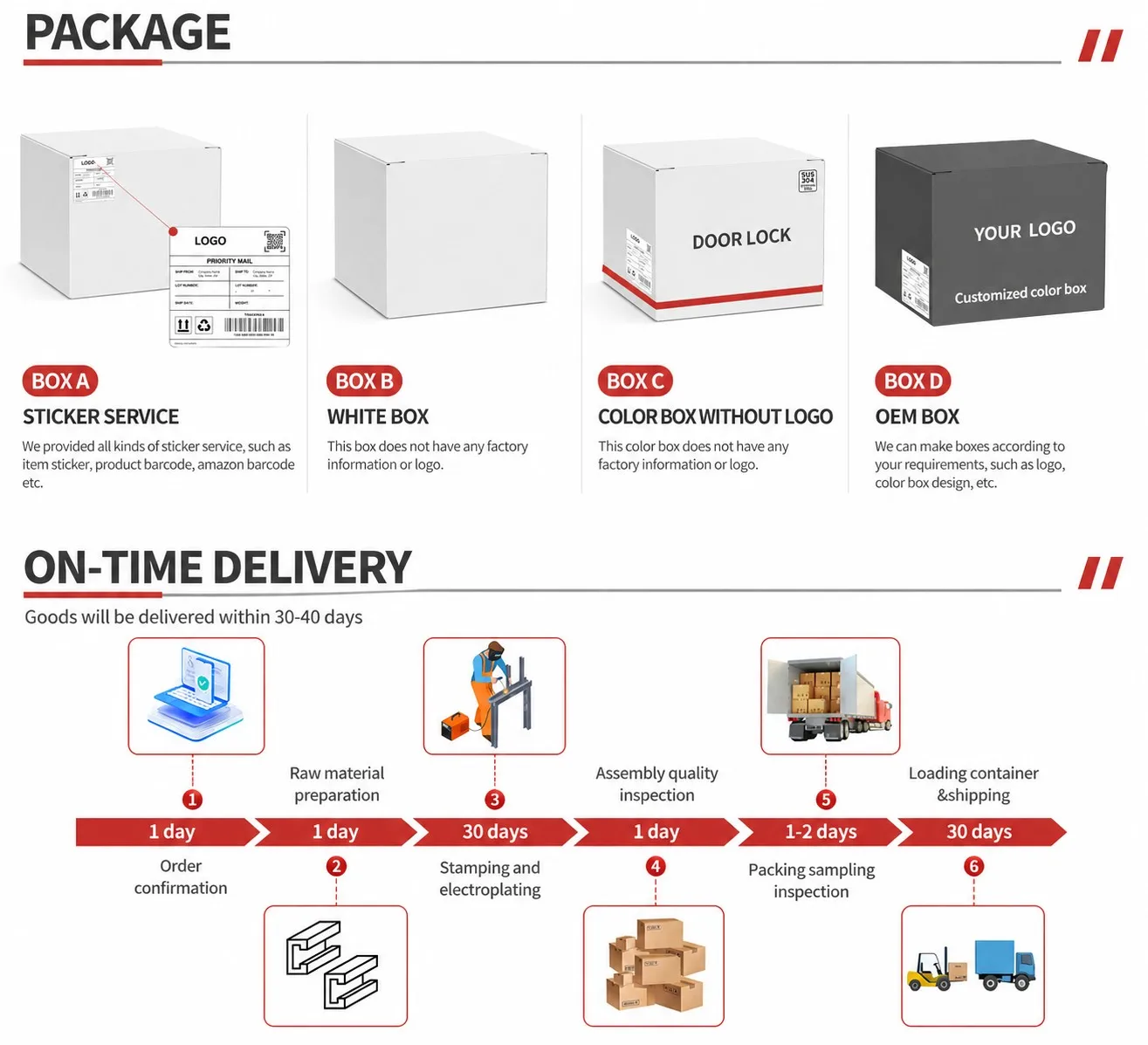
This round flap hinge is supplied by Guangzhou Gorgeous Intelligent Technology Co., Ltd., a furniture and architectural hardware business whose range covers hinges, drawer slides, handles, stays, legs, castors, locks and the connecting plates that go with them. The company works to export orders: quantities, packing, carton marking, barcodes and shipping documents are agreed before production rather than after it, and the specification written on the order is the specification the factory works from. The size, the finish and the screw count per hinge are all part of that specification.




Ordering
Send the model number G-K431-P17 with the number of hinges you need, the finish and the count per leaf, the carton marking you want and the destination port, and confirm the leaf thickness and the 1.30 centimetre body against the dimensioned frame at the same time. Samples are available before a production order so a hinge can be set into your own leaf and the flap run through its full 180 degrees, which is the fastest way for both sides to agree that the fold lies flat and that the stop tab lands level. The dimensioned frame, the packing list and whatever test documentation we hold for G-K431-P17 are issued on request, and delivery and payment terms are agreed order by order on the proforma rather than assumed from a previous order.


Comprehensive score