


Plastic Angle Bracket with Cover Cap Cabinet K420-P40
The K420-P40 Plastic Angle Bracket In Ten Photographed Positions

Ten frames were shot for this plastic angle bracket, and the first one shows the part the way a fitter sees it in the hand: a moulded plastic L body, black in this frame, with a zinc plated steel plate set into the face of the upright and four fixing holes in it. The bracket reinforces a right angle from the inside, and the plate is what takes the screws rather than the plastic.
A bracket of this kind exists because panel furniture needs a corner that can be stiffened after the cabinet is made. The bracket goes into the inside corner, one leg against each panel, and screws through the plate pull the two panels square. A plastic body spreads the load over a wider area than a bare steel L, so the bracket does not crush a chipboard face, and the steel plate keeps the screws from pulling through the plastic. Both parts are doing a job, which is why this is a two material bracket rather than a plain moulding.
The frames were shot square at 750 pixels as one set and the ten are ten views rather than re-exports. They cover the bracket from three angles, the colour range in a row and in an arc, the plate and the cover cap on their own, and one frame with the dimension callouts. The video in the folder was not used at all.
Body, Plate And Cover Cap
| Part | What it does | Where it shows on the frames |
| Plastic L body | holds the two panels at a right angle and spreads the load over a wide face | every frame; the black, grey and brown blocks |
| Zinc plated steel plate | carries the four fixing holes; the screws pull against steel, not plastic | frame 1 and frame 10, set into the upright face |
| Square cover cap | snaps over the plate and hides the plate and the screw heads | frame 6 and frame 9, shown on its own and fitted |
| Colours | the body and the cap are moulded to match the carcass | frame 8 and frame 9, six colours in a row and in an arc |
The bracket body is the part that decides whether the bracket suits a cabinet. Its two legs are set at a right angle, the inside of the angle is open so the bracket can sit over a panel corner, and the outside is a flat face that reads as a plain block once the cap is on. The plastic is rigid rather than soft: a bracket that flexes will let the joint move, and a joint that moves is the reason a cabinet door drops a season after it is fitted.
The steel plate is what makes the bracket more than a spacer and more than a plain moulding. It is zinc plated, it sits into a recess in the upright face, and its holes are the ones the screws pass through. Putting the plate under the plastic rather than on top of it is deliberate: the screw head bears on steel, the plastic is only in compression, and the bracket does not crack at the hole when a screw is driven hard. That is also why the plate is visible in frame 1 before the cap goes on, and invisible afterwards.
The bracket cover cap is the part that finishes the job. It is square, it snaps over the plate, and when it is on there is nothing on the bracket to see but the plastic. In a cabinet with the doors off, a bracket with exposed screw heads is the first thing that makes the inside look unfinished; a bracket with its cap on looks like a corner of the carcass rather than a fitting. The cap is moulded in the same colour as the body, so the bracket disappears into the cabinet instead of standing out of it.
The Sizes And Colours The Frames Show

The dimension frame is the one to read a fit from. It marks 43 millimetres across the base of the bracket, 49 millimetres along the other leg and 32 millimetres up the upright, and the bracket sits inside those three figures. Those are the numbers a joiner needs: whether the bracket fits between a shelf and a side panel, whether it clears the back panel, and whether it stands proud of the joint once it is screwed home.
The bracket colour range is wider than a buyer might expect and it is not decoration. Frame 8 sets out seven brackets in a row with their plates showing, and frame 9 shows six closed brackets in an arc. Black and grey are for the dark carcasses that are now common in kitchens and offices; white is for the white faced board that most flat pack furniture uses; beige and brown are for the wood finishes, where a white bracket would read as a mistake through a gap; gold is for the amber and honey finishes. A bracket ordered in one colour will be wrong in half the cabinets on a mixed run, which is worth settling before the order rather than after.

Every bracket in this range is checked as a bracket rather than as a moulding: the bracket body, the bracket plate, the bracket cap and the bracket colour are inspected together, because a bracket that is right in three parts and wrong in the fourth is a bracket that comes back. That is also the order in which a bracket is quoted, and the order in which a bracket should be checked on arrival.
The Names This Bracket Sells Under
A bracket of this shape is bought under three descriptions and all three are used on this page. It is a plastic angle bracket, which is the plain description of the body and the phrase a buyer types when a corner needs stiffening. It is a plastic corner brace with cover cap when the cap is the point of the order, which it usually is on a cabinet that will be seen inside, because a brace with a bare steel face leaves four screw heads on show. It is a plastic L bracket when the shape is what is being matched, and shape is the only thing that matters when a bracket has to fit a corner that is already drilled.
The three descriptions lead to the same bracket and the same frame, and a buyer who has been sent one name will recognise the part from the picture. What is worth checking before an order is that the bracket quoted is the one with a plate and a cap: a plain plastic L bracket looks similar in a photograph and costs less, and it is a different bracket with a different job, because nothing in a plain moulding takes the screw pull. The frames on this page show the plate on its own and the cap on its own, so the difference can be seen rather than argued.
Where This Bracket Is Used
The commonest place for a plastic angle bracket is the inside corner of a cabinet carcass, where a side panel meets a base or a top. The bracket is fitted after the panels are together, one leg against each, and the screws pull the corner square. It is also used where a shelf meets a side panel on shelving that carries light loads, and at the corners of drawer boxes where the box has to stay square under a pull.
Shop fittings and display units use the bracket because it is fast: a bracket can be added to a joint on site with a hand driver, and it leaves a finished inside face because the cap goes on afterwards. Wardrobe and cupboard interiors use it where a fixed shelf needs bracing but the shelf is too thin for a stronger steel bracket to sit flush. Flat pack furniture uses it as a repair part, which is the use most buyers actually have in mind: a corner that has come loose on a cabinet that is otherwise sound is fixed with a bracket rather than a new cabinet.
It is worth being clear about what the bracket is not for. It is not a structural corner for a loaded shelf; a shelf carrying books wants a steel bracket with more than four screws in it. It is not a hinge, and it will not do the work of a flap stay or a lid support even where the geometry looks similar. And it is not a joint that comes apart often: a bracket screwed into chipboard tolerates being taken out once or twice, after which the holes want filling.
Telling It From A Plain Corner Brace
A plain corner brace is a flat steel L with holes in it; this bracket is a moulded body with a steel plate inside and a cover cap over it. The difference matters because the two are sold under overlapping names and they solve different problems. A plain brace is the cheaper part and the stronger one for a loaded shelf, because it is steel through its whole section. A bracket with a plastic body is the better part for a finished face, because the plastic spreads the load and the cap hides the fixing.
The second difference is what the screw bears on. In a plain brace, the screw head bears on a thin steel flange and the flange can dish under load. In this bracket the screw bears on a zinc plated plate that sits in a recess, so the pull is spread and the plastic behind it is in compression rather than in tension. That is why this bracket can be screwed hard into chipboard without the corner crushing, and why it is the part a repair job usually wants.
In the hand the two are easy to tell apart. A plain brace is a single piece of bent steel, flexible in the fingers, with holes in both legs. This bracket is a solid plastic block with one face covered by a plate, a square cap that lifts off, and a weight that feels more than the size suggests. If a buyer is holding a part with a cap on it, it is this bracket; if there is nothing to lift off, it is a plain brace.
Questions A Buyer Asks About This Bracket
These are the questions that come back most often on a plastic angle bracket with a cover cap, and each answer points at a frame or a part.
- What size is the bracket? 43 mm across the base, 49 mm along the leg and 32 mm up the upright, as the dimension frame marks.
- What are the three parts? A plastic L body, a zinc plated steel plate that carries the holes, and a square cover cap.
- Does the cap come off? Yes, it lifts off to give access to the plate and snaps back on afterwards.
- How many screws does it take? Four, through the plate; the holes are in the plate rather than in the plastic.
- What colours are there? Black, grey, white, beige, brown, gold and silver across the frames.
- Is the bracket plastic or steel? Both: a plastic body with a zinc plated steel plate set into the face.
- Will it hold a loaded shelf? It will stiffen a light shelf joint; a shelf that carries weight wants a steel bracket.
- Can it be used as a repair part? Yes, which is the commonest use: a loose cabinet corner is braced rather than replaced.
- Does the cap hide the screws? Yes, once it is on nothing but the plastic shows.
- What is the load rating? Not stated in this batch; it is a reinforcing bracket rather than a rated structural part.
Checks Before A Bracket Goes Into A Corner
A bracket is a small part in a corner nobody looks at once the cabinet is shut, so the checks are the ones that decide whether the corner stays square.
- Corner checked for square before the bracket goes in, because a bracket holds an angle rather than pulling one square.
- Panel faces checked for clearance, so the bracket sits flat rather than on a proud edge.
- Plate offered over the pilot holes, so the screws start square in the steel rather than at an angle.
- Screws driven until the head bears on the plate, not until the plastic is crushed behind it.
- Cap worked on and off before fitting, so a stiff cap is found on the bench rather than in a cabinet.
- Colour checked against the carcass in daylight, because beige and white read alike under a workshop lamp.
- Cap fitted only after both legs are screwed, so the corner can still be shifted while the plate is open.
- Corner re-checked after a week, because a bracket that was cross threaded shows up as a shelf that has dropped.
Who Supplies This Bracket
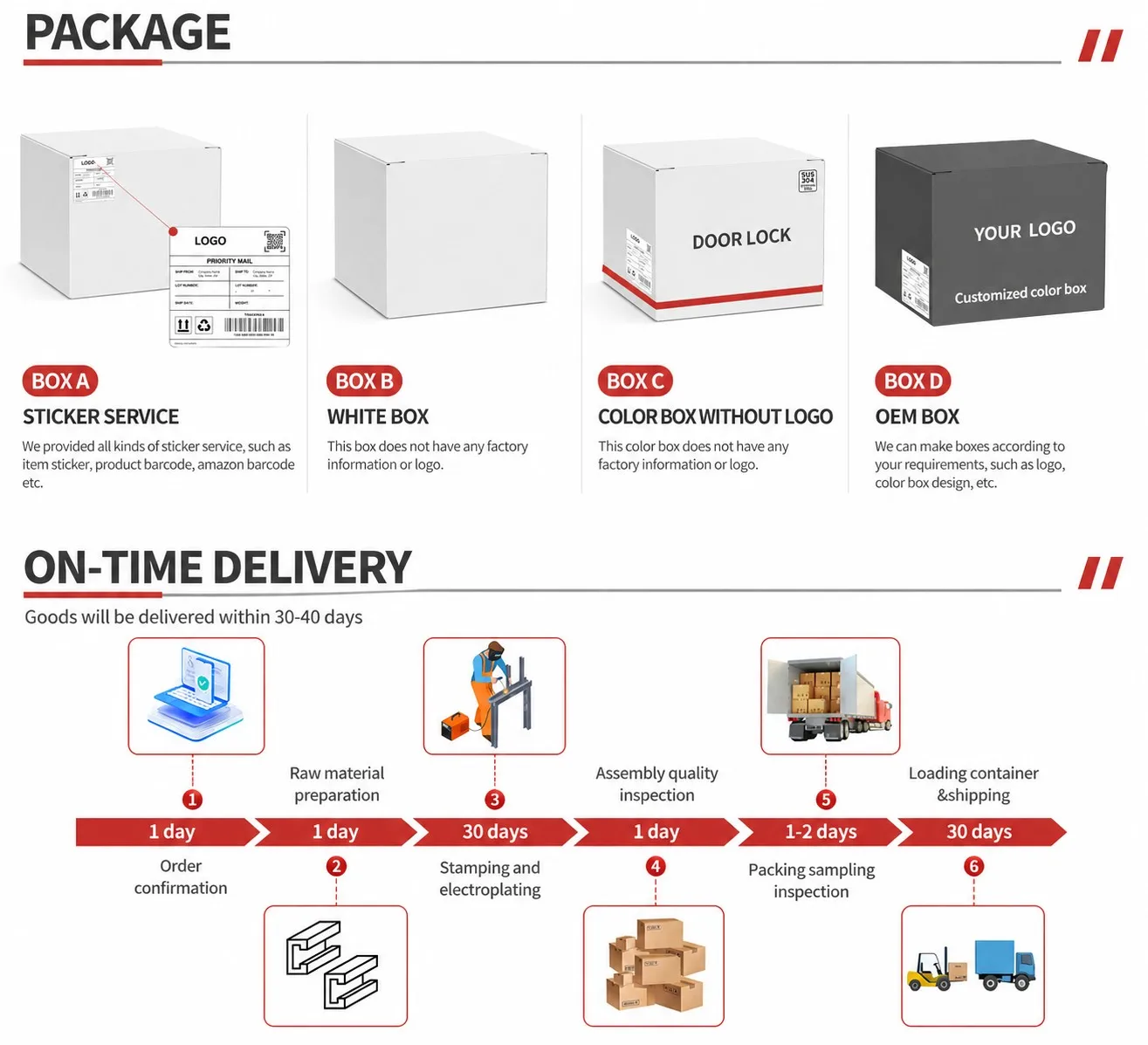
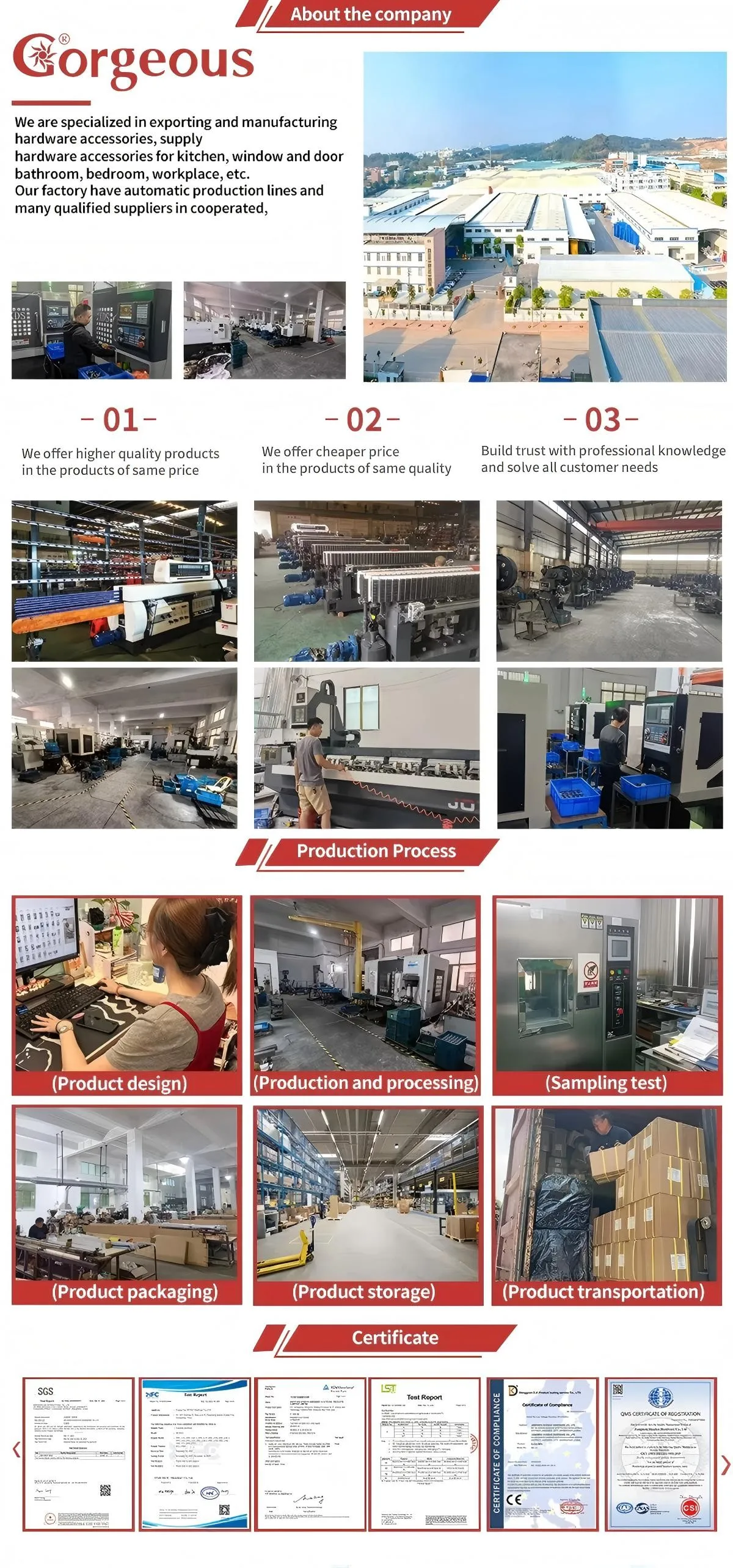
This plastic angle bracket is supplied by Guangzhou Gorgeous Intelligent Technology Co., Ltd., a furniture and architectural hardware business whose range covers hinges, drawer slides, handles, stays, legs, castors, locks, corner brackets, connecting plates and the fittings that hold panel furniture together. The company works to export orders: quantity, colour, plate specification, cover cap, packing, carton marking and shipping documents are agreed before production rather than after it, and the specification written on the order is the specification the tooling works from. The body colour, the plate thickness and the cap are all part of that specification.



Ordering
Send the model number K420-P40 with the number of pieces, the colour or colours, the screw specification and the destination port, and confirm the overall size and the plate against the drawing at the same time. Samples are available before a production order so a bracket can be screwed into a real cabinet corner and the cap worked on and off, which is the fastest way for both sides to agree that the plate sits in its recess, that the cap snaps down flush and that the corner goes square. The drawing, the packing list and whatever test documentation we hold for K420-P40 are issued on request, and delivery and payment terms are agreed order by order on the proforma rather than assumed from a previous order.


Comprehensive score