


Small Stainless L Bracket 25 29 and 40 mm G-JM13
The G-JM13 Small Stainless L Bracket In Three Sizes
Small brackets are not small versions of large ones. A 25 bracket goes where nothing else will reach: inside a drawer box, behind a cabinet back, on a picture frame, on the corner of a small case. At that size the bracket cannot be stiffened with a rib or a gusset, because there is no room for one, so the whole strength of the part is in the fold and in the width of the strip. That is why this range keeps a constant 15.6 mm width across all three lengths: the width is the only variable that can be held while the length changes.

The finish is polished rather than brushed, and on a bracket this small that is a visible decision. These are used on drawer boxes, display cases, frames and small cabinets, where the corner is close to the eye and the bracket will be seen. A polished surface reflects the timber around it and reads as part of the fitting; a brushed or plated surface reads as a repair. Where the bracket will be hidden, the finish costs nothing and matters less, and the same part is used either way.
The Three Sizes
| Legs (mm) | Width (mm) | Holes | Where it is used |
| 25 x 25 | 15.6 | one per leg | drawer boxes, frames, small cases |
| 29 x 29 | 15.6 | one per leg | cabinet corners, panel joints |
| 40 x 40 | 15.6 | two per leg | shelf corners, plinth returns, small repairs |
The 25 and 29 brackets carry one hole per leg, which is all the strip can take at that length without the holes running together at the fold. The 40 bracket is long enough for two holes per leg, and that is the one to specify where the bracket has to hold an angle rather than only locate a panel: two screws on each leg stop the joint rotating, whereas one screw per leg lets it pivot until something else holds it.

Holding An Angle With One Screw
A single screw per leg is enough for a joint that is held by something else, such as a drawer box where the panels are also glued or nailed, but it will not hold an angle on its own. That is not a fault in the bracket, it is what a single fixing does: the leg can rotate about the screw. On a cabinet corner where the bracket is the only fixing, use the 40 mm bracket with two holes per leg, or use two of the smaller brackets one above the other so that rotation is resisted at both ends.
Where the two smaller brackets are specified on a corner that will be knocked, a smear of adhesive under each leg is worth more than a bigger bracket: the screw locates the panel while the adhesive sets, and the joint stops relying on the screw alone. That is how these brackets are used on drawer boxes in production, where the bracket is a clamp as much as a fixing.

Working Inside A Small Space
The smaller the bracket, the more the driver matters. A 25 bracket sits in a corner where a long driver bit will not fit at an angle, and the screws have to go in square or the head will strip. Use a short bit or a right-angle attachment, and drill a pilot just under the core diameter: on a bracket this size a screw that will not go in will usually take the bracket round with it, because there is not enough purchase to hold it.
Hold the bracket with a finger while the first screw is driven, rather than letting it sit loose, because a small bracket will slide out of position before the screw bites. On a polished bracket, tape the leg to the panel if both hands are needed; the tape comes off after the second screw.
What These Are Called
Three phrases come in on enquiries and all three are this range. A small L bracket names the size and the shape, and it is what a buyer asks for when a full-size corner will not fit. A 25 x 25 corner bracket names the smallest size by its legs, and it is the phrase used on marketplace listings where the bracket is sold in packs by dimension. A cabinet corner bracket names the job, and it is the phrase used by a shopfitter or a cabinet maker who is reinforcing a carcass rather than repairing a piece of furniture. Every one of those phrases points at the brackets in these frames.
What none of them carries is the width, and on a bracket this small the width is what decides whether it will fit between two panels. State the leg length and the width together, and the bracket is specified rather than guessed.
Checks On Delivery
Four checks on a carton of small brackets. Squareness: stand one on a flat surface and sight along the legs, because a small bracket folded off square is harder to correct than a large one. Holes: run a finger round each rim for a burr, which stops the screw head seating and is commoner on small punched parts. Fold: look for a bright line at the outside of the fold, which is where a thin bracket will start to crack. Finish: a uniform polish with no drag marks or fingerprints, since a polished bracket shows every mark and arrives in front of a customer in the same bag it was packed in.
Count the carton by size. Three lengths that differ by a few millimetres are impossible to separate by eye once they are loose, and the difference only shows when the bracket will not line up with the holes on the job.
The Middle Size Is Not Padding
Three sizes look like a marketing ladder and are in fact three different jobs. The 25 bracket fits inside a drawer box where the side is only a little taller than the bracket, and it is the size that gets used in volume. The 40 bracket is the size that holds an angle on its own, because it takes two screws per leg. The 29 bracket exists because a carcass panel is often thicker than a drawer side: on a cabinet corner the 25 bracket leaves the screw too close to the fold for the driver to reach square, and the 40 bracket is more than the corner needs. The middle size puts the hole far enough from the fold without taking more room.
That is worth knowing when a buyer asks for one size to cover everything. It will not: a bracket that is right for a cabinet corner is loose in a drawer box, and a bracket that is right for a drawer box cannot be driven square on a cabinet. The three sizes are sold together for that reason, and a mixed bag by length is the normal way a workshop buys them.
Stainless In A Damp Corner
Most of these brackets go somewhere that never dries out completely: the inside of a bathroom cabinet, the base of a sink unit, the corner of a box stored in a shed. A plated bracket in that position rusts from the edge inwards, and the rust stains the panel around it long before the bracket fails. Stainless does not do that, and on a bracket this cheap the difference in price is smaller than the cost of one call-back.
The polish helps as well as the alloy. A polished face sheds water rather than holding it in a brushed grain, and it wipes clean without leaving a residue in the surface. Where the bracket is used on a bathroom cabinet or a shower fitting, that is the whole reason for specifying stainless rather than plated steel.
Where A Small Bracket Earns Its Place
- Drawer boxes, where the bracket has to sit inside the box without fouling the runner.
- Cabinet carcasses assembled on site, where the corner is reinforced from inside.
- Picture frames and small cases, where a full-size corner would show on the outside.
- Shelf corners in a bookcase, where the bracket holds a fixed shelf to a side panel.
- Plinth returns and toe-kick corners, where there is no room for a longer leg.
- Display units and shop fittings, where the fixing is close to the eye and has to look right.
- Small repairs on chairs and tables, where the damage is local and the bracket stays hidden.
- Model making and exhibition work, where a small steel corner is used instead of a timber block.
Why The Width Stays The Same
All three brackets are 15.6 mm wide, and that is deliberate. A small bracket is usually chosen for the space it has to fit into rather than for the load it will carry, so the length is the variable the buyer needs and the width is the constant that has to be small enough to fit between two panels with a hand tool. Widening the bracket to make it stronger would take it out of the jobs it is bought for.
Where more strength is needed at this size, the answer is a second bracket rather than a wider one: two brackets set apart on the same corner carry more than one larger bracket because the load is spread along the joint. That is the standard way of reinforcing a drawer box, and it is why the smaller sizes are sold in packs rather than singly.
Packing And Export
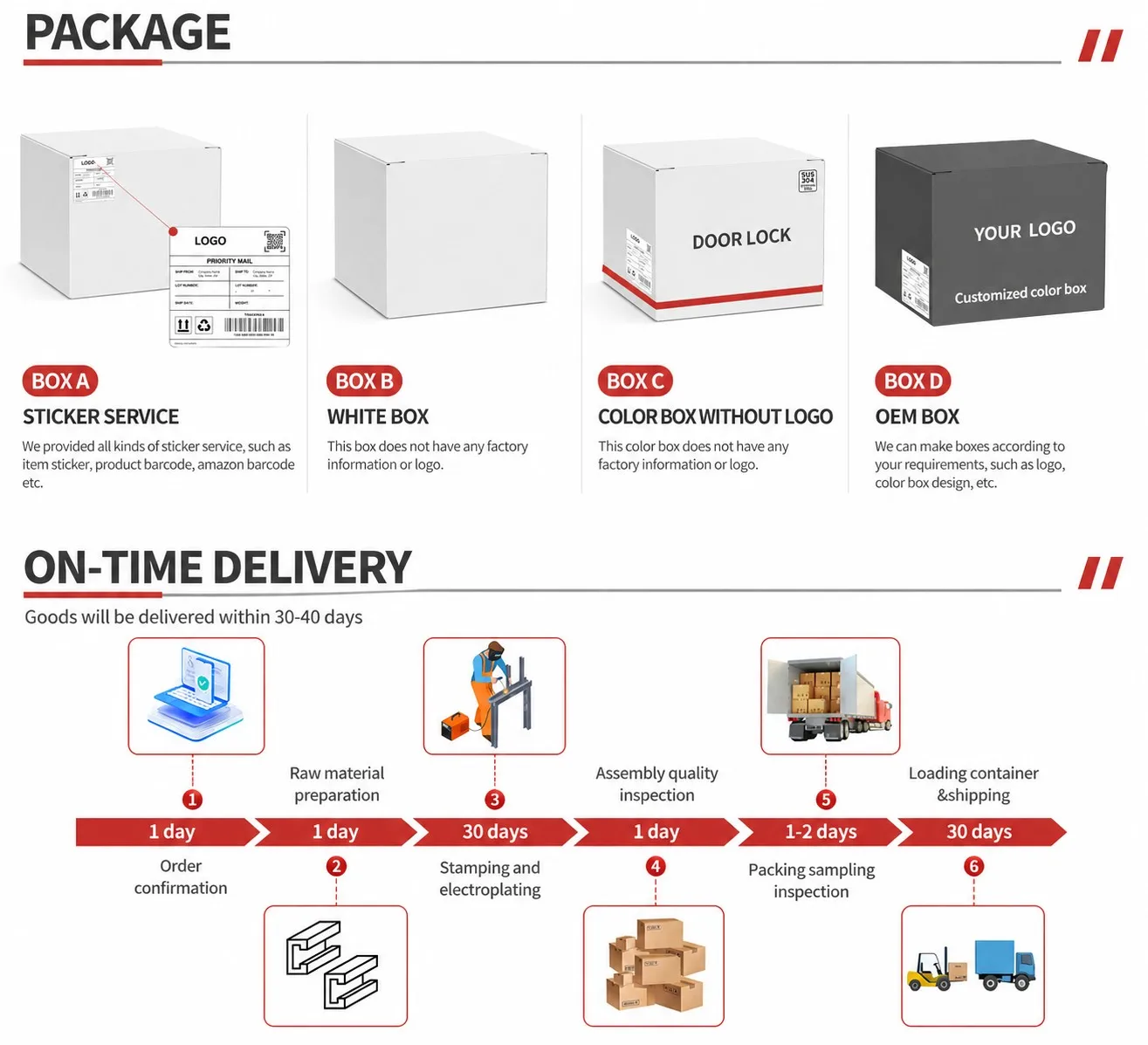
The brackets are packed to count by size, one bag per length, marked with the legs and the count. Small polished brackets travel badly if they are loose: they scratch each other, and a bag of scratched brackets is a bag that comes back. A paper sleeve or a bag per group of twenty is enough, and it keeps the polish intact until the bracket reaches the bench.



The G-JM13 range is a small polished stainless L bracket in three sizes, 25 x 25, 29 x 29 and 40 x 40, every one 15.6 mm wide, with one hole per leg on the two smaller sizes and two per leg on the 40. Packed to count by size. Hole diameters and spacing follow the issued drawing.
Send the leg length, the width available and how the corner will be fixed, and the bracket can be checked against all three before anything ships. Where the bracket is the only fixing on the corner rather than a reinforcement, say so at enquiry and the 40 mm bracket is the one to quote.


Comprehensive score