


Stainless Steel Flat Mending Plate Three Sizes G-JM04
The G-JM04 Flat Mending Plate In Three Sizes
A flat plate is the simplest fixing in a furniture catalogue and the one that gets used most on repair work. This plate lies flat on two panels, bridges the joint and takes screws on both sides, so a split rail, a broken apron or a panel that has pulled off its fixing can be joined again without taking the piece apart. Where an angle bracket pulls two faces together at a corner, a mending plate works on one plane, which is what a repair usually needs.

The plate is stainless, and on this part that matters more than on a bracket. A plate sits between two surfaces, often under a seat, inside a drawer box or behind an apron, where it cannot be inspected and cannot be repainted. A plated plate that starts to rust there will stain the timber around it and the damage shows before the fix fails. Bare stainless will not do that, and the plate can be left in place for the life of the piece.
The Three Sizes
| Plate (mm) | Holes | Hole layout | Typical use |
| 123 x 37 | six | two staggered rows | splicing rails, table aprons, long splits |
| 86 x 38 | four | staggered line | chair frames, drawer sides, panel joins |
| 76 x 16 | four | single line | narrow stiles, edging, small repairs |
The largest plate carries six holes in two staggered rows, which is what lets it bridge a split and still put two screws into sound timber on each side. The middle plate is four holes on a stagger, sized for a chair frame or a drawer side where the plate has to sit inside the width of the member. The smallest is four holes in a single line on a narrow plate, for a stile or an edge where anything wider would show.

Why The Holes Are Staggered
A staggered pattern puts the screws into different fibres along the grain instead of lining them up in one plane, which is where a split starts. On a repair the timber is already weakened, and four screws in a staggered layout hold better than four in a row because no single line of the plate is carrying all the load. The stagger also lets the plate be narrower than the sum of its holes: a straight line of six holes would need a plate almost twice as wide.
The holes are plain and slightly chamfered, so a countersunk or a pan head screw seats on the plate without a washer. On the small plate, where the holes run down the centre line, a screw head that stands proud will show; on the large plate it will not. That is worth knowing before choosing the screw rather than after.

One Plane, Two Faces
A flat joining plate works on the faces of two members that meet in the same plane. That is a different job from a corner bracket, and confusing the two is the commonest mistake on a repair. If the two members meet at an angle, a plate will only touch one of them, and the joint will open as soon as it is loaded. If they meet flat, a plate is stronger than an angle bracket because the load runs through the plate rather than through a fold.
Where the plate has to cross a joint that is not quite flush, the plate will pull the two faces level as the screws are driven, provided the screws are tightened in stages from the middle outwards. Tightening one end first will cock the plate and leave a gap at the other, and the gap is what shows on a finished piece.
Fixing Through A Plate
Drill a pilot just under the core diameter of the screw, and drill it through the plate so the bit cannot wander on the stainless. Screw length matters more than screw gauge here: the screw has to pass through the plate and bite into the member below without breaking out on the far side, and on a thin panel the safe length is short. If the panel is too thin for a screw, the plate can be fixed with a machine screw and a nut, or with a rivet where the back is accessible.
On a repair where the original holes have opened, the plate can be turned so its holes land on fresh timber. That is the practical advantage of a plate over a bracket of fixed geometry: the fixing points can be moved along the plate by rotating it, and the stagger means a rotation of half a hole still finds material. Say what the plate is bridging at enquiry and the size can be chosen to reach past the damage.
What These Are Called
Three phrases come in on enquiries and all three are this plate. A mending plate is the repair term, and it is what a joiner asks for when a piece has split and has to be held back together. A flat straight bracket describes the shape, and it is the phrase on marketplace listings where plates are sold in packs by length. A joining plate describes the job rather than the shape, and it is the phrase used when two panels have to be joined face to face rather than at a corner. Every one of those phrases points at the plates in these frames.
What none of them carries is the size, and with three plates in the range that is the decision. The same phrase bought at 76 and at 123 is the same part and a different repair. Quote the length, the width and the hole pattern, and the plate is specified.
Checks On Delivery
Four checks on a carton of plates. Flatness: lay a plate on a surface plate or a piece of glass and press one corner, because a plate that rocks will not pull a joint flush. Holes: run a finger round each rim for a burr, which stands the screw head off the plate. Edges: the chamfer should be even on both long edges, since an uneven chamfer means the plate was cut from the wrong part of the strip. Finish: a uniform brushed surface with no fingerprints or rust spots, because a stainless plate stored against carbon steel will pick up contamination on the surface without being at fault.
Count by size. Three plates that differ by a few centimetres are easy to mix once they are loose, and a mixed carton is always discovered at the bench. Keep the plates in their bag until they are used.
Reading The Plate Against The Job
Measured properly, the three plates in this range are 123 mm by 37 mm, 86 mm by 38 mm and 76 mm by 16 mm. The two larger plates are close in width and far apart in length, which is the point: a plate has to be long enough to reach sound material either side of a fault, and only as wide as the member it sits on. Buying the long plate for a narrow stile wastes metal and shows at the edges; buying the narrow plate for a split rail puts all its screws too close together to help.
A plate also has to clear whatever is behind the joint. Under a seat, the plate has to miss the corner blocks; inside a drawer box, it has to sit clear of the runner; on a chair rail, it has to fit between the leg and the first spindle. Lay the plate on the joint before drilling anything, and if it fouls, the next size down is the answer rather than a file.
When A Plate Is The Wrong Part
Three cases where a flat plate will not do the job, and it is worth naming them because a plate is cheap and tempting. A corner, where the two members meet at an angle: the plate touches one face only. A joint that has to carry a working load, such as a bed rail or a table leg under a heavy top: the plate is a repair part, not a structural one, and the screws will work in a plate that is asked to carry load. And a joint where the surface will be seen and finished: the plate is a visible repair, and on a piece that is going to be polished the repair should be a dutchman rather than a plate.
In the first two of those cases the correct part is a bracket with two legs, drilled through both, so the fixing crosses the corner rather than lying on one face. The plate remains the right answer for the flat joint it was made for, and saying so at enquiry saves a return.
Where A Flat Plate Earns Its Place
- Splicing a table apron or a rail that has split along the grain.
- Holding a chair leg back onto its seat rail after the original screws have pulled out.
- Joining two panels face to face where a dowel or a biscuit cannot be used.
- Reinforcing the back of a drawer side that has cracked at the runner.
- Repairing a flat-pack panel where the cam or the dowel hole has broken out.
- Bridging a crack in a shelf board underneath, where nothing will be seen.
- Holding a headboard or a bed slat rail where the fixing has worked loose.
- Strapping a joint in a display plinth or a shop fitting assembled on site.
Sizes And What They Reach
The three plates in this range are chosen by reach rather than by width. A 123 plate spans a damaged area of about the length of a hand and puts three screws either side of the fault, which is what a split rail needs. An 86 plate is the general repair size and the one that fits inside the width of a chair rail. A 76 plate is the narrow one, for a stile or an edge where a wider plate would be visible or would foul something behind.
Where a repair is longer than the largest plate, two plates can be used in line with a small gap between them, which is better than one plate at the middle: the two together reach past the damage at both ends and leave the middle free to move slightly. The plate is not a structural member and should not be treated as one, but for furniture repairs it does the job that a dutchman or a butterfly key would do, with less work and no matching.
Packing And Export
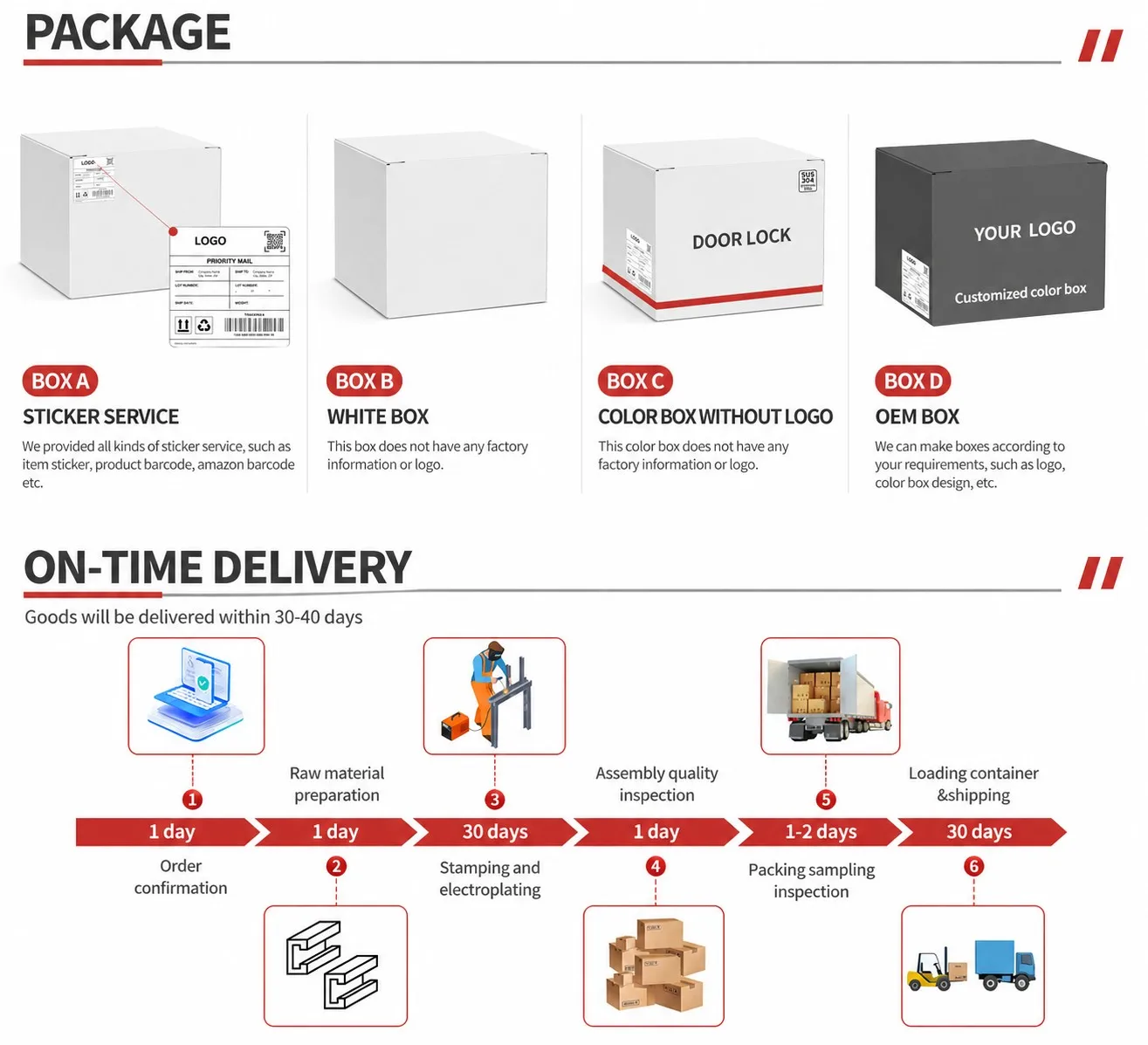
The plates are packed to count by size, in bags marked with the length and the count. They travel as flat stainless hardware: nothing breaks, nothing needs a cradle, and the only damage they take is surface marking from rubbing. A paper sleeve per group of ten keeps the brushed finish intact, which matters when the carton is opened in front of a customer.




The G-JM04 range is a stainless steel flat mending plate in three sizes, 123 x 37, 86 x 38 and 76 x 16, drilled with staggered holes and chamfered along both long edges. Packed to count by size. Hole diameters and spacing follow the issued drawing.
Send the length of the split, the width available and the panel thickness, and the plate can be checked against all three before anything ships. Where the two members meet at an angle rather than flat, say so at enquiry: a plate is the right part for a face-to-face joint and the wrong part for a corner.


Comprehensive score