


Stainless Steel L Corner Bracket 45 to 125 mm G-JM08
The G-JM08 Stainless L Bracket Family In Six Sizes
Six brackets, one drawing. The G-JM08 range runs from a 45 mm bracket to a 125 mm bracket, and every one of them is 20 mm wide, folded square from stainless strip with a plain face and countersunk-free round holes. The width is the constant: it is what lets a buyer keep the same hole layout on the narrow leg and choose the length by how far the bracket has to reach. The frames lay all six out side by side, which is the quickest way to see that this is one product in six lengths rather than six products.

The material is the other half of the specification. These brackets are stainless, not plated steel, so there is no coating to chip at the fold and no yellow chromate that fades with the light. A bracket that lives in a bathroom, a kitchen or a boat is chosen for that reason alone, and a bracket that will only ever be inside a dry carcass is chosen for it because the price difference has stopped mattering on small quantities. Bare stainless also means the bracket can be cleaned with anything, which matters on shop fittings and on anything a customer touches.
The Six Lengths
| Legs (mm) | Width (mm) | Where it is used |
| 45 x 45 | 20 | drawer boxes, small cases, light corners |
| 50 x 50 | 20 | general cabinet work |
| 65 x 65 | 20 | shelving and plinth returns |
| 86 x 86 | 20 | bookcases and wardrobe frames |
| 100 x 100 | 20 | bench work and repair plates |
| 125 x 125 | 20 | frame building and structural repair |
Two of those sizes are the ones that move. The 50 mm bracket is the general cabinet size and the one that gets reordered; the 100 mm and 125 mm brackets are the repair sizes, and a workshop that does maintenance work will get through more of them than the size list suggests. The 45 mm bracket exists because a drawer box will not take anything longer without the bracket showing inside the box, and the 65 and 86 mm brackets fill the gap for shelving and wardrobe frames where the 50 is marginal and the 100 is clumsy.

Why The Width Stays At Twenty
A bracket is loaded in two ways: along the leg, which the screws resist, and across the fold, which the material resists. Making a bracket longer adds screws and reach; making it wider adds material at the fold. This range solves the second problem by leaving the bracket narrow and letting the fold do the work, which is why the same 20 mm width appears on a 45 mm bracket and on a 125 mm bracket. The narrow bracket also fits where a wide one will not: inside a drawer box, along the edge of a shelf, into the corner between a rail and a stile.
The limit of that approach is the long bracket with a heavy load. A 125 mm bracket that is only 20 mm wide can be twisted by hand if enough load is applied off the plane, and the answer is not a wider bracket but a second bracket at right angles to the first, or a bracket with a pressed rib. Say what the bracket is carrying at enquiry and the range can be quoted honestly rather than optimistically.

Holes Through Both Legs
Every bracket in the range is drilled through both legs, and the number of holes rises with the length of the leg: two on the shortest brackets, three through the middle sizes and four through the longest. The drawing in the frames gives the pattern for each size, and it is worth reading rather than assuming, because the spacing is not simply scaled. What the extra holes buy is a bracket that can hold a joint where the screws cannot all reach sound material, which on a repair is common: three holes into a weathered rail are worth more than two.
The holes are plain, so a countersunk or a pan head screw seats directly on the stainless face. On a bracket that will be seen, that means choosing a screw with a head worth looking at. On a bracket that will not, it means a screw with a head wide enough not to pull through, and a pilot hole drilled just under the core diameter, because stainless will not forgive a screw driven without a pilot the way a plated bracket sometimes will.
Working Stainless
A stainless bracket behaves differently in the hand from a plated one and the difference is worth knowing. It work-hardens: bend the leg of a bracket twice and the fold stiffens, which is useful when a bracket has to be opened out to fit an angle that is not quite square. It also galls, so a screw driven fast into a stainless bracket without lubricant can seize in the hole, and the bracket then has to be cut off rather than unscrewed. A drop of oil on the screw, and a driver on a low torque setting, saves more brackets than any amount of care afterwards.
The finish is bare, which means it shows every mark. A bracket handled with dirty gloves will show the print, and a bracket wiped with a steel wool pad will show the scratch. Keep the brackets in their bag until they are fitted, and if a batch has to be cleaned before packing, use a cloth and a mild detergent rather than an abrasive. It is a small thing that decides whether a bracket arrives looking like hardware or like a part.
What These Are Called
Three phrases come in on enquiries and all three point at this range. A stainless steel L bracket names the material and the shape, and it is the phrase used by a buyer who knows what he wants and is checking the finish. A stainless steel corner bracket names the joint rather than the shape, and it is the phrase used on marketplace listings where the bracket is sold in packs for shelves and drawers. A heavy duty corner bracket is the claim on the long end of the range, where the bracket is bought for repair and for frames rather than for light cabinet work. Every one of those phrases describes the brackets in these frames.
What none of them carries is the length, and in a range of six that is the whole decision. A heavy duty corner bracket quoted in 45 mm and the same bracket quoted in 125 mm are the same drawing and a different job, and the buyer who names only the phrase will be sent whichever size is in stock. Quote the leg length and the width, and the bracket is specified.
Building A Frame With Brackets
Laid out four at a time, these brackets will make a square: one at each corner, screws through both legs, and the frame is square without a jig as long as the brackets themselves are square. That is how the frames in the photographs were built, and it is the reason a 125 mm bracket exists in a range that starts at 45. A long bracket at each corner of a heavy frame holds the corner against racking in a way a short one cannot, because the screws are further apart on both legs.
The same brackets will make a cube, and a cube is the honest test of a range like this: eight corners, twenty-four screws, and every bracket has to be square for the box to sit flat. A workshop building display plinths, light boxes or shadow-box frames with these brackets is buying the same part for the corners that it buys for a shelf, which is the practical advantage of a family over a single size.
Where a frame is welded rather than screwed, these brackets are still useful as a jig: clamp a bracket into the corner, tack the frame, then take the bracket off and keep it for the next one. A bracket that has been used that way will have spatter on it, so keep a separate set for jigging rather than using stock.
Counting And Packing
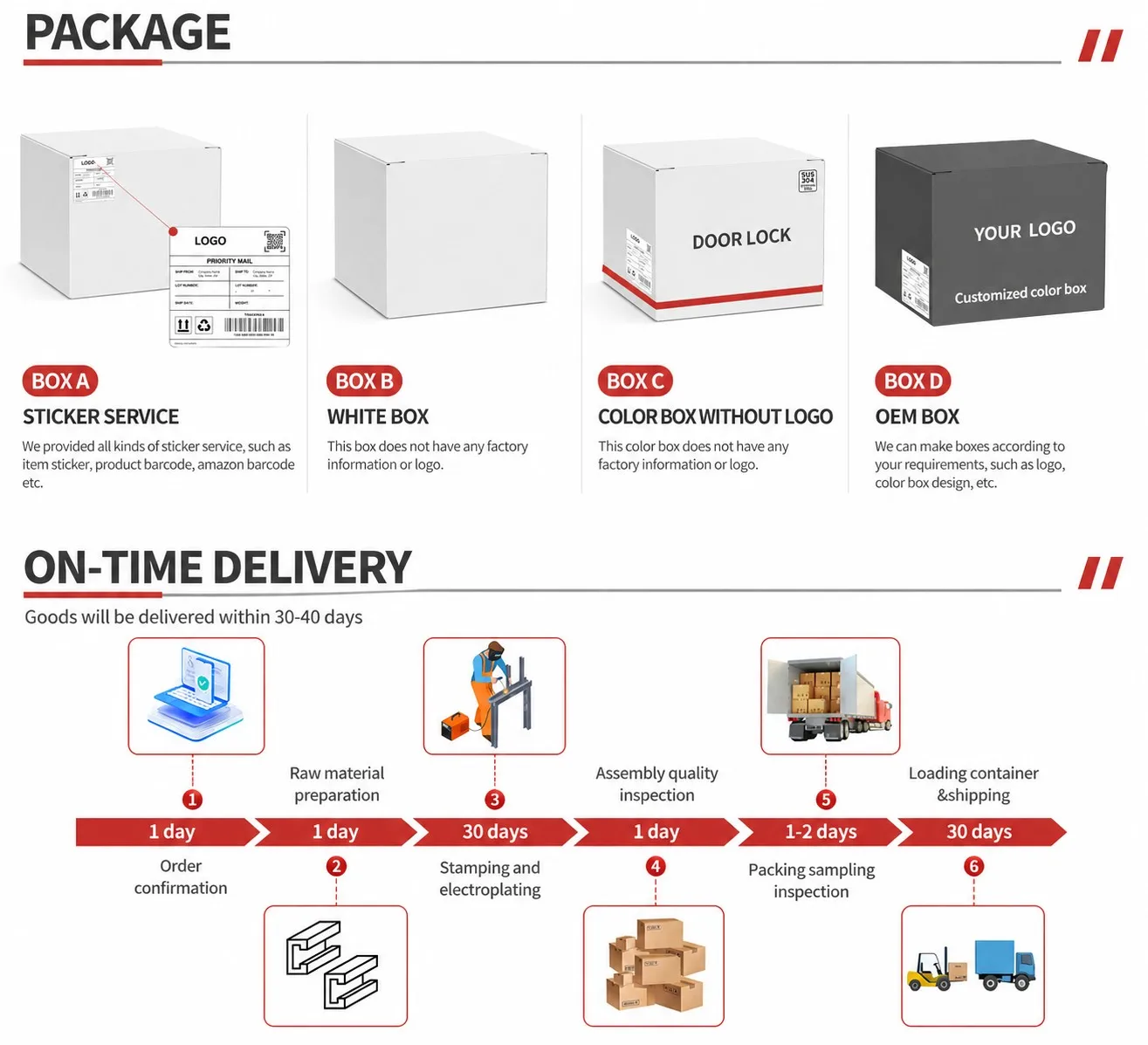
The range is packed to count by size, and that is the only way it stays usable. A carton of mixed brackets is a carton that gets sorted at the bench, and sorting costs more than the brackets. If a buyer wants a mixed carton, the useful split is one bag per size inside the outer carton, marked on the outside with the size and the count, so that a stock check can be done without opening every bag.
For export, the brackets travel well: they are flat, they do not break, and the only damage they take is surface scuffing from rubbing against each other. Wrap each size in a paper sleeve or a bag and the bracket arrives as it left. Unwrapped brackets in a carton with other hardware will arrive with bright marks on the face, and on a stainless bracket those marks are permanent.
Checks On Delivery
Four checks on a carton of brackets. Squareness: stand one on a flat surface and sight along both legs, because a bracket folded off square will hold the joint it is fitted to off square, and no screw will pull it back. Holes: run a finger round the rim of each for a burr, which stops a screw head seating and is the commonest fault on a punched bracket. Fold: look for a crack or a bright line at the outside of the fold, which is where a bracket that has been bent back and forth will fail. Finish: check for fingerprints, scratches and any spot of rust, since a stainless bracket that has been stored against carbon steel will pick up contamination and rust on the surface without being at fault itself.
Count the carton by length. Six sizes that differ by a few centimetres are impossible to separate once they are loose, and a mixed carton is always discovered at the bench. Mark the length on each bag, and keep the brackets wrapped until they are used: an unwrapped bracket in a parts bin is a bracket that will be scratched by the next thing dropped on it.
A Note On The Fold
The fold is the part of a bracket that is hardest to specify and easiest to judge by eye. On these brackets it is a single clean crease across the full 20 mm width, with no relief cut and no pressed rib, and the inside radius is tight. A tight radius is what keeps the two legs at a right angle under load; a generous radius would let the bracket open slightly as the screws are driven, and a shelf fitted to it would sit visibly out of level. Stand a bracket on a surface plate and look at the gap under the outside of the fold: on a good bracket there is none.
A bracket that has been folded from annealed strip will take a small correction in a vice, and one that has been folded from hard strip will crack if it is forced. That is worth knowing before a fitter decides to open a 45 mm bracket out to fit an angle that is not quite square. If the angle on the job is not 90 degrees, say so at enquiry, because a bracket bent at the bench is a bracket that has lost some of its strength at the fold and none of its price.
Ordering The G-JM08 Range



The G-JM08 range is supplied as stainless steel L corner brackets in six sizes, 45, 50, 65, 86, 100 and 125 mm legs, every leg 20 mm wide, with two to four round holes per leg and a plain fold. Packed to count by size. Plate thickness, hole diameter and hole spacing for each size follow the issued drawing.
Send the lengths you need, the screw you intend to use and what the bracket has to carry, and the range can be checked against all three before anything ships. Where the joint takes a working load rather than only holding an angle, say so at enquiry and the bracket with a pressed rib is the one to quote.


Comprehensive score