


Zinc Alloy Folding Table Butler Tray Hinge G-K4312
The G-K4312 Zinc Alloy Folding Table Hinge In Six Photographed Positions

This listing is written from the frames in this folder, and six of the eight are used on this page. What they show is a zinc alloy folding table hinge in two marked sizes. The family frame lays the larger member and the smaller member out together with six wood screws beside them, and that frame is also the frame the numbering sheet uses to name the two: the larger is K4312 and the smaller is K4313. The two drawings then state the size of each member and are the frames a buyer reads a specification from. Three further frames show one hinge on its own: a front elevation where the two leaves lie flat and the body stands below them, a view from above where the square pocket and the pivot screw sit in the middle of the closed hinge, and an underside frame that turns the casting over and shows the pockets, bosses and the spring well inside it.
The hinge is the unit this listing is about, and this hinge is a particular one. It is not a cup hinge and it is not a butt hinge: there is no round knuckle running the length of a leaf and there is no cup bored into a door. What this hinge has is a square barrel body cast in zinc alloy, two round edged leaves that fold out of it, a pivot screw that sets the fold, and a spring latch that holds the hinge at the angle the piece of furniture needs. The two hinge leaves sit flush with the surface the hinge is mortised into, which is the whole point of the shape: a table top built with this hinge folds flat and shows a joint line rather than a barrel standing proud of the surface.
The Two Hinge Sizes The Drawings Mark

The first drawing is the larger member and it is the frame a buyer reads the size from. It marks 65 millimetres across the closed hinge and 40 millimetres deep, the two leaf portions at 32 millimetres each, the square pocket at 30 by 20 millimetres, the body at 13 millimetres, and a 1 millimetre step where the leaf meets the barrel. The second drawing is the smaller member on the same construction and it marks 58 millimetres across, 37 millimetres deep, the leaf portions at 27 millimetres each, the square pocket at 21 by 17 millimetres, and the same 13 millimetre body. Both drawings carry the same two lines of text, Specification followed by the size and Material Zinc alloy, and those are the two figures a buyer orders against.
Two sizes on one construction is the practical point of this hinge, because a furniture maker rarely builds one folding surface at one size. The larger member is the one that goes on a dining table leaf or a butler tray that takes real load across the joint; the smaller member is the one that goes on a sewing machine table flap, a desk return, a cabinet drop front or a smaller tray, where the same flush fold is wanted in a tighter space. Having the two members in one model number means a buyer specifying a table and a tray in the same order is specifying two sizes of the same hinge rather than two different hinges, and the screws, the screw pattern and the fold behaviour are common to both.
| Member | Marked size | Leaf portions | Square pocket | Body |
| K4312 (larger) | 65 x 40mm | 32mm each | 30 x 20mm | 13mm |
| K4313 (smaller) | 58 x 37mm | 27mm each | 21 x 17mm | 13mm |
| Both members | Zinc alloy | Four countersunk holes each | Knurled pad on the barrel face | 6 wood screws supplied |
The second drawing is worth reading on its own rather than as a smaller copy of the first, because the smaller member is not a scaled photograph of the larger one. The leaf portions come down from 32 millimetres to 27, the pocket comes down from 30 by 20 to 21 by 17, and the overall size comes down from 65 by 40 to 58 by 37, while the body stays at 13 millimetres on both. A buyer who scales the larger member down in their head and orders the smaller one for a shallow mortise will find the body is the same depth it was, which is exactly the figure a mortise is cut to. That is why both drawings are on this page and why the two are stated side by side in the table above: the size that changes and the same hinge size does not are both on the record.
The Hinge Barrel, The Pivot Screw And The Latch
Read the top view and the underside frame together and the working of the hinge is visible. Between the two hinge leaves sits a square hinge barrel body, and in the middle of its face a knurled pad is set into a square pocket, which is the friction face the hinge closes onto. Two screws sit in the barrel line on the top face: one is the pivot screw that sets how the leaves sit relative to the body, and the one beside it is the setting screw a fitter uses to take slack out of the fold. On the underside the same body is a casting with ribs, bosses and a well, and in that well sits the spring and the lever that form the latch, which is the part that holds the table open flat and stops it dropping when the leaf is loaded.
The latch is the part of a folding table hinge that decides whether the furniture feels sound, and it is worth being precise about what the frames show. The three quarter frame shows the lever standing out of the body on the far side of the barrel, and the underside frame shows the well the spring sits in with the lever arm reaching across it. What those two frames prove is that the hinge carries a spring loaded latch that is part of the casting rather than a separate catch added later. What they do not prove is the force the spring holds or the angle at which it breaks over, so those are drawing figures rather than photograph facts: a hinge of this class is normally made to snap past a detent near flat and to hold again where the leaf is fully open, and the exact angles for this model are issued against the drawing rather than guessed from a picture.

The underside is the frame to look at before ordering if the hinge is going into a thin panel, because it is the frame that shows what has to be hollowed out. The body is a casting with a floor, ribs and two screw bosses rather than a shell, so the mortise has to take the whole 13 millimetres of body depth at the barrel and the leaf portions sit on top of that. A panel too thin to take the body is a panel this hinge will not sit flush in, and no figure in a photograph tells a buyer that: it is the 13 millimetre body against the panel thickness, which is the first arithmetic to do on this hinge and the reason the body depth is stated twice on this page.
The Hinge Leaves, The Screw Pattern And The Flush Fold
Each hinge leaf is a round edged oval, and the round edge is not decoration. A flip top hinge on a table tray is handled constantly and the leaf edges are where hands and cloths catch, so a round edge is a safer and easier edge to have on a surface that folds than a square corner; it also lets the hinge leaf be mortised with a single round cut at each end rather than four corners. Each hinge leaf carries four countersunk holes, and the countersink matters for the same reason it matters on any flush hinge: the screw heads have to finish level with or below the hinge leaf face, because anything proud of the hinge leaf face stops the two halves closing flat and marks the surface as the hinge swings.
The screw pattern is four holes per leaf, eight per hinge, and the family frame shows the six wood screws that come with the pair of hinges photographed there. A buyer counting holes and counting screws will notice the two figures are different, and the reason is on the frame rather than in a paragraph: the set is sold in a quantity where the screws in the frame are the sample of a larger bag, so the screw count for an order is agreed with the order rather than read off the photograph. What the frame does establish is the type of fixing the leaves are cut for, which is a countersunk wood screw into the leaf, not a machine screw into a nut plate.
The fold itself is 180 degrees, which is what makes the hinge a folding table hinge rather than a lid stay. At 180 degrees the two hinge leaves lie in one plane and the table top is flat and continuous; at 90 degrees the leaf stands up as a return or a drop front. A hinge built to sit flush and fold through 180 degrees is a hinge whose two hinge leaves have to be in line at the flat position, and the 1 millimetre step marked on both drawings is the clearance that lets that happen without the leaf portions fouling each other at the fold line. That step is the one figure on the drawing that a buyer is most likely to leave out of a mortise, and it is on both drawings for that reason.
What The Frames In This Listing Prove
Every structural claim on this page can be pointed at in one of the frames. The two members and the six screws are in the family frame, and the same frame repeated with red labels is the numbering frame that names them K4312 and K4313. The marked sizes, the leaf portions, the square pocket, the body depth and the Material Zinc alloy line are on the two drawings. The square barrel, the knurled pad, the pivot screw and the setting screw are in the top view. The flush fold and the body standing below the leaves are in the front elevation. The casting, its ribs and the spring well are in the underside frame. What no frame on this page proves is the load the hinge carries, the angle the latch breaks at, the force the spring holds, the thickness of the zinc alloy wall and the plating thickness, and none of those figures is carried here as a photograph fact. They come from the hinge drawing and the test report for this model, and a figure borrowed from a similar looking hinge is the kind of typo that shows up when the table is loaded rather than at the desk.
Two things are stated as class behaviour rather than as frame facts, and both are worth naming. The first is the latch: the frames show the lever and the spring well, not the spring working, so the break over angle and the holding force are drawing figures and are confirmed on a sample through a full fold before a production order is cut. The second is the flush fit: the frames show the leaves in line and the body standing below them, not the hinge in a mortise, so the fit is worked on a sample in the buyer's own panel with the buyer's own thickness, because a hinge that sits flush in a 20 millimetre panel and a hinge that sits flush in a 12 millimetre panel are two different jobs even on the same hinge.
The staged set also omits, on purpose, the two source images that repeat a view already on the page. One is a three quarter frame taken from slightly above and behind the closed hinge, whose pose is already carried in the top view and in the underside frame; the other is a four panel grid that repeats the top view, the front elevation, a three quarter view and the underside at lower resolution in one image. Nothing in either of them is a view the six staged frames do not already carry, so they are described here rather than used twice on the page. The numbering frame is likewise not uploaded: it is the same family frame with the model names written onto it, and it exists to name the two members for us rather than to show the product.
Questions A Hinge Buyer Asks
A hinge of this kind is bought on a handful of questions rather than on a paragraph, so the hinge is answered question by question here, and each answer points at the hinge frame or the hinge drawing it comes from.
- Which hinge size fits my table? The larger hinge at 65 by 40 millimetres suits a dining leaf or a butler tray, the smaller hinge at 58 by 37 millimetres suits a sewing table flap, a desk return or a tray, and both hinge sizes share the same 13 millimetre hinge body.
- Will the hinge sit flush? That is what the hinge is cut for: the two hinge leaves mortise flush and the hinge body sits below them, so the hinge leaves a joint line rather than a barrel standing out of the top.
- Does the hinge hold the top up? The hinge carries a spring loaded latch, and the hinge holds where that latch breaks over; the two hinge angles are a drawing figure rather than a photograph fact.
- How many screws does the hinge take? Eight holes per hinge, four in each hinge leaf, and the hinge is supplied with wood screws counted against the order rather than against the sample.
- Is this hinge brass or zinc? This hinge is zinc alloy, and a brass hinge of the same shape is a different hinge in a different finish, so the two are not interchangeable on an order.
- Can the hinge be adjusted? The hinge carries a pivot screw and a setting screw in the hinge barrel, so slack can be set out of the hinge at the bench without replacing it.
- What does the hinge fold to? The hinge folds through 180 degrees, and at that angle the two hinge leaves lie in one plane and the top is flat and continuous.
- What if my panel is thin? A panel thinner than the 13 millimetre hinge body will not take this hinge flush, and that is a hinge choice to change rather than a hinge fault to fix.
- Is this a cup hinge? No. This hinge has no cup and no knuckle: the hinge is a flush folding hinge built around a square zinc alloy hinge barrel.
- Can the hinge go outside? The finish decides that, so an exterior or damp hinge position is agreed against the hinge drawing rather than assumed from the bright silver the hinge shows in the frames.
How The Hinge Is Built
Read the front elevation and the underside together and the construction is plain. The body is a single zinc alloy casting, ribs and bosses included, so the barrel, the pocket and the spring well cannot work loose from each other the way an assembly of parts can. The two hinge leaves are formed out of the same casting line and finished with the same plating, and the pivot screw and the setting screw are steel parts set into the zinc body. The finish across the hinge is one bright silver tone, uniform across the hinge leaves, the hinge barrel face and the pockets, and it is the finish the frames show rather than a finish named here: a position near salt air, a bathroom or an exterior tray wants that finish agreed against the drawing, because the bright silver in a photograph is one finish among several.
- Zinc alloy folding table hinge in two marked sizes, K4312 at 65x40mm and K4313 at 58x37mm.
- Two round edged oval leaves per hinge, four countersunk screw holes in each, eight per hinge.
- Square barrel body between the leaves, cast in one piece with its ribs, bosses and spring well.
- Knurled pad set into a square pocket on the barrel face, the friction face the hinge closes onto.
- Pivot screw and setting screw in the barrel line, so the fold can be set and slack taken out at the bench.
- Spring loaded latch inside the body, shown as a lever arm in the three quarter and underside frames.
- Folds through 180 degrees to a flat top, with a 1 millimetre step at the fold line marked on both drawings.
- Body depth 13 millimetres on both members, which is the figure a mortise is cut to.
- Six wood screws in the family frame, with the screw count for an order agreed on the order.
Where A Flip Top Hinge Earns Its Keep
A hinge of this shape turns up wherever a surface has to fold flat and then carry load, and the three places it is most often bought for are worth naming because they are the three the product keywords on this page name. As a folding table hinge it goes into a dining table leaf, a kitchen peninsula that extends, a camping or boat table, or a workbench extension, and the 180 degree fold is what lets the top double in size and then sit flat again. As a butler tray hinge it goes into a tray table, a drop front desk or a chest lid, the small furniture a tray of drinks or a laptop is put down on, where the hinge has to be flush because the tray surface is the working surface. As a flip top hinge it goes into a sewing machine table flap, a cabinet drop front, a vanity return or a bed end that hinges up, where the leaf stands vertical in one position and lies flat in the other.
The reason all three buy the same hinge is that all three have the same two problems, and the hinge answers both. The first is the joint line: a cup hinge or a butt hinge needs a knuckle or a cup, and on a table top both are visible and both collect dirt, while a flush folding hinge leaves a line and nothing else. The second is the load at the fold: a table leaf that folds flat carries weight right at the joint, which is why the body of this hinge is a casting with ribs and bosses rather than a folded sheet, and why the hinge leaves are 32 millimetres each on the larger hinge member and 27 on the smaller. A buyer who needs a hinge that hides and a hinge that carries is a buyer this hinge is built for, and the two sizes let the same answer be applied to a dining table and to a sewing table without changing the hardware family.
What To Confirm Before The Order Is Cut
Four figures are worth confirming against the drawing before a production order, and none of them is a figure a photograph can give. The member size is the first, because 65 by 40 and 58 by 37 mortise differently and a hinge leaf portion of 32 millimetres against 27 changes where the hinge screw line falls. The body depth is the second, because 13 millimetres of casting has to come out of the panel and a panel too thin for it will not take this hinge flush at all. The latch figures are the third, the angle at which it breaks over and the force the spring holds, because a tray that has to stay open under load and a flap that only has to stay shut are two different settings of the same hinge. The finish and the wall thickness are the fourth, because they decide how the hinge behaves in a damp position and how much the leaves will take before they bend.
Two checks are worth doing on the sample rather than on paper. The fold is the first: with the hinge mortised into the buyer's own panel, the hinge leaves should come through to flat with no step at the joint line and no rub at the 1 millimetre clearance, and the latch should break over and hold at both positions the furniture uses. The screw seating is the second: with the buyer's own screws in the buyer's own panel, every head should finish level with or below the hinge leaf face, because a head 0.5 millimetres proud is a head that marks the other half of the table every time it closes. Both checks take a few minutes on a sample and neither is answerable from a photograph.
- Member size confirmed against the drawing, K4312 at 65x40mm or K4313 at 58x37mm, since the mortise and the screw line both change with it.
- Body depth confirmed at 13 millimetres against the panel thickness, because a panel too thin for the body cannot take this hinge flush.
- Latch break over angle and holding force confirmed against the drawing rather than assumed from a similar hinge.
- Wall thickness and finish confirmed for the position, with a damp or exterior use agreed against the drawing.
- Fold checked on the sample in the buyer's own panel, leaves through to flat with no step and no rub at the 1 millimetre clearance.
- Latch checked on the sample at both positions the furniture uses, breaking over and holding where the leaf sits in service.
- Screw heads checked level with or below the leaf face, since a proud head marks the other half of the table on every close.
- Screw count and specification agreed with the order, with the six screws in the family frame as the reference and not as the quantity.
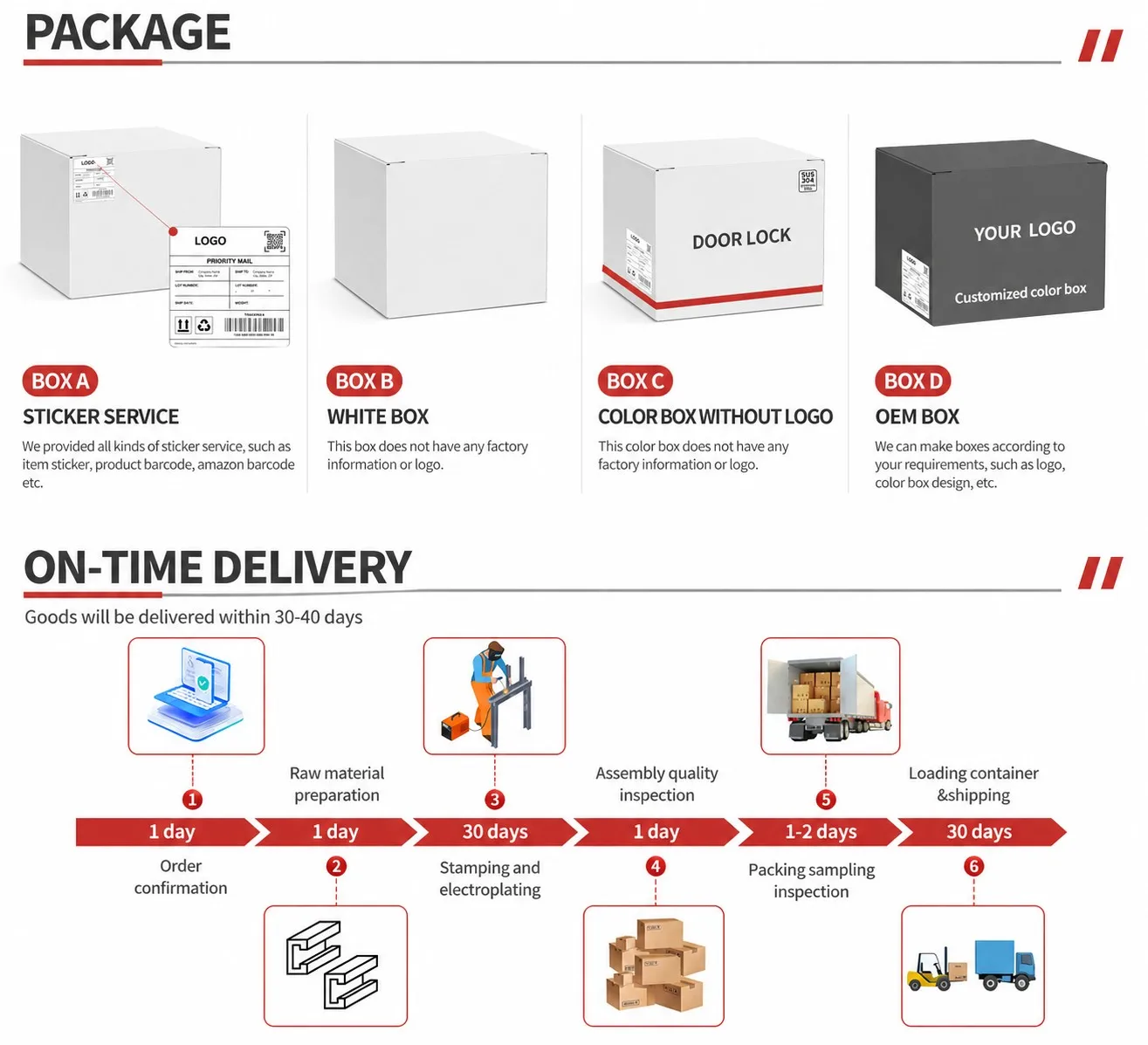
- Packing and carton marking agreed for a mixed order, so both members arrive as one matched set with their screws.
Who Supplies This Hinge
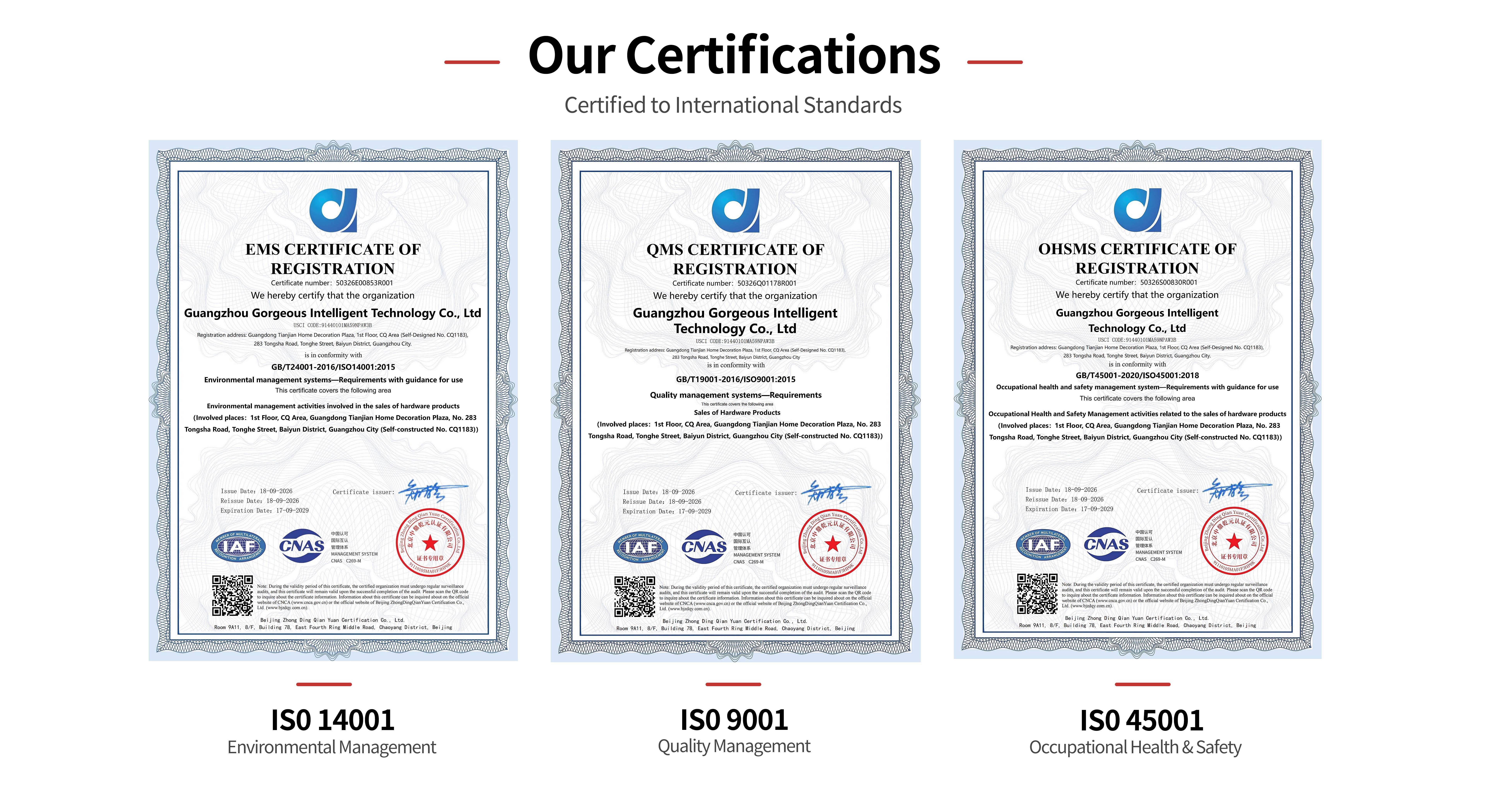
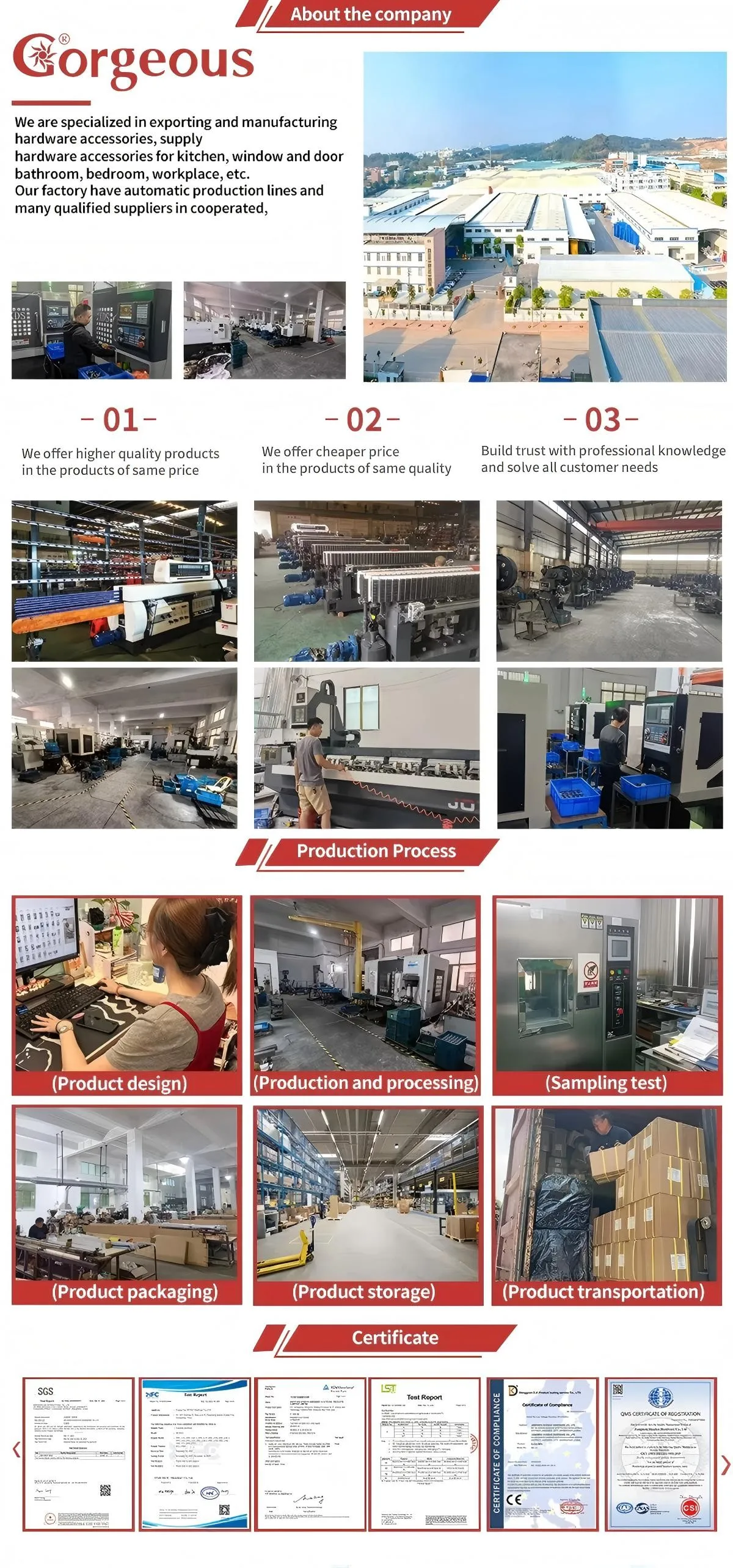
This hinge is supplied by Guangzhou Gorgeous Intelligent Technology Co., Ltd., a furniture and architectural hardware business whose range covers hinges, drawer slides, handles, stays, legs, castors, locks and the connecting and fixing plates that go with them. The company works to export orders: quantities, carton marking, barcodes and shipping documents are agreed before production rather than after it, and a buyer who specifies the member size, the finish and the latch setting on the order gets those things made, because that is the only specification the factory works from.


Ordering
Send the model number G-K4312 with the member size or sizes you need and the count for each, the destination port and the carton marking you want, and confirm the finish and the latch figures against the drawing at the same time. Samples are available before a production order so the hinge can be mortised into your own panel, folded through to flat and the latch worked at both positions, which is the fastest way for both sides to agree that the body fits the panel, the leaves come through flush and the spring holds where the furniture needs it. The hinge drawing, the fixing sheet and whatever test documentation we hold for G-K4312 are issued on request, and delivery and payment terms are agreed order by order on the proforma rather than assumed from a previous order.


Comprehensive score