


Zinc Plated L Shaped Corner Bracket K411
The K411 Corner Bracket Family In Sixty Photographed Positions
This is one design photographed at six sizes. Four photo sets sit behind the page, sixty files and fifty one distinct views once the repeats are removed, and the bracket does not change its logic between them: strip folded at ninety degrees, a rib pressed across the bend, two holes per leg, a yellow-green plated finish. What changes is the size of the bracket and the thickness of the strip it is folded from, which is exactly the choice a buyer has to make.

Read the frames in the order they were shot and the family organises itself. The wide shots show the bracket as a shape: an L with two holes in each leg and a bright edge along the fold. The close shots show the rib, and the rib is what separates this bracket from a plain folded angle. The annotated frames carry the numbers, and there are only three of those, which is why this page quotes the sizes those three frames actually mark and sends every other dimension to the drawing.
The Rib Across The Bend
Look at the close-up: a raised bead runs across the inside of the bend, from one free edge toward the other, with a crimped end where the tool started and stopped. That bead is a stiffener. A folded bracket wants to open when a load pulls the two legs apart, and the rib puts a ridge of material exactly where the bend would otherwise flex. On the thin sizes the rib does most of the work: a 0.6 mm bracket with a rib holds a joint that a plain 0.6 mm bracket would let open.
The rib also tells you how the bracket was made. It is stamped after the fold, in one hit, and the crimped ends are where the punch entered and left the strip. A bracket with a rib that stops short of the edge, or with a rib that is deeper at one end, has been stamped with a worn tool. That is worth checking on a sample, because a shallow rib looks fine on a shelf and does nothing in a joint.

The Six Size Groups The Frames Mark
Three frames carry printed figures and between them they describe six groups. The first frame marks the narrow bracket: 16 mm across the face, legs of 25 mm on the thicker piece and 20 mm on the two thinner ones, with thickness of 1.3 mm, 1.0 mm and 0.6 mm and a hole marked 8 mm on the thinner pair and 11 mm on the thickest. The second frame marks the largest bracket in the set: a face of 38 mm by 20 mm, a second leg of 25 mm, a depth of 20 mm, with no thickness printed on that frame. The third frame marks four small groups at once: 30 mm by 20 mm with 17 mm legs in 1.0 mm and 0.6 mm, 28 mm by 15 mm with 20 mm legs in 0.9 mm, and 23 mm by 13 mm with 17 mm legs in 1.0 mm and 0.6 mm.
| Size across the bracket | Leg lengths | Thickness | Marked on |
| 16 mm | 25 mm and 20 mm | 1.3 mm, 1.0 mm, 0.6 mm | the narrow frame |
| 23 mm by 13 mm | 17 mm | 1.0 mm, 0.6 mm | the small frame |
| 28 mm by 15 mm | 20 mm | 0.9 mm | the small frame |
| 30 mm by 20 mm | 17 mm | 1.0 mm, 0.6 mm | the small frame |
| 38 mm by 20 mm | 25 mm | not printed | the large frame |
That table is the whole of what the photographs state. Every other figure a specification would want, from hole diameter on the unmarked frames to the tolerance on the fold, is a drawing matter. If a line needs a size that is not in the table, the bracket exists in the family but the photographs on this page cannot prove it, and the drawing decides.
Why The Plate Is Yellow
Every bracket in every frame carries the same finish: a yellow-green iridescence that shifts with the light and shows a rainbow at the edges of the holes. That is what a plated zinc coating looks like after passivation, and it is the finish most furniture brackets are bought in, because the coating protects the steel at the cut edges and the holes, which are the places that would rust first on a painted part.
The finish also has a practical cost. A plated bracket shows a fingerprint, and it shows a scratch as a bright line through the iridescence. On a visible joint that matters, and on a hidden carcass corner it does not. When a buyer asks for a bracket that will not show handling, the answer is usually a different finish rather than a different bracket.

Holes: Plain, Not Countersunk
These holes are plain. There is no cone cut into the face around them, so a screw head will sit on the surface of the bracket rather than flush with it. On a carcass corner nobody sees it; on a visible joint the head shows, and that is the one place where this bracket and a countersunk bracket are not interchangeable. If a job needs flush heads, say so before ordering, because countersinking changes the tool and the price.
The holes sit on the centre line of each leg, one near the free edge and one nearer the bend, and the pair is what stops a joint rotating: one screw pulls the panels together, the second stops the panel pivoting about the first. A bracket with a single hole per leg will hold a light shelf and nothing that gets knocked.
Choosing A Thickness
Thickness is the choice that matters most in this family, and the frames make the range visible because they photograph the same shape in 0.6 mm, 0.9 mm, 1.0 mm and 1.3 mm. A 0.6 mm bracket is for a light joint that will not be loaded: a drawer bottom, a panel corner on a display unit, a repair where the original material is thin. A 0.9 mm or 1.0 mm bracket is the general purpose piece, and most orders land there. A 1.3 mm bracket is for a joint that gets knocked or carries weight, and it takes a bigger screw without deforming the hole.
Two things change with thickness besides strength. The screw has to match: a thin bracket needs a screw with a wide enough head to bear on the plate, or the head pulls through. And the rib becomes less necessary as the plate thickens, which is why the heaviest bracket in the set is also the one with the least pronounced bead.
Where These Small Brackets Go
A small corner bracket does the work that a bigger one cannot, because it fits inside a joint that has no room. Drawer boxes, small cabinet carcasses, picture frames, plinth corners, display plinths, bed slat supports and repair work on flat pack furniture all take a bracket of this size. The largest in the family, the 38 mm piece, is the one that goes into a carcass corner that has to carry a shelf; the 23 mm and 28 mm pieces are the ones that go into a drawer box or a frame where the material is thin and the space is tight.
The second use is volume. These brackets are sold by the hundred to furniture factories and by the pack to repair shops, and a factory that runs the same bracket in two thicknesses across a whole range keeps one screwdriver bit, one screw and one packing standard. That consistency is worth more than a fraction of a cent on the bracket.
Three Names On A Quotation
The same piece is quoted under three names. Written by shape it is an l shaped corner bracket. Written by the trade it serves it is a furniture corner bracket. Written by size it is a small corner bracket, which is how a repair shop orders it when the size matters more than the specification. All three names describe this family, and none of them tells you the thickness, so a quotation that only carries the name still needs the size and the plate thickness before it is a firm order.
Checks On The Bench
Four checks. Squareness: stand the bracket on one leg and look along the other, a sprung bracket shows light under the far edge. Rib: the bead should run the full width of the bend and feel even under a thumb, not deeper at one end. Holes: a burr inside the hole will stop a screw seating, and a plated bracket with a burr will also show a bright ring where the coating has been torn. Finish: look for bare patches at the cut edges, because that is where a plating bath that was running weak shows first.
Then load one. Clamp a bracket to a scrap of the panel it will be used on, drive the screws the job will use, and hang a weight on the free leg. What fails first is informative: a bracket that opens at the bend needs a thicker plate or a deeper rib, and a bracket that tears at the hole needs a bigger washer area rather than a thicker bracket.
How Many Brackets A Joint Needs
One bracket per corner is the minimum and two is the usual. A single bracket in a corner holds the two panels at ninety degrees but leaves them free to rotate about their own axis, so the joint can still rack. Two brackets, one on each face of the same corner, close that movement and cost one more bracket than the minimum. On a tall carcass, bracket the top and bottom corners and let the middle rely on the back panel; on a shelf that carries load, bracket both ends and put the bracket under the shelf where the load runs into it rather than above where the load pulls on the screws.
Count per unit, then add a working allowance. A drawer box takes four brackets, a small carcass eight to twelve, a repair job one or two. A ten per cent allowance covers the bracket that gets dropped, the screw that strips and the piece that is bent during fitting; a bracket that has been bent once will not sit square again, and a square bracket is the whole point of the part.
Screws, Bits And What The Bracket Expects
The bracket sets three expectations and a screw has to meet all of them. The head has to be wide enough to bear on the plate: on a thin bracket a narrow head pulls through the hole long before the joint is tight. The shank has to pass the hole without threading it. And the length has to bite into the panel without breaking through the far face, which on thin furniture board is a narrow window.
The bit matters as much. A plated bracket is thin steel, and a bit that cams out of the head marks the plate right beside the hole, which is the one place a buyer will look for a defect. Drive slowly, keep the bit seated, and stop when the head meets the plate rather than when the driver stalls. On the thin sizes this is the difference between a bracket that arrives installed and a bracket that arrives stripped.
What Arrives, And What To Check First
A carton of brackets should open on a piece that matches the sample: same size, same plate thickness, same finish, rib present and even. Measure the thickness at three points on one leg rather than one, because a rolled strip can run thin at the edge, and weigh a counted bag against the expected count, because a bracket that is thin for its size is the cheapest substitution there is and the hardest to see.
Then fit one. A bracket that goes into a joint square, takes its screws without stripping and holds the joint closed under a hand push has passed. A bracket that rocks, opens or shows a gap at the fold has failed, and no amount of counting the rest of the carton will change that.
Packing And Counts
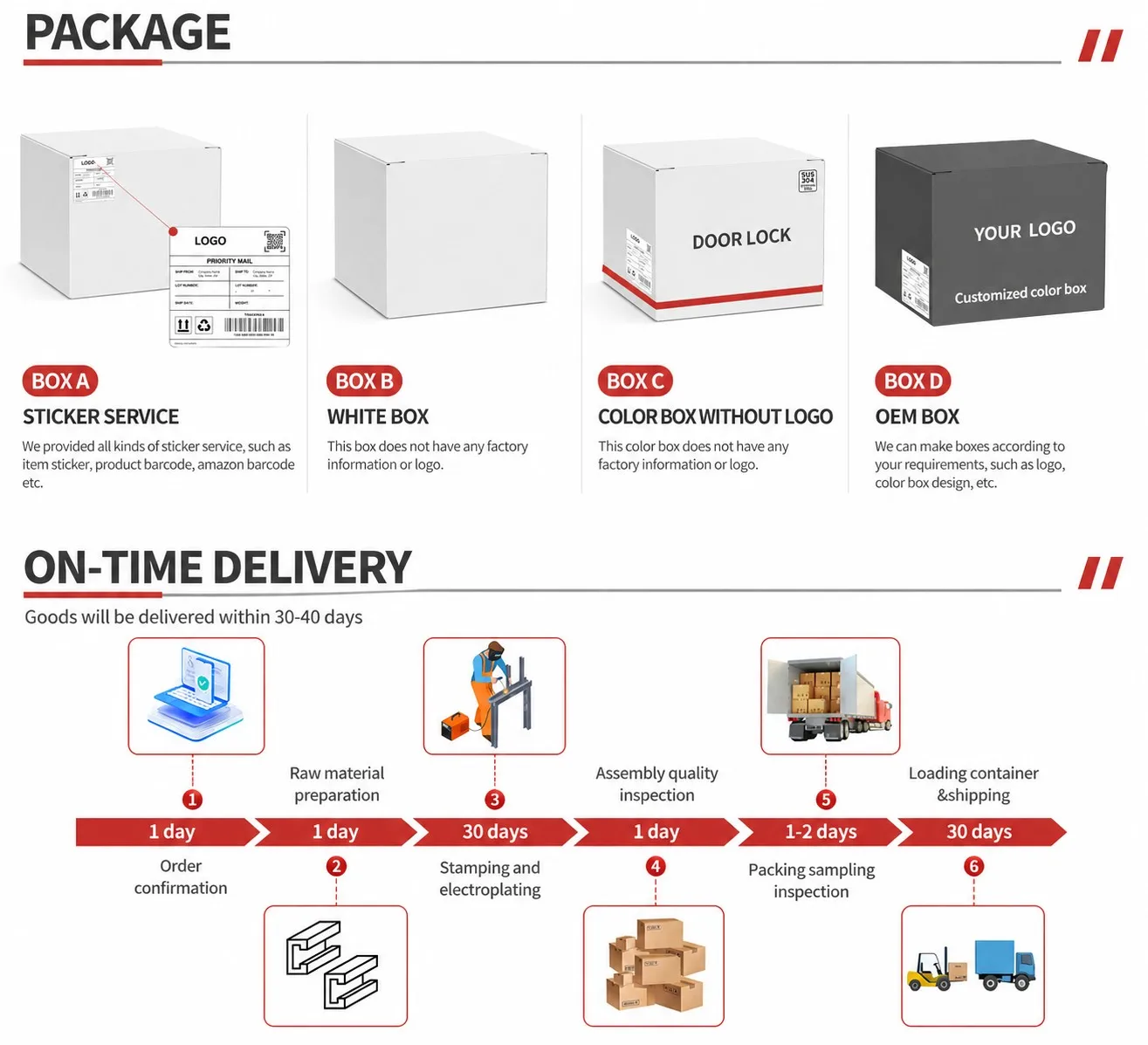
Small brackets are counted by weight on most lines, and weight counting drifts with thickness, so a mixed order of 0.6 mm and 1.0 mm pieces has to be counted, not weighed, or the count will be wrong in one direction. Bag to count, nest the brackets the same way round, and label the bag with the size and the thickness, because two thicknesses of the same shape look identical in a bin and behave differently in a joint.
Ordering The K411 Family




The K411 family is supplied in six size groups as shown on this page, in the thicknesses the frames mark, with a rib stamped across the bend and plain holes, packed to count. Sizes and thicknesses that the frames do not mark are available against the issued drawing; send the size, the plate thickness and the screw you intend to use and the bracket can be checked against all three before anything ships.
Quantities are quoted per piece and mixed counts are packed to the count on the order. If the joint is visible and the screw heads must sit flush, say so at the enquiry stage: the plain hole on this family is a deliberate choice for hidden carcass work, and a countersunk version is a different drawing.


Comprehensive score