


304 Stainless Steel Soft Close Cup Hinge G-F930H
The G-F930H 304 Stainless Steel Soft Close Cup Hinge In Six Photographed Positions

This listing is written from the six frames on this page, and what they show is a cup hinge in 304 stainless steel: an opened three quarter view of the whole hinge with the door plate and cup at one end and the case tail plate with its adjustment slot at the other, a second opened view from the opposite side where the brass damper cartridge and its spring sit in the body in plain sight and the separate tail plate is placed beside the hinge, a vertical view of the hinge with the brass damper inside the body and the separate plate with its white pivot element beside it, a folded front view with the two tail plates squared to the camera and the cup at the top, a folded vertical view of the hinge with the arm on top and the cup at the bottom where the SUS 304 stamp reads across the cup section, and a rear view of the opened hinge with the damper cartridge seen from behind. The folder designates the model as the 304 stainless arc arm self release hydraulic hinge, and the frames are what this page describes, so where the designation and the frames differ the difference is stated rather than smoothed over.
Two points are stated plainly rather than implied. First, the brass damper cartridge is readable as a part in the opened three quarter view, in the vertical view of the body and in the rear view, and that is the closing mechanism on a hydraulic hinge of this class, but what a photograph proves is the part being there, not the closing feeling, so the soft close behaviour is confirmed on a sample worked through its full swing before a production order is cut. Second, the door load, the door thickness range and the cycle count are not numbers a photograph can give, so the specification table carries them as drawing figures rather than as anything the frames measure.
The Brass Damper The Photographs Can See

A hydraulic soft close hinge of this class carries its closing mechanism in the body, and the opened three quarter view shows it directly: a brass damper cartridge with its spring seated in the body, the part that takes the door's energy in the last degrees of the swing so the door comes to rest against the case instead of striking it. The vertical view of the body shows the same cartridge from a second angle inside the opened section, and the rear view of the opened hinge catches it a third way, from behind, where the brass reads against the stainless body. The photographs put the part in view rather than hiding it, which is the difference between a damper that is printed on a catalogue page and one that is in the hinge you are looking at, and it is the part a buyer is actually purchasing when they specify the soft close on a cup hinge.
What the photographs do not prove is the closing feel. A hinge can carry the damper and still close hard if the case is built wrong, the door is heavy for the hinge, or the hinge is fixed crooked, so the soft close behaviour is confirmed two ways before an order: the designation states the closing class, and the sample is worked through its full swing in the buyer's own board, where the last degrees of the swing are what a buyer actually buys. The damper is visible in the frames; the closing is something the sample proves.
The Cup, The Plates And The Self Release Fit
The cup hinge gets its name from the round cup that is cut into the door: the cup seats in the bored hole, the door plate is fixed around it, and the hinge body clips onto the case plate rather than being screwed to the case at all. That clip on, self release fit is the second structure the frames put in view: the opened view from the opposite side and the vertical view each carry the separate tail plate placed beside the hinge, the plate the hinge meets on the case, and in the vertical frame the plate shows its white pivot element, the part the body locks around. A self release hinge is how a door comes off a cabinet without unscrewing anything: the hinge is pulled free of the plate, the door is lifted, and the work is done, which is why the class is the standard for fitted kitchens and any casework where a door gets removed and re hung more often than the design is decided.
Because the cup is bored into the door, the cup hinge is also the class where the door thickness has to be right: too thin a door and the cup wall has nothing to hold, too thick and the door sits proud of the case line, so the drawing names the thickness range the cup is cut for, and the bore is the one place on this hinge where a wrong number cannot be adjusted away, which is why the thickness range goes in the proforma rather than being assumed.
The Vertical Frame: The Damper Inside The Body
The vertical view of the hinge is the frame to read the construction from, because it puts the body on edge with the brass damper cartridge inside the opened section, the cup at the top with the door plate arms across it, and the separate tail plate beside the hinge at the right. That single frame carries the three parts a buyer is deciding on: the cup that goes into the door, the damper that runs the closing, and the plate the hinge clips onto. The folded vertical view shows the same hinge closed up, the arm on top with the brand stamp running down it, the two tail plates flanking the body with their fixing holes, and the cup at the bottom with the SUS 304 stamp across the cup section, which is where the material of the hinge is stated on the part itself rather than on the listing.
The SUS 304 Stamp On The Cup Section
The material claim on this hinge is not only in the listing: the SUS 304 stamp reads across the cup section in the folded vertical frame and across the cup face in the opened frames, and the 304 in the model name is the same 304 the part carries. For a cup hinge that is the part a buyer actually pays for in the long run, because a cup hinge lives in a cabinet that sees every open door, every wiped worktop and every steam cycle the room runs, and plated steel on a damp kitchen door is a finish that starts at the joint radius and works outward. The 304 stainless surface across cup, arm and plates is the same finish from the first carton to the last, the stainless body shows no passivation marks in the staged frames, and the brass of the damper cartridge is a separate material that does the damping rather than the wearing, so the part that touches the swing every day is the part that is made to take it.
What The Frames In This Listing Prove
Every structural claim on this page can be pointed at in one of the six frames: the cup with its door plate in the opened three quarter views, the brass damper cartridge in the body in the opened view from the opposite side, in the vertical view of the body and in the rear view, the separate tail plate placed beside the hinge in the opened and vertical views, the folded front view with the two plates squared to the camera, the folded vertical view with the SUS 304 stamp across the cup section, and the rear view of the opened hinge. What no frame on this page proves is the door load, the door thickness range or the cycle count, so none of those figures is carried as a photograph fact. They come from the hinge drawing and the test report, and a figure borrowed from a similar hinge is the most expensive kind of typo in a workshop, so they are issued against this model rather than assumed.
The staged set also omits, on purpose, the remaining frames of this folder that repeat the same positions at slightly different angles, including two near repeat frames adjudicated at the selection stage, one near repeat of the opened three quarter view and one near repeat of the folded front view, and seven further frames that repeat positions already carried. What remains is six different views of the hinge, and each of the six is used once in the image gallery on this page.
How The Hinge Is Built
The opened three quarter view is the clearest way to read a hinge of this kind: the cup and door plate at one end, the arm body running to the case side, the brass damper cartridge seated in the body, the joint where the body pivots onto the plate, and the tail plate with its adjustment slot at the tail. Three things about this construction are worth a buyer knowing before the drawing arrives. First, the whole hinge is 304 stainless steel, the cup, the arm and the plates, with the stamp on the cup section in the staged frames, so the finish is the material rather than a coating on it. Second, the damper is a brass cartridge in the body, visible in three of the six frames, so the closing runs through the hinge itself rather than through an add on piece. Third, the case fit is clip on and self release, the separate plate is the part the body locks around, and the door comes off the plate rather than off the screws.
- Cup in 304 stainless steel for the bored door, the door plate fixed around it.
- Arm body in 304 stainless steel with the SUS 304 stamp on the cup section.
- Brass damper cartridge with its spring in the body, visible in the opened, vertical and rear views.
- Case tail plate with its fixing holes and the adjustment slot at the tail.
- Clip on self release fit: the body locks around the separate plate and pulls free of it.
- The separate tail plate shown beside the hinge in the opened and vertical frames.
The Fitting Sequence A Clip On Cup Hinge Runs In
A cup hinge goes on in a short fixed sequence, and the sequence is worth putting here because it is where a fitter loses the most time. The case plate is screwed to the case edge first, the cup is bored into the door at the depth the drawing gives and the door plate is fixed around it, and the hinge body is then clipped onto the case plate with the door open flat, the body locking around the plate in the self release fit the frames show. The adjustment is set at the tail plate until the door sits where the design wants it, the gap to the case even top to bottom, and on a soft close hinge the last check is the close: the door pushed shut and left, the damped run through the last degrees of the swing, the door coming to rest against the case without a strike. A hinge fitted in that order takes minutes with the right screws in pilot holes the drawing specifies, and the same hinge fitted with the plate and the door reversed or the bore at the wrong depth spends the afternoon being chased by a fitter. The hinge is only as good as the sequence it is installed in, and the sequence is in this paragraph.
The Rear View: The Hinge From The Case Side

The rear view of the opened hinge is the frame a buyer usually does not get, because a catalogue shoots the pretty side of a hinge and leaves the case side to the drawing, and it is worth the attention here for two reasons. The first is that it shows the brass damper cartridge from behind, the same part the opened three quarter view shows from the front, which is the difference between a damper that is a photograph and a damper that is a part in the body. The second is that it puts the case side of the fit in view: the tail plate with its fixing holes at the upper left and the cup section with its two hole base plate at the bottom, the two faces that run between the hinge and the cabinet, and the faces the drawing centres. A soft close cup hinge is bought as much on the case side as the door side, because the closing runs through the fit, and the fit is what the rear view shows.
Where A 304 Stainless Steel Cup Hinge Is The Right Call
A 304 stainless steel cup hinge with a brass damper belongs in the rooms where a plated hinge starts its life on the day it is fitted: kitchens, bathrooms, laundry rooms, basements and utility casework, and any fitted room where the door sees steam, wiping and open water more often than a living room door does. The stainless body is the material rather than the finish, the damper is in the body where the frames show it, and the clip on fit is the one a fitted kitchen wants, because a fitted door comes off for a re hang, a repair and a move more often than the design is decided. It is also the right call where the closing needs to be damped, because a striking door in a fitted kitchen is the fault the soft close class exists to remove.
It is the wrong call where the door is beyond what the drawing rates, because the stainless body does not make the hinge stronger than its load figure, and it is the wrong call for a marine or exterior position: 304 is the interior grade of stainless, and for that work a 316 specification is quoted instead, because the difference between the two grades is exactly the environment 304 was not cut for. A hinge that is the right steel for the wrong room is a hinge that costs the price of both.
The Six Frames, In Order
The staged set runs in a fixed order, and the order is worth stating frame by frame because each of the six frames carries one job. Frame one is the opened three quarter view of the whole hinge: the door plate and the cup at the upper left, the arm body running down to the case tail plate with its adjustment slot, the hinge in one line across the frame, which is the frame a buyer reads first and the frame that decides whether the listing is worth reading at all. Frame two is the opened view from the opposite side, the one that puts the brass damper cartridge and its spring in the body in plain sight with the separate tail plate placed beside the hinge, and it is the frame the soft close claim is made from.
Frame three is the vertical view of the hinge with the damper inside the opened section of the body and the separate plate with its white pivot element beside it, the frame that carries the three parts a buyer is deciding on in a single picture: the cup for the door, the damper for the closing, and the plate for the case. Frame four is the folded front view with the two tail plates squared to the camera and the cup at the top, the frame to judge the plate shape and the fixing holes from, and the frame that shows the hinge line the hinge will leave on a closed door. Frame five is the folded vertical view with the arm on top and the cup at the bottom, the frame where the SUS 304 stamp reads across the cup section, and frame six is the rear view of the opened hinge, the case side of the fit and the damper seen from behind, the two frames together covering the side of the hinge the catalogue usually leaves to the drawing.
Why The Damper Is Brass And The Body Is Steel
A close look at the opened frames shows the body in stainless and the damper cartridge in brass, and the difference is a parts decision rather than a finish inconsistency, because the two parts do two different jobs. The body takes the load of the door and the working of the swing, and that is the job the 304 stainless is cut for, the cup, the arm and the plates carrying the door through the full swing. The damper cartridge takes the damping, which is a cyclic friction job the brass is cut for, the cartridge and its spring running through the last degrees of every close, and a soft close hinge of this class is built on the same split, the steel structure around the brass wear part, because the part that wears is the part that is made to wear, and the part that holds is the part that is made to hold.
What the split means for a buyer is simple: the corrosion exposure of the hinge is set by the body, which is the 304 stainless the stamp states, and the closing feel of the hinge is set by the cartridge, which is the brass the opened frames show. A door that strikes is not a damper fault and a hinge that stains is not a closing fault, and the two parts in the frames are the two reasons a soft close cup hinge either does the job the room needs or does not, which is why the sample is worked through its full swing in the buyer's own board before the production order is cut, and the brass of the cartridge is checked in the body at the bench before it leaves the line.
The Hinge On A Door, Piece By Piece
A door that is fitted correctly is a hinge that is fitted correctly, piece by piece, and the pieces of this hinge are worth naming against the door they live on. The cup is the piece that goes into the door, bored at the depth the drawing gives, and the door plate is the piece fixed around the cup, the two of them making the door side of the fit. The arm is the piece that works through the swing, the piece that carries the door from open to closed and back again on every use. The damper cartridge is the piece that runs the closing, the brass part in the body that the soft close designation is built on. The tail plate is the piece the hinge clips onto, the separate plate the frames show beside the hinge, and the adjustment at the tail plate is the piece that sets the door line after the fitting is done. Five pieces, one hinge, and a door that is out of line is a door where one of the five was set wrong, which is why the sign off checklist below names each of the five against the door rather than against the carton.
The hinge count is the one number that scales with the door: a modest door runs two hinges, a tall or heavy door runs three with the middle hinge at mid height, and the middle hinge is the piece that keeps a tall door flat, because a tall door without its middle hinge is a door that bows at the middle and drops at the bottom, which reads as a hinge fault and is a door proportion fault. The hinge is only as true as the door it is counted for, and the count goes in the proforma for the same reason the cup bore goes in, because the two numbers the drawing carries are the two numbers the door cannot live without.
The Hinge, Stated In Full
This page runs on one part, the hinge, and the hinge runs on four numbers and four checks, so the hinge is stated in full here: the hinge count, the hinge drawing, the hinge sample and the hinge carton, the four things the order names and the four things the dock checks, because a hinge order that names the four is a hinge order that can be checked at both ends.
- The hinge count is the number of hinges per door, two hinges up to a modest door height and three hinges on a tall door, the count stated on the proforma rather than assumed at the bench.
- The hinge drawing is the document the hinge is cut against and the hinge is checked at, the drawing the cup bore, the door thickness range and the door load live on.
- The hinge sample is the hinge the buyer works through the swing in the own board, the hinge the closing is felt on before the order is cut.
- The hinge carton is the carton the hinge leaves in, the hinge counted and bagged, the hinge marked with the model number, the hinge checked at the dock against the order.
- The hinge line is the line the hinge leaves on a closed door, the line that changes between doors when the hinge changes between batches.
- The hinge fault is the fault that shows up as a hinge fault and is a fixing fault, an adjustment fault or a load fault, the fault the checklist below is built to catch.
- The hinge and the room is the match the 304 stainless body is cut for, the room the hinge lives in, the closing the hinge runs, the door the hinge carries.
- The hinge order is the order that names the hinge count, the hinge drawing, the hinge sample and the hinge carton, and the proforma that carries the four is the proforma the factory works from.
Batch Consistency: Why One Hinge Runs Across A Whole Contract
A contract for a run of cabinet doors is where a cup hinge either earns the order or loses it, because the hinge works on every door in the job, and a hinge that changes between batches is a door line that changes between doors. The consistency a buyer should hold the supplier to is the hinge itself: the cup diameter batch to batch so the bore stays one size, the plate fixing centres on the drawing every time, the damper present in every hinge of the soft close run, the adjustment slot cut clean so the door position sets, and the 304 stainless surface even across the cartons. The batch check section below is how the factory holds those points at packing, while the drawing is how the buyer holds them at receipt, because a hinge contract that names the drawing and the model number is a contract that can be checked, and a kitchen contract is the kind where the check matters most, since a door that is three millimetres out on every unit is a room that is three millimetres out.
How This Hinge Sits In Our Range
Within our own hinge range, a buyer choosing a soft close cup hinge is usually choosing between the material, the closing and the plate, in that order. The material sets what the hinge survives: this hinge is the 304 stainless member of the soft close cup line, the stainless body you can read in the staged frames, sitting beside the plated members of the same line that are listed under their own model numbers for the rooms that do not need the steel. The closing sets how the door comes to rest, and this hinge is the hydraulic member with the brass damper cartridge in the body, the part you can see in three of the six frames on this page. The plate sets how the hinge meets the case, and the clip on self release plate with its adjustment slot is the part the drawing centres. A buyer comparing the stainless and the plated members of the line should compare them on those three points, because the difference is the environment, and the environment is a thing a white background photograph shows only partly: the steel is in the hinge, and the room is where the buyer finds out.
Specification Summary
| Model | G-F930H |
| Hinge type | 304 stainless steel soft close cup hinge, self release clip on fit, for cabinet and kitchen doors |
| Material | 304 stainless steel across cup, arm and plates; the SUS 304 stamp is visible on the cup section in the staged frames |
| Closing | Hydraulic, soft close; the brass damper cartridge is visible in the body in the opened, vertical and rear views, and the closing behaviour is confirmed on a sample |
| Arm | Straight tapered arm with a curved damper section at the cup end, as the staged frames show; the supplier sheet designates the model as the arc arm member of the line |
| Mount | Cup bored into the door, door plate fixed around it; the body clips onto the case plate in the self release fit |
| Plates | Case tail plate with fixing holes and the adjustment slot, plus the door plate around the cup; the separate plate is shown beside the hinge in the staged frames |
| Damper | Brass cartridge with spring in the body, the part the soft close designation runs through |
| Door load and thickness range | From the hinge drawing; not read from photographs |
| Fixing screws | Not supplied as standard unless agreed on the order |
| Sample policy | Samples before a production order so the hinge can be fixed and hung in the buyer's own board and the closing felt through the full swing |
How Each Hinge Batch Is Checked Before Packing
Every hinge batch is sampled on four points before packing. Assembly: the cup, the arm, the tail plate and the damper cartridge are checked to be present and seated, the joint is checked to sit square rather than cross loaded, and the adjustment is checked to run rather than bind at the tail plate. Appearance: the 304 stainless surface is checked for passivation marks, handling scratches and any staining that has worked at the joint radius, which is the part of the hinge that shows first on a fitted door, and the brass of the damper cartridge is checked to sit clean in the body. Function: each sampled hinge is worked through its full swing by hand, opened and closed, so a binding joint or a closing that strikes instead of damping shows up before the carton closes, and the self release fit is checked to lock around the plate and pull free of it, because a fit that binds is a door that will not come off. Packing: carton quantity, inner bag, marking and the model number on the label are checked against the order rather than the previous job, and the documents a buyer needs at their own customs are issued with the proforma.
Who Supplies This Hinge
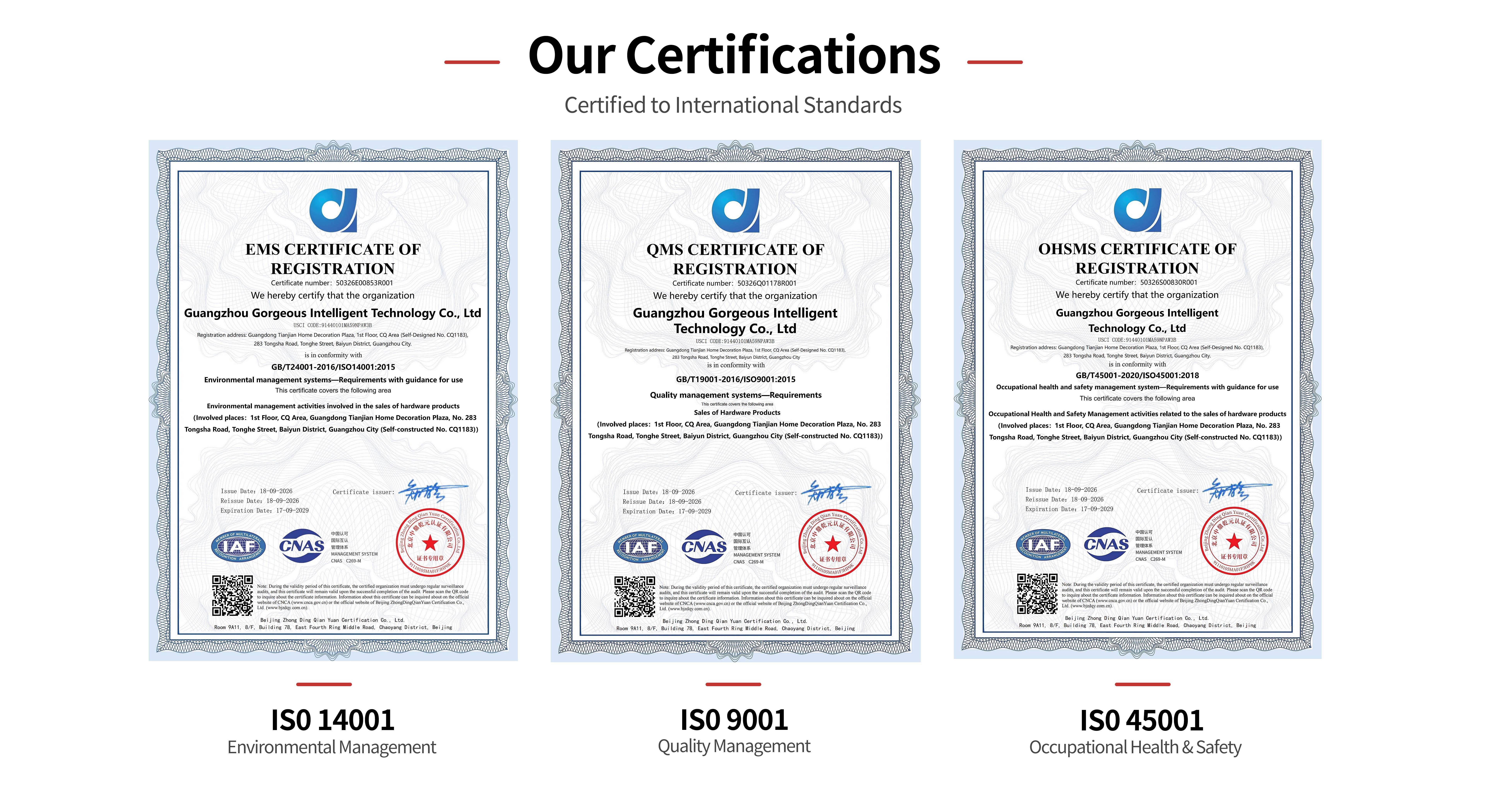
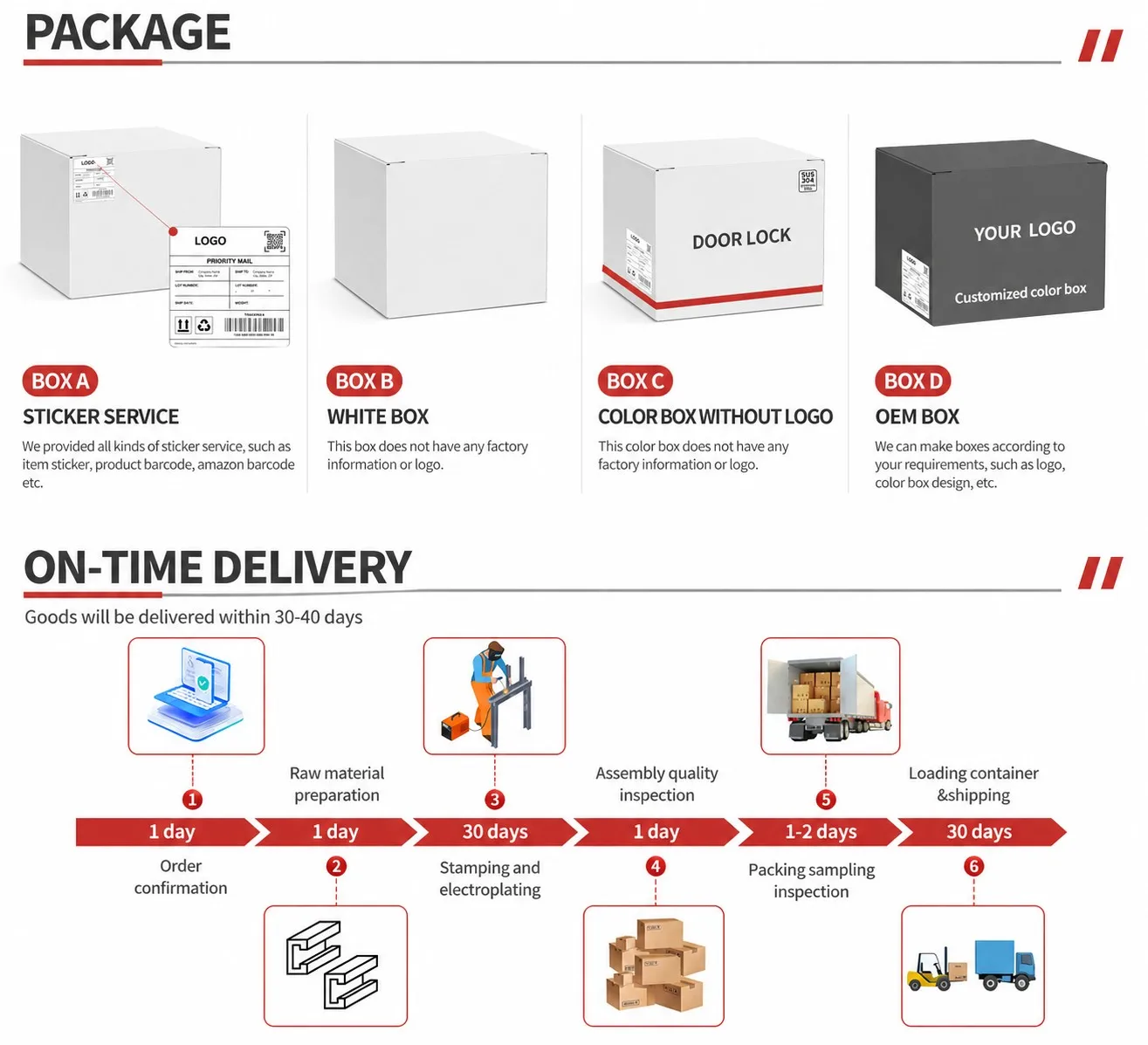
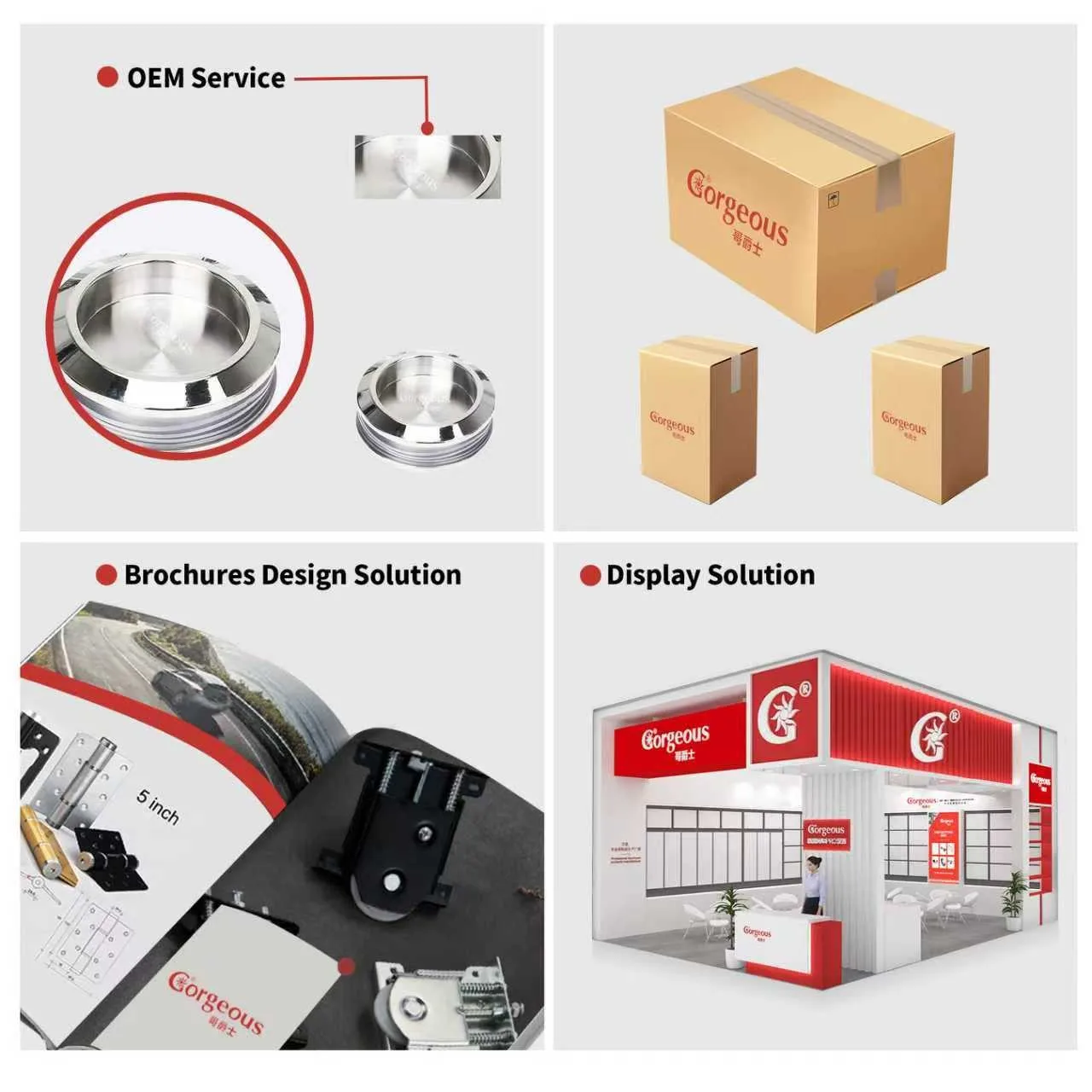
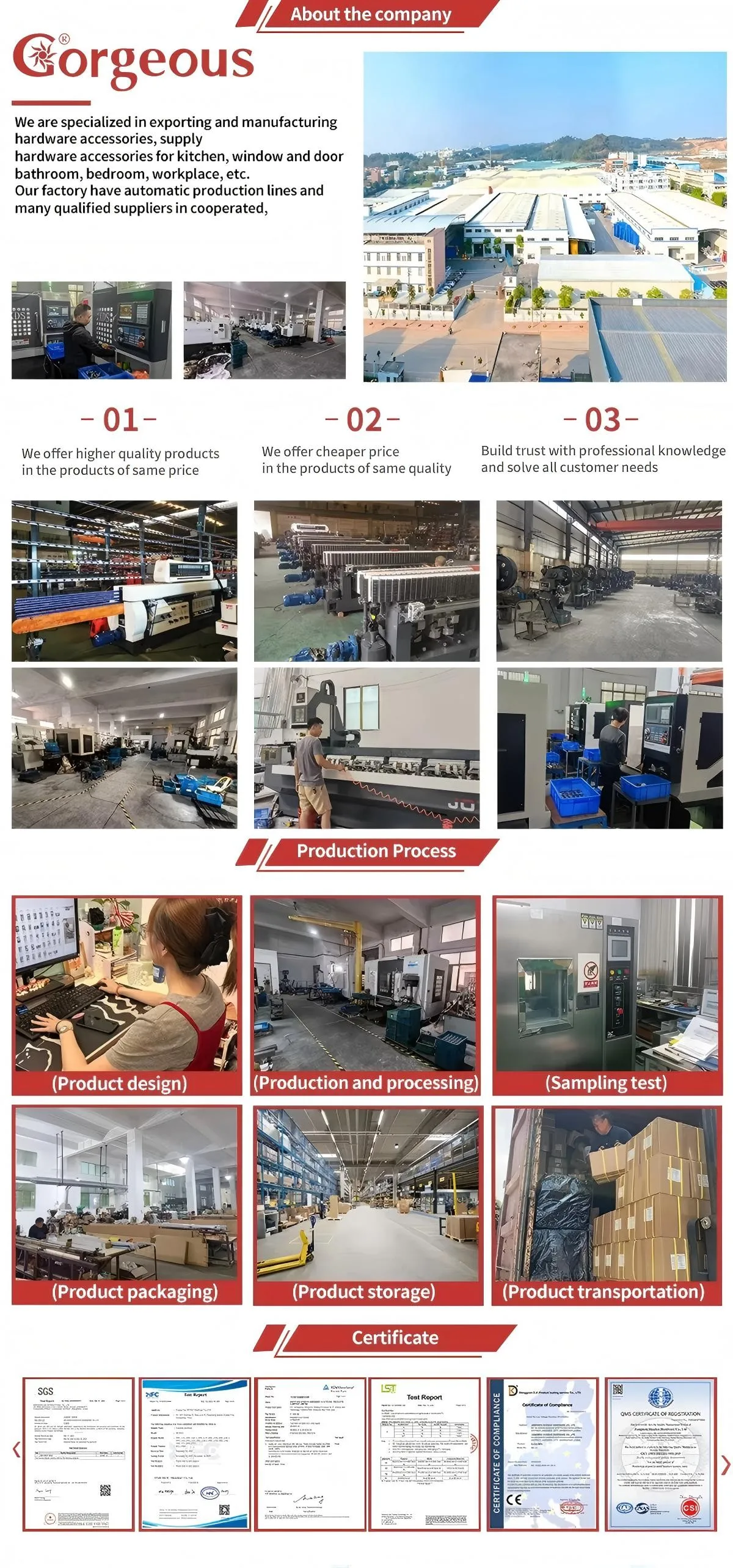
This hinge is supplied by Guangzhou Gorgeous Intelligent Technology Co., Ltd., a furniture and architectural hardware business whose range covers hinges, drawer slides, handles, stays, legs, castors, locks and the fitting sets that go with them. The company works to export orders: quantities, carton marking, barcodes and shipping documents are agreed before production rather than after it, and a buyer who specifies the plate, the closing and the screw type on the order gets those things made, because that is the only specification the factory works from.
Terms Worth Agreeing Before Two Hinges Are Compared
- 304 stainless steel hinge: a hinge whose cup, arm and plates are 304 grade stainless steel rather than plated steel; the SUS 304 stamp on the cup section in the staged frames is the part stating its own material.
- Cup hinge: a hinge whose body mounts through a cup bored into the door, the class the frames show in every opened view.
- Clip on hinge: a hinge whose body clips onto the case plate in a self release fit rather than being screwed to the case, the fit the separate plate beside the hinge in the staged frames belongs to.
- Soft close hinge: a hinge whose closing is damped so the door comes to rest against the case instead of striking it; the brass damper cartridge is visible in the body in the staged frames, and the closing behaviour is confirmed on the sample.
- Hydraulic hinge: the closing class built on a damper cartridge in the body; on this model the cartridge is brass and it sits in the body where the frames show it.
- Damper cartridge: the brass part with its spring seated in the body, the hardware the soft close designation is built on.
- Self release plate: the separate case plate the body locks around and pulls free of, shown beside the hinge in the staged frames, the part that lets a door come off without unscrewing.
- Drawing: the document that turns a hinge photograph into a hinge specification; the cup diameter, the door thickness range and the door load come from it, and we send it with the quotation.
- Family member: the plated soft close cup hinge listed under its own model number, the same line for the rooms that do not need the steel.
Common Hinge Faults And What They Actually Mean
A door that drops over time on a cup hinge is almost always a fixing problem rather than a hinge problem. The hinge is the strongest part of that joint; the board it is screwed into is not. In chipboard and MDF the holding power depends on the pilot hole and the screw gauge, and a plate that has been screwed and unscrewed repeatedly while a fitter chases the line loses grip, which shows up later as the plate pulling away from the door edge or the case while the hinge itself is still sound. The answer is the fixing and the screw gauge, not a heavier hinge, and the drawing names the screw specification for the reason.
A door that will not square up is usually an adjustment question on a hinge of this class: the tail plate slot sets the door position, and a screw that is at the end of its travel means the hinge is being asked to correct a gap the case does not have, which is a case geometry problem wearing a hinge costume. The answer is checking the case edge against the drawing and the sample, not forcing the door or swapping the hinge for one nobody has specified. On a hydraulic hinge a closing that feels hard or uneven at the last degrees is an alignment or a door load question, and both are fixed at the bench with the sample door, which is why the sample comes first on a new case: the buyer feels the closing in their own board before the production order is cut.
The faults that actually do come from the hinge are the cup, the arm and the joint: a cup bored at the wrong depth, an arm that was bent during fitting, and a damper cartridge that was driven over the top instead of seated. None of those is a defect in the steel, but they all show up as one, and the way to keep a 304 stainless soft close cup hinge working is the same as the way to keep any hinge working, which is to fix it true the first time with the right screws in the right holes.
Questions Buyers Ask About This Hinge
- The folder name calls this an arc arm hinge. What do the frames show? The staged frames show a straight tapered arm with a curved damper section at the cup end, and this page describes the structure as the frames show it. The arc arm designation is how the supplier sheet names the model, and the difference between the designation and the frames is stated here rather than smoothed over, because a buyer comparing hinges compares what is in the photograph.
- Is the G-F930H a soft close hinge? Yes: the model designation marks it as the hydraulic, soft close, cup hinge, and the brass damper cartridge is visible in the body in the opened three quarter view, in the vertical view and in the rear view. The photograph proves the part is in the hinge; the closing feel is confirmed on a sample in your own board, and we will confirm it in writing before you order.
- Is it really 304 stainless steel, or plated? The SUS 304 stamp reads across the cup section in the folded vertical frame and across the cup face in the opened frames, and the model is the 304 stainless member of the soft close cup line. 304 is the interior grade of stainless: the right call for kitchens, bathrooms and utility rooms, and for a marine or exterior position we quote 316 instead, because that is the environment 304 was not cut for.
- What does the self release clip on fit mean in practice? The hinge body locks around the case plate and pulls free of it, so a door comes off the cabinet without unscrewing the plate: the hinge is pulled free, the door is lifted, and the work is done. The separate plate is shown beside the hinge in the staged frames, and the white pivot element in the vertical frame is the part the body locks around.
- How many do I need on a tall door? Two up to a modest door height, three above it, because a tall door loads the fixings and the mid fixing is what keeps the door flat. The hinge count, the plate fixings and the screws are the three numbers a proforma for a hinge order should name.
- Are the fixing screws included? Fixing screws are not supplied as standard unless agreed on the order; the drawing lists the specification we would ship so the screws match the holes in the plates.
- What door thickness does it take? The door thickness range is a drawing figure rather than a photograph fact, and the bore is the one place on a cup hinge where a wrong number cannot be adjusted away, so the thickness range goes in the proforma against the door stock before the cutting is done.
Sign-Off Checklist Before You Order This Hinge
- Door and case material confirmed as panel material the plates can fix to.
- Cup bore confirmed at the depth the drawing gives, against the door stock, since the bore is the one number on a cup hinge that cannot be adjusted away.
- Door height and mass confirmed against the hinge count, with an added hinge at mid height on tall doors.
- Door thickness range confirmed against the drawing, issued on the proforma before the cutting is done.
- Soft close requirement confirmed in writing against the designation, and felt on a sample in the buyer's own board, since the closing behaviour is the point of buying the hydraulic hinge.
- Self release fit confirmed on the sample, the body worked around the plate and pulled free of it, so the door comes off the way the frames show it is built to.
- Environment confirmed as interior or moderately humid; marine and exterior work is quoted on 316 instead of 304.
- Screw specification agreed separately, since fixings are not supplied as standard.
- Sample worked through the full swing in the buyer's own board before the production order is cut, closing felt through the last degrees.
Ordering
Send the model number G-F930H with the quantity, the destination port and the carton marking you need. Samples are available before a production order so the hinge can be fixed and hung in your own board, the closing felt through the full swing and the self release fit worked around the plate, which is the fastest way for both sides to agree that the cup seats, the damper runs and the soft close closing is right. The drawing, the fixing sheet and whatever test documentation we hold for this hinge model are issued on request, and delivery and payment terms are agreed order by order on the proforma rather than assumed from a previous order.


Comprehensive score