


Iron 145mm Push Pull Wardrobe Door Handle G-F950X
The G-F950X Iron Push Pull Wardrobe Door Handle In Six Photographed Positions

This listing is written from the six frames on this page, and what they show is an iron push pull wardrobe door handle in two coated finishes: a white background frame with the gold body and the black body together with their two black mounting channels, a scene frame of a fitted wardrobe where a circular callout shows the black handle fitted on the door edge at mid height, a technical drawing of the black handle that marks the body 145 by 45 millimetres, marks the channel 74 by 22 by 9 millimetres, marks a 31 millimetre hole in the opened body and reads Material: iron, the same drawing in the gold finish, a four panel grid of the gold handle in closed three quarter, opened mechanism, side and opened three quarter positions, and a close frame of the two mounting channels, one closed and one open with its ribbed interior. The frames are what this page describes: the handle, the spring inside it, the latch at its end, and the channel it is mounted with.
Two points are stated plainly rather than implied. First, the spring is readable as a part in the drawing and in the opened frames of the grid: the leaf spring and the slotted carrier inside the opened body, and the small latch pin at the end of the gold body in the white background frame, and that spring and latch are the working parts of a push pull handle, the parts that take the push, retract the catch and run the handle back out, but what a photograph proves is the parts being there, not the working of them, so the push pull behaviour is confirmed on a sample worked through its full action before a production order is cut. Second, the figures on the drawing, 145, 45, 74, 22, 9 and 31 millimetres, are marked in the frames and are carried on this page as marked figures rather than as measurements the frames were taken to prove, and the load and the cycle count are not numbers a photograph can give at all, so they are issued against the handle drawing rather than assumed.
The Scene Frame: The Handle On A Wardrobe Door
The scene frame in the gallery is the one a buyer judges the handle by first, because it puts the handle where it lives: a fitted wardrobe, clothes on the hanger rail, and the black handle on the door edge at mid height in the circular callout, the long body reading as a grip rather than as a decoration. That is the whole job of a push pull handle in one picture. A wardrobe door does not need a handle that shows off, it needs a handle that the hand finds at eye level, pushes or pulls without fumbling, and returns to the line of the door when it lets go, and the callout in the scene frame shows the handle doing exactly that, sitting on the door edge in the position a hand reaches for without the eye going looking first.
The scene also shows the finish in context, because a black or a gold handle on a wardrobe door is part of the furniture line of the room, not just the hardware of the door, and the gold member of this handle is the one for a wardrobe that wants the hardware to read as part of the design, while the black member is the one for a wardrobe where the handle should sit back and let the door do the talking. The two finishes are the same iron body with the same spring, the same latch and the same channel, so a buyer mixing finishes across a wardrobe run does not mix mechanisms, and the scene frame is where the two finishes meet the door they are bought for.
The Spring Body The Drawing Can Read

The drawing is the frame a buyer reads the handle from, because it puts every number and every part in one picture: the body marked 145 millimetres long and 45 millimetres wide, the channel marked 74 by 22 by 9 millimetres, the 31 millimetre hole marked in the opened body, and the note that reads Specification 145x45mm and Material: iron. Inside the opened body the leaf spring is visible against the slotted carrier, the two parts that make a push pull handle work, the spring that stores the return and the carrier that runs the latch through its travel, and the 31 millimetre hole is the part of the carrier the mechanism indexes on. A drawing that marks its own spring is a handle that states its mechanism rather than hiding it, and the four panel grid in the gallery shows the same spring in the gold handle from the end and from the side, so the part the drawing names is the part the photographs carry.
What the drawing does not mark is the load the handle takes and the cycle count it runs, and those are the two figures a buyer should not accept without the document that carries them, because a push pull handle lives on the action, the push, the retract, the return, every time the door is opened, and a handle whose spring is undersized for the door it works will start to feel tired long before it starts to break, which is the failure a buyer cannot see in a photograph and a sample can feel in ten seconds of working it in the buyer's own board.
The Gold Member Of The Same Body
The drawing in the gold finish carries the same marks as the black drawing, the same 145 by 45 millimetre body, the same 74 by 22 by 9 millimetre channel, the same 31 millimetre hole and the same Material: iron note, and the point of the pair is that the finish is a coating decision on one body rather than a second product, so the black and the gold of this handle are compared on the door, in the room, against the furniture, not on a specification sheet, because on the sheet the two are the same handle. The four panel grid in the gallery is shot in the gold member, and the white background frame carries both members together, which is the combination a buyer wants to see before deciding how many of each the run needs.
The Four Positions The Grid Frames Carry
The four panel grid of the gold handle in the gallery runs the handle through the positions a buyer will work it in: the closed three quarter view with the body whole and the end section in its seated position, the opened view from the end with the leaf spring and the slotted carrier in the body in plain sight, the side view with the small latch pin showing at the end of the body, and the opened three quarter view with the mechanism running along the length of the handle. Those four panels are the working story of the push pull handle in four pictures: the handle as it sits on a closed door, the handle as its mechanism is read from the end, the handle as the latch is seen from the side, and the handle as the whole mechanism is read along the body. A handle that can show its spring from four directions is a handle whose mechanism is not a secret, and the frame with the latch pin from the side is the one that puts the working part the push acts on in view, the part that retracts on the push and runs the door open.
The Mounting Channel The Frames Show In Pairs

The mounting channel is the piece the handle is mounted with, and the close frame in the gallery shows it the way a drawing would: closed, with the two fixing holes and the small end tab on the top face, and open, with the ribbed interior grid and the two circular holes in the base. The drawing marks the channel 74 millimetres long, 22 wide and 9 high, which is the figure a buyer checks against the door edge and the frame edge before the handle is ordered, because a channel that is sized for the wrong door edge is a handle that will not sit in the line of the door no matter how well the body works. The white background frame carries the channel with the handle body in the same picture, which is the relationship the fit runs on: the body seats against the channel, the fixing goes through the channel, and the handle is on the door. What the frames do not show is the screw specification for the channel fixings, and that is a drawing figure the quotation carries rather than a detail the photographs are asked to prove.
The scene frame confirms the relationship on a real door: the black handle on the wardrobe door edge in the callout is the body seated against the channel on that door, and the handle reads as part of the door line from the outside, which is the finish of the fit a buyer is paying for, the mechanism working inside the body, the body working against the channel, and the channel holding the whole thing in the line of the door.
What The Frames In This Listing Prove
Every structural claim on this page can be pointed at in one of the six frames: the gold and the black members of the handle body in the white background frame, the small latch pin at the end of the gold body in the same frame, the handle fitted on the wardrobe door edge in the scene frame, the leaf spring and the slotted carrier in the opened body of the black drawing and in the opened panels of the gold grid, the marked figures 145, 45, 74, 22, 9 and 31 millimetres and the Material: iron note in the drawings, and the mounting channel closed and open with its fixing holes and its ribbed interior in the close frame. What no frame on this page proves is the load the handle takes, the cycle count it runs or the screw specification for the channel fixings, so none of those figures is carried as a photograph fact. They come from the handle drawing and the test report, and a figure borrowed from a similar handle is the most expensive kind of typo in a workshop, so they are issued against this model rather than assumed.
The staged set also omits, on purpose, the remaining frame of this folder that repeats the grid positions already carried in the black finish: the four panel grid is shot in both finishes, the gold grid is staged in the gallery, and the black grid repeats the same four positions of the same handle, so one of the pair is carried and the other is set aside, with the black member of the handle still present in the white background frame, the scene frame and the drawing. What remains is six different views of the handle, and each of the six is used once in the image gallery on this page.
How The Handle Is Built
The opened drawing is the clearest way to read a handle of this kind: the long iron body, the end section at one end where the latch pin works, the leaf spring inside the body, the slotted carrier that runs the latch through its travel, and the mounting channel that the body seats against on the door. Three things about this construction are worth a buyer knowing before the drawing arrives. First, the body is iron with a coated finish rather than plated steel or stainless, the drawing reads Material: iron, and the coating is the part that carries the finish of the handle in the room, so the finish is a coating decision the buyer specifies, black or gold, on the same iron body. Second, the spring is in the body where the frames show it, so the push pull action runs through the handle itself rather than through an add on piece. Third, the channel is the mounting face, the body seats against it and the fixing goes through it, and the door line of the handle is set at the channel rather than at the body, which is the part of the fit the 74 by 22 by 9 millimetre figure protects.
- Iron body 145 by 45 millimetres as the drawing marks it, coated in black or gold, the two finishes of the same handle.
- Leaf spring in the body, visible in the opened drawing and in the opened panels of the grid, the part that stores the return of the push pull action.
- Slotted carrier running the latch through its travel, the 31 millimetre hole marking the index point of the mechanism in the opened body.
- Small latch pin at the end of the body, shown in the white background frame and in the side panel of the grid, the part the push acts on.
- Mounting channel 74 by 22 by 9 millimetres, closed and open in the close frame, with its two fixing holes and its ribbed interior.
- Scene frame of the handle fitted on a wardrobe door edge, the position and the finish the handle is bought for.
The Fitting Sequence A Push Pull Handle Runs In
A push pull handle goes on in a short fixed sequence, and the sequence is worth putting here because it is where a fitter loses the most time. The channel is fixed to the door edge or the frame edge first, at the height the design wants the hand to reach, the fixing set through the channel holes in pilot holes the drawing specifies, and the body of the handle is then seated against the channel so the latch runs clear in the travel the frames show. The last check is the action: the handle pushed, the latch retracted, the door run to open, and the handle left to come back on its spring to the line of the door, and a handle that runs that sequence smooth, with no binding at the ends of the travel, is a handle the fitter sets once. A handle fitted with the channel crooked or the body seated against a channel at the wrong height is a handle that binds, that drops out of the line of the door and that gets adjusted, re adjusted and eventually abandoned, and the channel is the piece that makes the difference, because the body is only as true as the channel it is seated against.
Where A Push Pull Wardrobe Door Handle Earns Its Keep
The push pull handle exists for doors a conventional pull handle either overworks or underworks, and the scene frame in the gallery is the class: wardrobe doors, closet doors, utility cabinet doors and fitted room doors where the hand meets the door at one place and the handle has to do the opening without the hand looking for a knob, a bar or a recessed finger pull. The push pull action is the part the door gets: the hand pushes, the latch retracts, the door opens, and the spring runs the handle home, which is the whole cycle in one motion rather than the two motions a pull handle takes, grip and pull. A black iron handle of this kind is bought for those doors when the furniture wants the hardware set into the door line and the opening done by push rather than by grip, and the gold member is the one where the wardrobe wants the handle to read as part of the design rather than as a fitting on it.
It is the wrong call where the door is a security door, because a push pull handle is an opening convenience and not a locking position, and the lock on that door is the part the order names separately. It is also the wrong call for a wet, hosed or coastal position without the finish question answered first, because the body is iron with a coated finish rather than stainless, and for that work the finish specification is agreed against the room before the order is cut, since a coated iron handle in a damp room is a finish problem the coating was not specified for.
The Handle, Stated In Full
This page runs on one part, the handle, and the handle runs on four numbers and four checks, so the handle is stated in full here: the handle count, the handle drawing, the handle sample and the handle carton, the four things the order names and the four things the dock checks, because a handle order that names the four is a handle order that can be checked at both ends.
- The handle count is the number of handles per door, one handle at the hand height the design names, and a two door wardrobe run takes the count doubled with the heights matched on the pair so the two handles sit level across the wardrobe.
- The handle drawing is the document the handle is cut against and the handle is checked at, the drawing the 145 by 45 millimetre body, the 74 by 22 by 9 millimetre channel and the 31 millimetre hole live on, and the drawing that reads Material: iron is the drawing the finish specification hangs from.
- The handle sample is the handle the buyer works through the push pull action in the own board, the handle the latch travel is felt on before the order is cut, because the action is the part a photograph cannot prove.
- The handle carton is the carton the handle leaves in, the handle counted and bagged with its channel, the handle marked with the model number, the handle checked at the dock against the order, and the carton that carries black and gold mixed is the carton the order named as mixed.
- The handle line is the line the handle sits in on the door edge, the line the channel holds and the body keeps, and the line that drifts between doors is the line a channel fix or a channel height set wrong is letting drift.
- The handle fault is the fault that shows up as a handle fault and is a fixing fault, a height fault or a finish fault, the fault the checklist below is built to catch before the handle reaches the door.
- The handle and the room is the match the coating of the iron body is cut for, the room the handle lives in, the door the handle works and the hand the handle is sized for.
- The handle order is the order that names the handle count, the handle drawing, the handle sample and the handle carton, and the proforma that carries the four is the proforma the factory works from.
Batch Consistency: Why One Handle Runs Across A Whole Contract
A contract for a run of wardrobe doors is where a push pull handle either earns the order or loses it, because the handle works on every door in the job, and a handle that changes between batches is a door line that changes between doors. The consistency a buyer should hold the supplier to is the handle itself: the body profile batch to batch so the 145 millimetre length stays the 145 millimetre length, the channel fixing centres on the drawing every time so the handle sits at the same height on every door, the spring present and running in every handle of the run, the latch travel clear at both ends, and the coating even across the cartons in each of the two finishes. The batch check section below is how the factory holds those points at packing, while the drawing is how the buyer holds them at receipt, because a handle contract that names the drawing and the model number is a contract that can be checked, and a wardrobe contract is the kind where the check matters most, since a door that is three millimetres out on every unit is a room that is three millimetres out.
How This Handle Sits In Our Range
Within our own handle range, a buyer choosing a push pull door handle is usually choosing between the action, the finish and the mounting, in that order. The action sets what the hand does to the door, and this handle is the push pull member, the spring and the latch in the body the frames show, rather than the pull member that takes a grip and a drag or the recessed member that takes a finger. The finish sets how the handle reads on the door, and this handle is the coated iron member in black and gold, the two finishes of the same body, sitting beside the stainless members of the range that are listed under their own model numbers for the rooms that need the steel rather than the coating. The mounting sets how the handle meets the door, and the channel with its fixing holes is the part the drawing centres at 74 by 22 by 9 millimetres. A buyer comparing the push pull and the pull members of the range should compare them on those three points, because the difference is the action, and the action is a thing a white background photograph shows only partly: the spring is in the handle, and the sample is where the buyer feels it.
Specification Summary
| Model | G-F950X |
| Handle type | Iron push pull wardrobe door handle with spring body and mounting channel, for wardrobe, closet and utility cabinet doors |
| Material | Iron as the drawing reads Material: iron; the body carries a coated finish in black or gold |
| Body | 145 x 45 mm as marked in the drawing; the leaf spring and the slotted carrier are visible in the opened body |
| Mechanism | Leaf spring with slotted carrier in the body, the 31 mm hole marked at the index point; the push pull action is class behaviour confirmed on a sample |
| Mounting channel | 74 x 22 x 9 mm as marked in the drawing; two fixing holes and a ribbed interior shown closed and open in the close frame |
| Latch | Small latch pin at the end of the body, shown in the white background frame and in the side panel of the grid |
| Finish | Coated iron in black and gold, the two finishes of the same body as the paired drawings show |
| Door load and cycle count | From the handle drawing; not read from photographs |
| Fixing screws | Not supplied as standard unless agreed on the order |
| Sample policy | Samples before a production order so the handle can be fixed on the buyer's own board and the push pull action felt through the full travel |
How Each Handle Batch Is Checked Before Packing
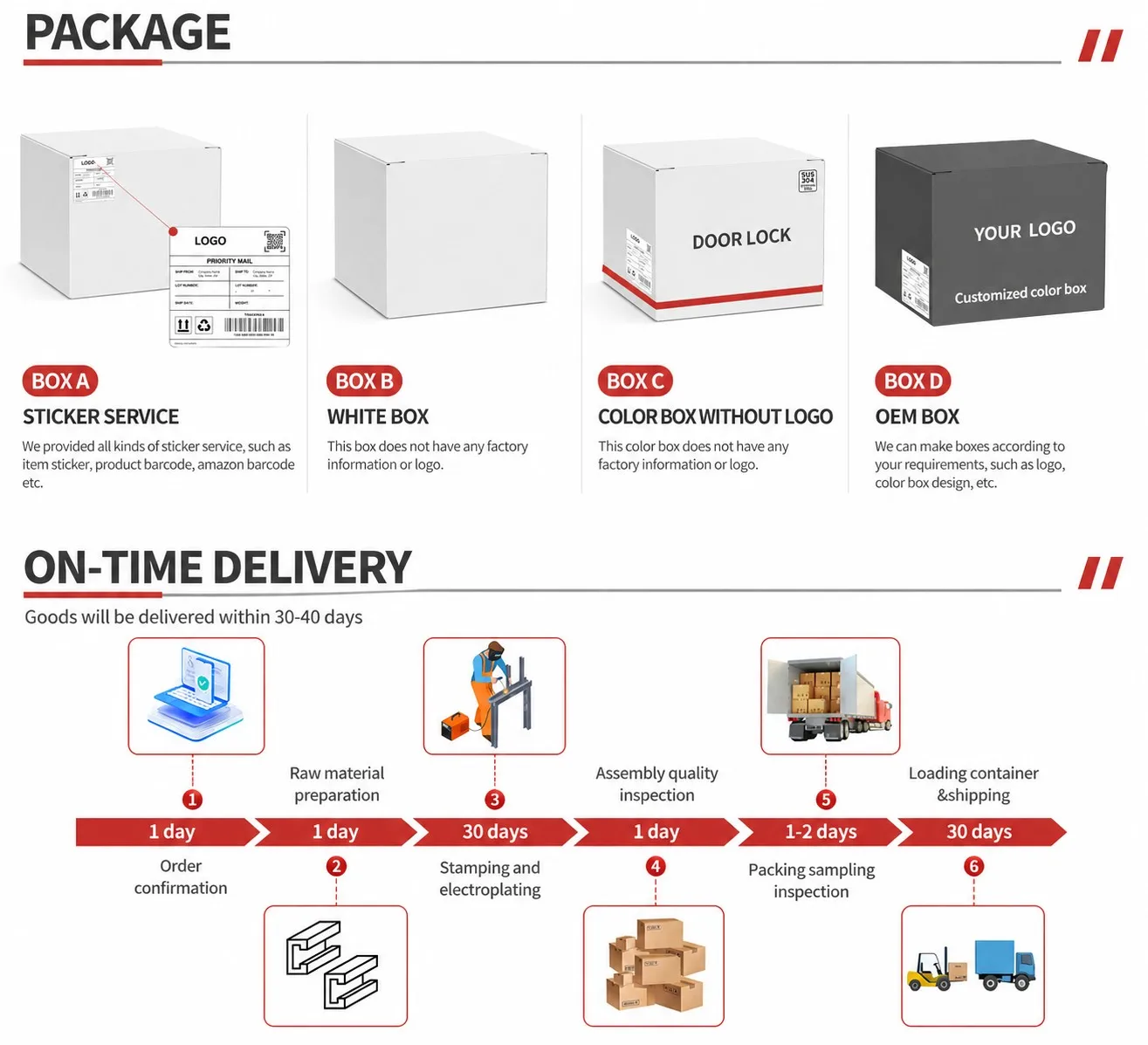
Every handle batch is sampled on four points before packing. Assembly: the body, the spring, the carrier, the latch and the channel are checked to be present and seated, the latch is checked to run clear in its travel rather than bind at the ends, and the channel is checked to hold square to the body so the handle sits in the line of the door. Appearance: the coating is checked for runs, handling marks and any edge wear where the finish meets a radius, which is the part of the handle that shows first on a fitted door, and the black and the gold of a mixed run are checked to stay the two finishes the order named rather than drift toward each other. Function: each sampled handle is worked through the push pull action by hand, pushed, retracted and returned on the spring, so a binding latch or a spring that does not run the handle home shows up before the carton closes, because a handle that does not return home is a handle that will not hold the line of the door. Packing: carton quantity, inner bag, channel count against body count, marking and the model number on the label are checked against the order rather than the previous job, and the documents a buyer needs at their own customs are issued with the proforma.
Who Supplies This Handle
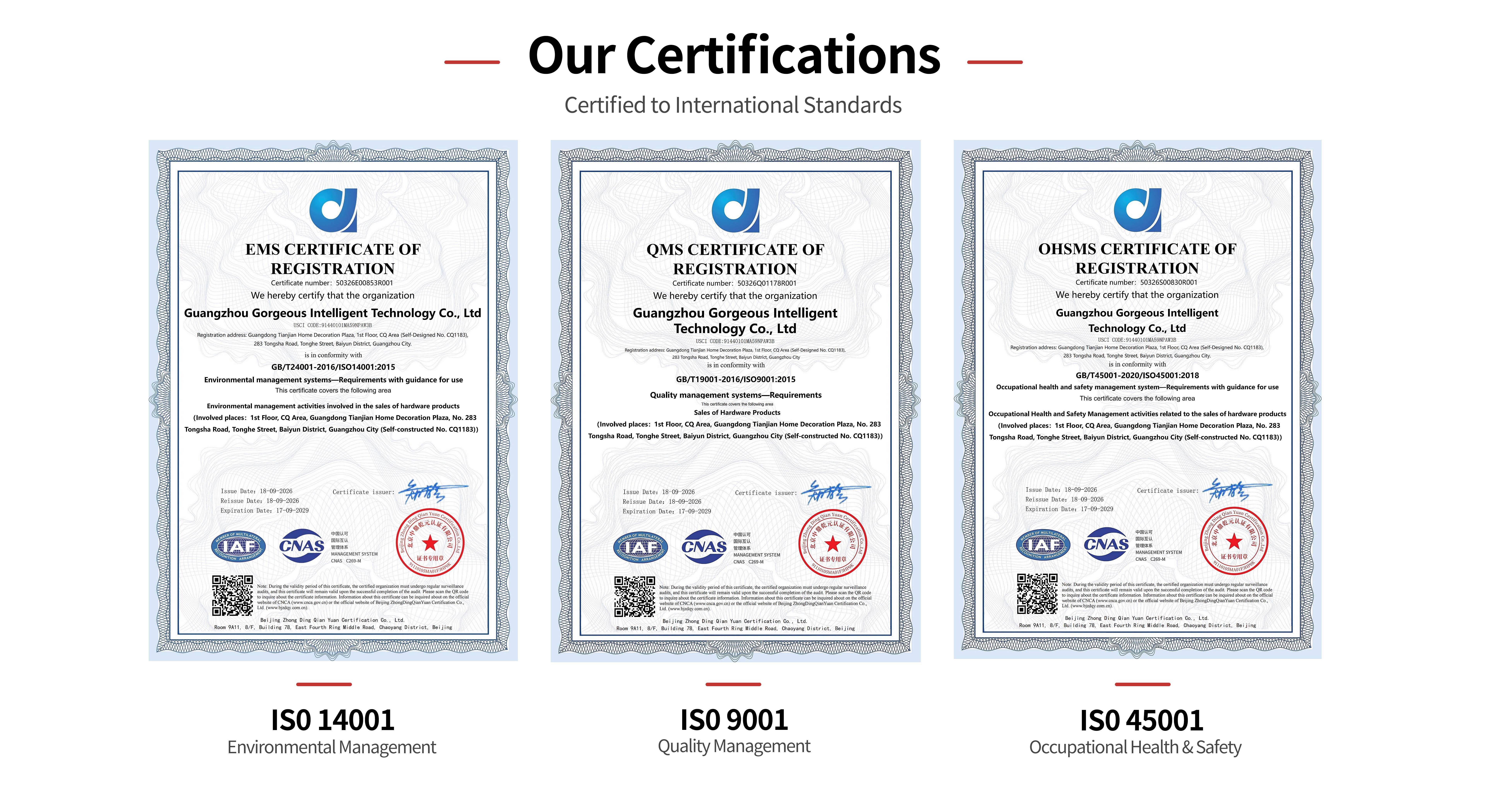
This handle is supplied by Guangzhou Gorgeous Intelligent Technology Co., Ltd., a furniture and architectural hardware business whose range covers hinges, drawer slides, handles, stays, legs, castors, locks and the fitting sets that go with them. The company works to export orders: quantities, carton marking, barcodes and shipping documents are agreed before production rather than after it, and a buyer who specifies the finish, the mounting and the screw type on the order gets those things made, because that is the only specification the factory works from.



Terms Worth Agreeing Before Two Handles Are Compared
- Push pull handle: a handle whose opening action is a push rather than a grip and a drag, the latch retracting on the push and the spring running the handle back to the line of the door; the leaf spring and the slotted carrier in the opened body in the staged frames are the parts the action runs on.
- Wardrobe handle: a door handle fitted on a wardrobe or fitted room door at the hand height the design names, the class the scene frame in the gallery shows with the black handle on the door edge of the fitted wardrobe.
- Closet door handle: the same fitting class on a closet door, the door the push pull action was built for, and the search class a buyer in the trade uses for the handle in the scene frame.
- Push pull door handle: the door class of the push pull handle, the door that takes the push and gives the opening, wardrobe, closet, utility and fitted room doors in the scene frame and the application frames.
- Leaf spring: the spring form in the body of the handle, the visible coil leaf against the carrier in the opened drawing and the opened grid panels, the part that stores the return of the action.
- Mounting channel: the 74 by 22 by 9 millimetre piece the body of the handle seats against, shown closed and open in the close frame, the part the fixing goes through and the door line is set at.
- Coated iron: the material and finish combination the drawing names, iron as the body with a coated finish in black or gold, the finish the buyer specifies against the room rather than against the steel grade.
- Drawing: the document that turns a handle photograph into a handle specification; the body figures, the channel figures and the material note come from it, and we send it with the quotation.
Common Handle Faults And What They Actually Mean
A handle that drops out of the line of the door over time is almost always a fixing problem rather than a handle problem. The handle is the strongest part of that joint; the board it is fixed into is not. In chipboard and MDF the holding power depends on the pilot hole and the screw gauge, and a channel that has been screwed and unscrewed repeatedly while a fitter chases the height loses grip, which shows up later as the handle sitting proud of the door edge or the channel pulling away from the board while the body of the handle is still sound. The answer is the fixing and the screw gauge, not a heavier handle, and the drawing names the screw specification for the reason.
A handle that binds on the push is usually a fit question on a handle of this class: the channel height sets the travel of the latch, and a handle that is set at the wrong height is a handle being asked to run the latch through a travel it was not fixed for, which is a fitting geometry problem wearing a handle costume. The answer is checking the channel against the drawing and the sample, not forcing the push or swapping the handle for one nobody has specified. On a push pull handle a return that feels tired, the handle not running all the way home on the spring, is a load or a travel question, and both are fixed at the bench with the sample door, which is why the sample comes first on a new case: the buyer works the action in their own board before the production order is cut.
The faults that actually do come from the handle are the spring, the carrier and the latch: a spring that was undersized for the door, a carrier that was seated crooked in the body, and a latch that was driven home instead of seated. None of those is a defect in the iron, but they all show up as one, and the way to keep a coated iron push pull handle working is the same as the way to keep any spring handle working, which is to fix it true the first time with the right screws in the right holes and the channel at the height the drawing names.
Questions Buyers Ask About This Handle
- Is the body iron or stainless steel? The drawing reads Material: iron, and the body carries a coated finish in black or gold, so this handle is a coated iron handle rather than a stainless handle. 304 or 316 stainless is the right call where the room is wet or coastal, and for that work we quote the stainless member of the range under its own model number, because the coating on this handle is the part that is sized to the room rather than to the water.
- How do I know the push pull action works before I order? The spring and the latch are visible in the opened drawing and in the opened grid panels, which proves the parts are in the handle, and the sample is where the action is felt: the handle pushed, the latch retracted, the door run to open, and the handle run back home on the spring in your own board. We will confirm the action in writing against your door before the production order is cut.
- What do the marked figures mean? The 145 by 45 millimetre figure is the body, the 74 by 22 by 9 millimetre figure is the mounting channel, and the 31 millimetre figure is the hole at the index point of the mechanism in the opened body. They are marked in the drawing frames and are the figures the door edge and the frame edge are checked against before the handle is ordered, because the channel is the piece that sets the line of the handle on the door.
- Can black and gold be mixed in one run? Yes: the two finishes are the same iron body, the same spring, the same latch and the same channel, so a run can be mixed by count per door or per wardrobe pair, and the mixed run is named on the proforma as mixed so the packing check runs the black and gold counts against the order rather than against each other.
- Where does the handle sit on the door? At the hand height the design names, with the channel fixed first and the body seated against it, and the scene frame in the gallery shows the position on a wardrobe door at mid height. The height is a fitting decision the channel makes, and the channel height is the one number on this handle that the door line is only as true as.
- Are the fixing screws included? Fixing screws are not supplied as standard unless agreed on the order; the drawing lists the specification we would ship so the screws match the holes in the channel.
- What door thickness does the channel take? The channel figure is 74 by 22 by 9 millimetres as marked, and the door edge the channel fixes to is checked against that figure in the drawing before the order, since the channel is the piece that meets the board and the board is the part the fixing has to hold in.
Sign-Off Checklist Before You Order This Handle
- Door and board material confirmed as panel material the channel can fix to, with the screw specification named against it.
- Channel height confirmed at the hand height the design names, against the drawing, since the channel is the piece the door line of the handle is set at.
- Door edge and frame edge checked against the 74 by 22 by 9 millimetre channel figure before the order, because the channel is the piece that meets the board.
- Finish specified against the room: black or gold or a named mix per run, with the mix counts on the proforma for a mixed wardrobe pair.
- Push pull action confirmed on the sample in the buyer's own board, the handle worked through the full travel, the latch run clear at both ends and the return run home on the spring.
- Coating condition confirmed as interior or moderately humid against the coated iron body; wet and coastal work is quoted on the stainless member of the range.
- Channel fixings agreed separately, since screws are not supplied as standard.
- Handle count confirmed per door and per pair, with the heights matched on a two door wardrobe run so the handles sit level.
- Drawing, fixing sheet and whatever test documentation we hold for this handle model issued on request before the order is cut.
Ordering
Send the model number G-F950X with the quantity, the finish count, the destination port and the carton marking you need. Samples are available before a production order so the handle can be fixed on your own board, the push pull action felt through the full travel, the latch run clear at both ends and the return run home on the spring, which is the fastest way for both sides to agree that the channel sets, the spring runs and the handle holds the line of the door. The drawing, the fixing sheet and whatever test documentation we hold for this handle model are issued on request, and delivery and payment terms are agreed order by order on the proforma rather than assumed from a previous order.


Comprehensive score